
We’d like to remind Forumites to please avoid political debate on the Forum.
This is to keep it a safe and useful space for MoneySaving discussions. Threads that are – or become – political in nature may be removed in line with the
Forum’s rules. Thank you for your understanding.
📨 Have you signed up to the Forum's new Email Digest yet? Get a selection of trending threads sent straight to your inbox daily, weekly or monthly!
Ha what fun! The note on my latest tax code notice describes the Personal Allowance as "the standard amount of taxable income most people can have before they start paying Income Tax."
Bear in mind that the calculator assumes you're on £60k all year. Since this is a change mid-year your total for the tax year will be less than £60k and therefore total tax due will be less.
Since PAYE works on running totals not solely month by month I think what will happen is the amount of tax taken each month will start from not much more than last month, and creep up month by month.
This website can calculate for the current month assuming you have all the YTD figures
You say you get taxed at 40% on only £10k then ignore this in your tax home pay.
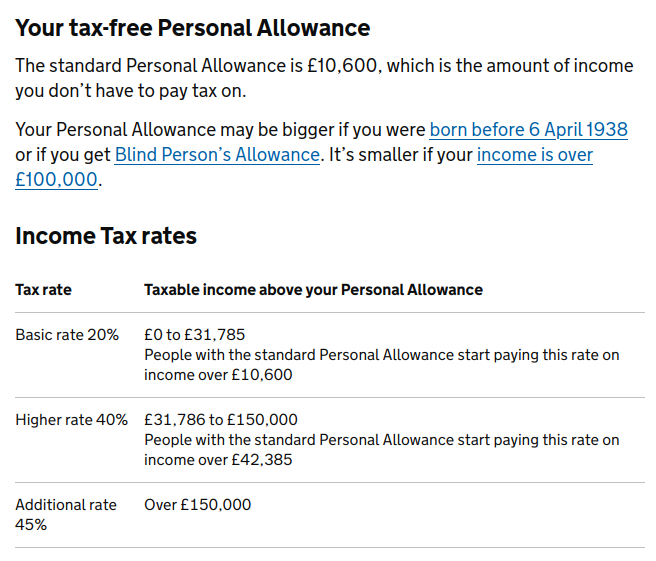
The first £12570 of your pay is taxed at 0% so the £12570 is fine. The next £37700 (£50270-12570) is taxed at 20% so £7540 tax and £30160 is take home pay. This leaves the remaining £9730 to be taxed at 40% so £3892 tax and take home of £5838.
So total tax is £11432 (£7540+£3892) and total take home is £48568. Per month this is approx £4037.
You are ignoring NI and employee pension contributions.
I do try and mention this when I said "This doesn't take into consideration any of your specific tax allowances, pension contributions or tax code changes" as I don't know OP's personal circumstances. I ignored NI as it's not as straight forward to calculate off hand (especially with pay that includes bonus payment(s) which I didn't know the value(s) of) and the post was long enough as is. The above example was a generalisation of what someone on roughly £60k would see if NI and pension contributions are ignored.
The OP's question was mostly about tax so wanted to give an overview of that. But you are correct NI and pension contributions (as well as tax code changes) would change OP's take home pay after tax.
The first £12570 of your pay is taxed at 0% so the £12570 is fine.
Picky I know but it's not taxed at all, it's tax free and doesn't count towards your taxable income. Maybe you are thinking about the starting rate for savings and the personal savings allowance which are taxable albeit at 0%
I think the move to "taxed at 0%" came in, due to confusion around tax codes that were changed so that an individuals personal allowance (or 0% tax amount) was no longer £12570. For example, marriage allowance or changed tax code to collect tax due from previous year.
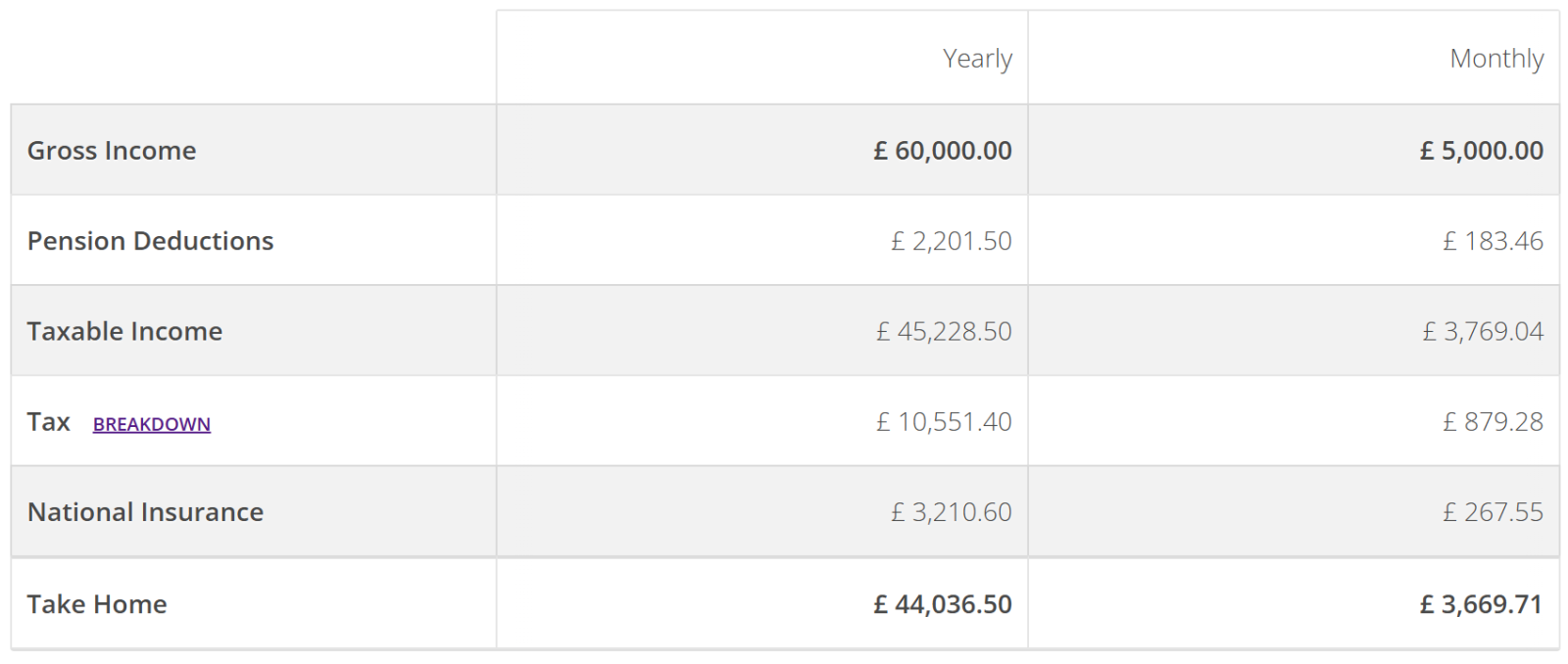
For anyone interested, the calculator @Qyburn mentioned gives the following figures including NI and pension contributions (I've assumed 5%). Tax due is lower than my example above due to NI and pension contributions with lower tax home pay overall. Again, this doesn't cover a non-standard tax code and assumes bonus is paid equally across all payslips.