We’d like to remind Forumites to please avoid political debate on the Forum.
This is to keep it a safe and useful space for MoneySaving discussions. Threads that are – or become – political in nature may be removed in line with the Forum’s rules. Thank you for your understanding.
DCB Legal Representing Excel Parking - ANOTHER ONE BITES THE DUST
Comments
-
Thanks, I submitted my defence in March and it's still dragging on. The whole system is so poor.jd576 said:When I filed my defence by email, it was done on the 26th of July 2024 and it took until the 10th of August for MCOL to be updated noting that the defence had been received. The same day I received a paper acknowledgement and the next day the directions questionnaire.
These acknowledgements only came after the deadline to file my defence (5 August) had already expired, so caused me a considerable amount of angst too.0 -
I think you should complain by email to HMCTS as you can't be left in the lurch indefinitely and your MCOL record looks like you haven't defended at all, which makes you nervous of a CCJ.alicebarbz said:After following up, I got another auto response acknowledging the email and stating that I would receive a response with 10 days. This was on 03/08/25 and still nothing. MCOL still shows my latest document as Acknowledgement of Service - no update to show my defence as logged.
I have since received an email from DCB legal about a 'without prejudice settlement' offering to reduce claim from six hundered and something to £500... laughable. Does this sugggest that my defence has been processed somewhere? Any sense on when I will receive the directions questionnaire?PRIVATE 'PCN'? DON'T PAY BUT DON'T IGNORE IT (except N.Ireland).
CLICK at the top or bottom of any page where it says:
Home»Motoring»Parking Tickets Fines & Parking - read the NEWBIES THREAD4 -
So it's been a while. I made the complaint, ad the mediation and declined their offer, now I've received two letters one saying that the claim has been transferred to the County Court at Huddersfield and then another letter saying it has been transferred to Sheffield. Why is this happening - my local county court is Doncaster which I remember specifying?
1 -
The claimant is in Sheffield, so contact the court in Sheffield, in writing, and ask them to transfer it to the court you requested, Doncaster , specified in the N180 a long time ago
You are expecting too much if you think that the civil justice system is infallible
3 -
I have my court date set for the end of this month. Any helpful comments on my witness statement?
- Should my previous defence statement be submitted as evidence (this was from the pre-word limit template if it matters)?
- There are numerous articles referencing the same car park with the same issue of the registration plate being incorrectly logged that I have, is it worth referring to this?
- I received a letter saying they are discontinuing part of the claim i.e. one of the three tickets, should this be referenced at all?
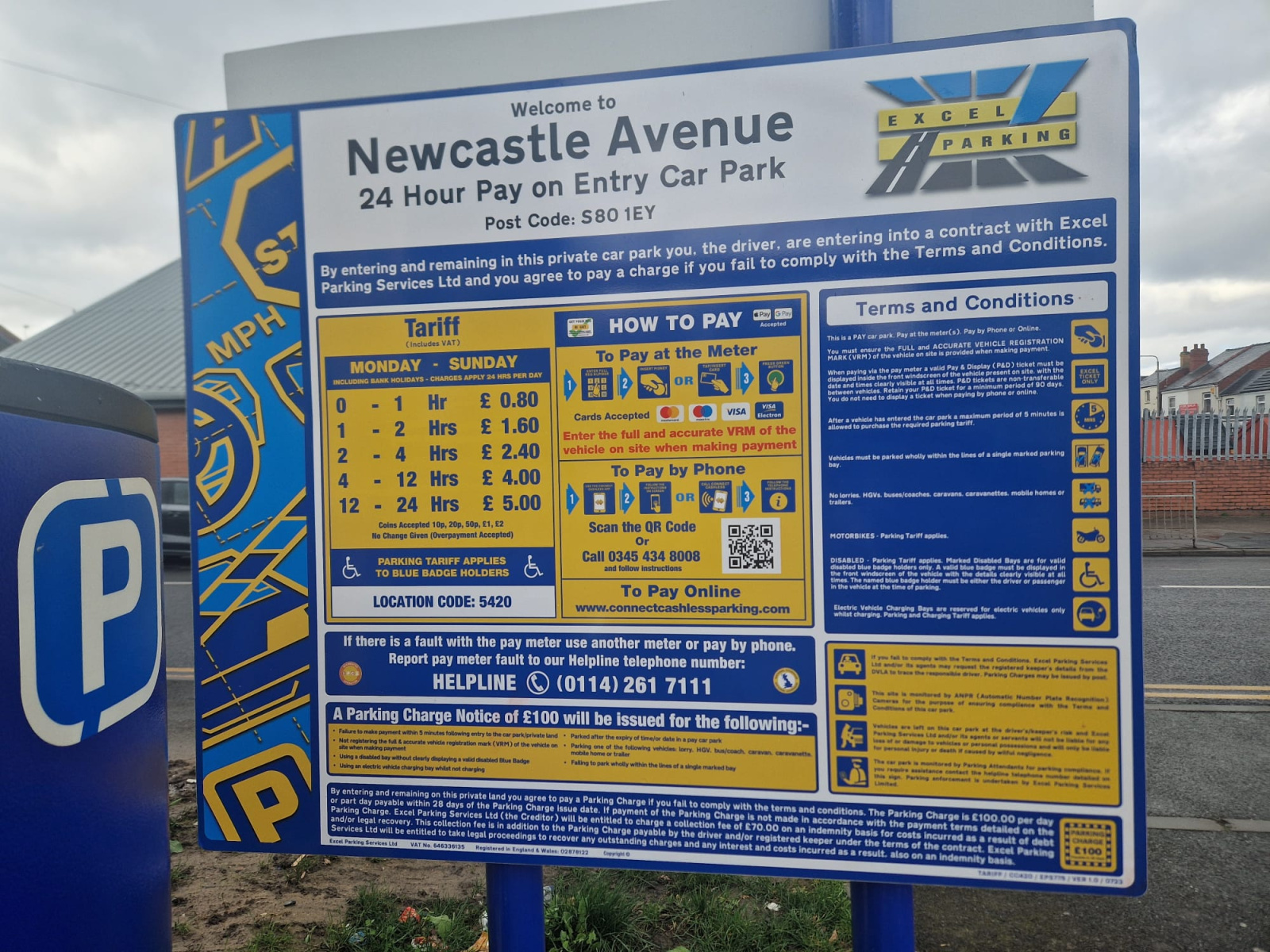
WITNESS STATEMENT OF [NAME]
I, [NAME], of [ADDRESS] am the Defendant in this matter. I make this witness statement from matters within my own knowledge and belief in support of my defence to the claim brought by Excel Parking Services Ltd.
Where facts are not within my own knowledge, they are true to the best of my information and belief.
- I am the registered keeper and driver of the vehicle referred to in these proceedings.
- This witness statement addresses the circumstances surrounding the alleged parking charges issued at Newcastle Avenue Car Park and explains why the claim is without merit.
- The Claimant alleges that parking charges were incurred on multiple dates in 2024. One of these charges, dated 07/11/2024, has since been discontinued by the Claimant.
- Accordingly, the matters remaining before the Court relate only to the remaining alleged parking events.
- At the relevant time I was employed as an NHS staff member working with the Courts, attending patients at the Probation Service building located directly opposite the Newcastle Avenue car park.
- My work required me to attend appointments at various sites on a strict schedule, and the Newcastle Avenue car park was the nearest available parking location that would allow me to meet appointments at this site.
- On each occasion in question, I made genuine attempts to comply with the parking terms and pay for parking.
- Any alleged breach occurred solely because of failures in the Claimant’s equipment and payment systems, combined with unclear and confusing signage.
The Parking Events
21 October 2024
- On this date I entered the Newcastle Avenue car park and purchased a parking ticket using the payment machine located on site.
- I paid for the appropriate period of parking and exited the car park within the time that had been paid for.
- However, the Claimant’s machine appears to have malfunctioned and recorded only part of my vehicle registration number on the ticket issued.
- At the time of purchase there was no indication that the machine had failed to correctly record my full registration number.
- I therefore reasonably believed that I had fully complied with the parking requirements.
- Evidence that the payment machines at the site were unreliable is supported by subsequent events.
- The Claimant issued a separate parking charge for 07 November 2024, which has since been discontinued.
- On that date the payment machine was completely non-functional, which demonstrates that the equipment at the site was experiencing faults during this period.
- The partial recording of my vehicle registration on 21 October 2024 is therefore consistent with the malfunctioning equipment present at the site at that time.
- A copy of the parking ticket showing the partially recorded registration is provided at Exhibit 1.
- Evidence relating to the use of an alternative payment method necessitated by the broken machine for the discontinued charge dated 07 November 2024 is provided at Exhibit 2.
14 November 2024
- On this date I again parked at the Newcastle Avenue car park in order to attend a patient appointment at the Probation Service building.
- On this occasion the payment machine was not operational.
- I attempted to purchase a ticket using the Connect mobile application, however the application repeatedly failed to function and crashed during the process.
- I attempted several times to complete payment but was unable to do so due to these technical failures.
- I contacted the Claimant’s helpline to report the malfunctioning payment machines and application on my next working day at the site. The signage at the location states that if a payment machine is faulty motorists should use another machine; however, both machines on site were non-functional. The signage then directs motorists to pay by phone, however the Connect cashless payment application was also non-functional and repeatedly failed during attempted use. The signage further instructs motorists to report faults to the helpline telephone number. It does not specify that such faults must be reported within any particular timeframe, nor does it state that payment attempts made after a system failure would be refused. I therefore followed the instructions provided on the signage and reported the issue via the helpline.
- I attempted to pay but was informed that payment could not be made retrospectively once the consideration period had elapsed but that the conversation would be noted.
- Despite making genuine attempts to comply with the parking terms, I was prevented from doing so due to failures in the Claimant’s systems.
- My call logs demonstrating attempts to contact the helpline and the failure of the app are provided at Exhibit 3.
Evidence of Technical Failures
- The call records show multiple attempts to contact the Claimant’s helpline regarding faults with the payment machine and application.
- These records demonstrate that I made genuine efforts to resolve the issue and comply with the parking requirements.
- The failures were entirely outside my control.
Inadequate and Confusing Signage
- I will provide photographs of the signage present at the site.
- The signage consists of large amounts of dense and confusing text.
- The signs contain numerous terms and conditions presented in a cluttered and contradictory manner.
- Significant portions of the signage use blue text on a yellow background.
- The British Parking Association Code of Practice warns that certain colour combinations, including blue on yellow, reduce readability, particularly in low lighting conditions.
- The signage is therefore difficult to read from within a vehicle.
- In order to read the signs properly a motorist must exit the vehicle and stand close to them.
- The photographs submitted required 2x zoom in order to capture the wording clearly, demonstrating how difficult the signs are to read from normal viewing distance.
- Photographs of the signage are provided at Exhibit 4.
Unreasonable Requirement to Read Multiple Signs
- The entrance signage directs motorists to further terms and conditions located elsewhere in the car park.
- A motorist entering the car park is therefore expected to:
- read the entrance sign while manoeuvring into the car park
- locate and secure a parking space
- locate additional signage near the parking space as this provides different information
- locate further terms displayed at the payment machine as directed by the entrance sign
- read and understand the full terms and conditions
- make payment
all within a five-minute period.
- This expectation is unreasonable, particularly where the payment machine is malfunctioning and the mobile application is not working.
Comparison with the Signage in ParkingEye v Beavis
- I will also provide a comparison between the signage used at this site and the signage considered by the Supreme Court in ParkingEye Ltd v Beavis [2015] UKSC 67.
- In the Beavis case the signage was large, clear, and prominently displayed, with the parking charge clearly visible.
- The signs in the present case are materially different.
- The initial sign on entrance is vague and refers you to another sign to read the terms and conditions. The terms and conditions are in small font buried among other large amounts of text.
- A copy of the Beavis signage for comparison is provided at Exhibit 5.
Lack of Legitimate Interest
- The Supreme Court in Beavis held that parking charges may only be enforceable where they protect a legitimate interest and where the terms are clearly communicated.
- In this case there can be no legitimate interest in penalising a motorist who made genuine attempts to pay but was prevented from doing so due to equipment failures.
- The facts of this case are therefore materially distinguishable from Beavis.
Inflated and Unlawful Charges
- The Claimant seeks to recover £510.
- The advertised parking charge is £100 per notice.
- The remainder appears to consist of so-called “debt recovery costs”.
- These sums were not incurred and represent an attempt at double recovery, contrary to the principles governing the small claims track.
Relevant Case Law
- In Civil Enforcement Ltd v Chan (2023) the court held that parking claims relying on vague and inadequate particulars may be struck out.
- Similarly, in Car Park Management Services Ltd v Akande (2023) the court criticised poorly particularised parking claims and emphasised the need for clarity.
- The Particulars of Claim in the present case are similarly sparse and unclear. They provide only a brief summary of the alleged breach and do not explain how the sum claimed has been calculated. The Defendant was therefore required to infer the basis of the claim from limited information.
Impact on the Defendant
- The ongoing issues surrounding these parking charges have caused considerable stress and disruption.
- At the time of the events I was working in a demanding NHS role with strict time pressures.
- The time required to deal with correspondence, appeals and legal proceedings has been substantial.
- This situation has caused significant personal distress resulting in my resignation from the role and disruption to my doctoral studies.
Conclusion
- I made genuine attempts to comply with the parking requirements on each occasion.
- Any alleged breach occurred solely because of failures in the Claimant’s equipment and unclear signage.
- The Claimant has failed to demonstrate that the terms were clearly communicated or that the charge protects any legitimate interest.
- For these reasons, I respectfully request that the Court dismiss the claim.
1 -
That's good. But this is wrong because Excel aren't in the BPA AOS:
The British Parking Association Code of Practice warns that certain colour combinations, including blue on yellow, reduce readability, particularly in low lighting conditions.
You should instead give the judge a hyperlink to v1 of the 2024 Joint Code of Practice (any relevant clauses you can find about signage. There are a few).
Also where you talk about the added £70 you should point out that:
The disproportionate added sum:
- isn't contractually agreed because the sign is wordy gobbledegook with none of terms readable and the added fake fee is at the bottom like an afterthought. It was never seen, nor 'bound to be seen' so the added £70 isn't a fair or prominent part of the contract. There's nothing about added fees either in the app or at the machine.
- falls foul of the Beavis case (use the wording in the newly edited template defence about para 3.4 of HHJ Moloney's judgment in Beavis which the Supreme Court upheld). Quote HHJ Moloney and link his transcript which is linked by the SC here:
https://ukscblog.com/case-preview-parkingeye-limited-v-beavis/
This is important to show the judge because adding a supposed 'collection fee' in unseen small print at the bottom of a cluttered visual 'soup' - an aberration of a consumer contract - is unfair and is also double recovery of the exact same heads of cost that HHJ Moloney listed were already more than covered by the £85 PCN in Beavis.
You also need to mention your costs (again you can crib from the end of the current Template Defence).
And you need the long statement of truth (it's not one short line. Don't ask AI). Pretty sure I mention the SoT in the WS & exhibits section of post 2 of the NEWBIES thread.
PRIVATE 'PCN'? DON'T PAY BUT DON'T IGNORE IT (except N.Ireland).
CLICK at the top or bottom of any page where it says:
Home»Motoring»Parking Tickets Fines & Parking - read the NEWBIES THREAD4 -
An observation - the PoC state the breach so the following paras are not relevant (they were, also, NOT in the Defence filed):-
"
Relevant Case Law"-Chan and Akande cases4 -
I've just given 2024 Joint Code of Practice and I actually feel more discouraged by it.
It states "Where a Parking Charge becomes overdue a sum of up to £70 may be added." Which is where the £170 (x3) fee they are trying to charge me has come from.
Excel also JUST meet the minimum requirements for signage outlined by them. The only thing I can really argue is the colour contrast. The entrance sign meets the requirements which then signposts me to the sign with the terms and conditions (the one I posted) where there is no real guidance.
The 5 minute grace period to read signs also appears to be acceptible.
0 -
"It states "Where a Parking Charge becomes overdue a sum of up to £70 may be added."
So did the BPA CoP. This scam add-on isn't new. That's been a disingenuous add-on that the industry invented for itself a few years back.
But judges don't take any notice of that clause.
HHJ Moloney's judgment in ParkingEye v Beavis proves the costs of the supposed 'enforcement' letter chain are in the PCN and "must be" (so said the Supreme Court).
Excel also JUST meet the minimum requirements for signage outlined by them. The only thing I can really argue is the colour contrast. The entrance sign meets the requirements which then signposts me to the sign with the terms and conditions (the one I posted) where there is no real guidance.
Never mind the self-serving Code! That wordy 'soup' of Excel's gobbledegook sign is AWFUL by any reasonable view and doesn't meet the legal test for prominence of terms. Look at the Consumer Rights Act 2015.
Certainly nobody could consider the added fake fee of £70 as prominent and therefore it IS NOT contractually agreed. None of the terms can be read either. They are in minuscule text! The CRA 2015 doesn't allow hidden terms and the HHJ Moloney judgment in Beavis proves the added £70 is double recovery. Unenforceable.
PRIVATE 'PCN'? DON'T PAY BUT DON'T IGNORE IT (except N.Ireland).
CLICK at the top or bottom of any page where it says:
Home»Motoring»Parking Tickets Fines & Parking - read the NEWBIES THREAD3 -
Thanks for everyone's help. In case it is to anyone elses benefit, this is my ammended and final witness statement as I need to submit before the deadline:
WITNESS STATEMENT OF ALICE MOSLIN
I, [name and address] am the Defendant in this matter. I make this witness statement from matters within my own knowledge and belief in support of my defence to the claim brought by Excel Parking Services Ltd.
Where facts are not within my own knowledge, they are true to the best of my information and belief.
- I am the registered keeper and driver of the vehicle referred to in these proceedings.
- This witness statement addresses the circumstances surrounding the alleged parking charges issued at Newcastle Avenue Car Park and explains why the claim is without merit.
- The Claimant alleges that parking charges were incurred on multiple dates in 2024. One of these charges, dated 07/11/2024, has since been discontinued by the Claimant.
- Accordingly, the matters remaining before the Court relate only to the remaining alleged parking events.
- At the relevant time I was employed as an NHS staff member working with the Courts, attending patients at the Probation Service building located directly opposite the Newcastle Avenue car park.
- My work required me to attend appointments at various sites on a strict schedule, and the Newcastle Avenue car park was the nearest available parking location that would allow me to meet appointments at this site.
- On each occasion in question, I made genuine attempts to comply with the parking terms and pay for parking.
- Any alleged breach occurred solely because of failures in the Claimant’s equipment and payment systems, combined with unclear and confusing signage.
The Parking Events
21 October 2024
- On this date I entered the Newcastle Avenue car park and purchased a parking ticket using the payment machine located on site (Exhibit 1).
- I paid for the appropriate period of parking and exited the car park within the time that had been paid for.
- However, the Claimant’s machine appears to have malfunctioned and recorded only part of my vehicle registration number on the ticket issued.
- At the time of purchase there was no indication that the machine had failed to correctly record my full registration number. I had made every effort to ensure that a full and accurate VRM was provided when making payment as per the terms and conditions.
- Nowhere within the terms and conditions does it state what action should be taken in the event that a full is not displayed on the parking tariff receipt after payment due to machine malfunction.
- I therefore reasonably believed that I had fully complied with the parking requirements.
- The Private Parking Sector Single Code of Practice (June 2024) (Exhibit 2) addresses issues relating to vehicle registration errors. Clause 6.3 states that operators should have documented procedures in place to avoid issuing or enforcing parking charges in cases of accidental keying errors and should adopt technologies that reduce such errors.
- Single-character vehicle registrations are extremely rare in the United Kingdom. It would therefore be reasonable to expect that the Claimant’s system would include basic validation checks to identify such an anomaly and prevent the taking of payment and the issue of a parking tariff receipt when the machine has failed to record the vehicle registration. The issue of a parking charge in these circumstances suggests a failure to apply appropriate safeguards against obvious keying machine errors.
- Evidence that the payment machines at the site were unreliable is supported by subsequent events. The Claimant issued a separate parking charge for 07 November 2024, which has since been discontinued.
- On that date both payment machines were completely non-functional which necessitated my payment using the Connect Cashless app (Exhibit 3). This demonstrates that the equipment at the site was experiencing faults during this period.
- The partial recording of my vehicle registration on 21 October 2024 is therefore consistent with the malfunctioning equipment present at the site at that time.
- The issue of keying errors and malfunctioning parking machines is not unique to my case. Reports have documented similar problems occurring with Excel Parking machines and at the Newcastle Avenue car park specifically (Exhibit 4).
- These articles are not relied upon as proof of the specific events in my case but are provided to demonstrate that such faults are known to occur and have been publicly reported. This supports the plausibility of my account that the machine malfunctioned and recorded my vehicle registration incorrectly despite payment being made.
- Without accepting fault for any keying error occurred, and maintaining that the machine malfunctioned when recording my vehicle registration number, I note that the Private Parking Sector Single Code of Practice (June 2024) provides clear guidance on how operators should deal with situations where payment has been made but the vehicle registration number has been entered incorrectly.
- Annex F.3 of the Code states that where a motorist has paid the parking tariff but made a major keying error when registering their vehicle, this should be treated as a mitigating circumstance. In such cases the operator should reduce the parking charge to £20 for a period of 14 days, provided appropriate evidence of payment is available.
- The Code specifically lists examples of such keying errors, including where letters are wrong or missing or where characters are incorrectly entered. In my case a ticket was successfully purchased but the machine recorded only a single character of the vehicle registration. This is consistent with either a machine malfunction or a keying error of the type anticipated by the Code.
- Despite clear evidence that payment had been made, the Claimant did not apply this mitigation. Instead, the charge was maintained at £60, which is substantially higher than the £20 level recommended by the Code for such circumstances.
- A copy of the Parking Charge Notice showing the charge of £60 is provided at Exhibit 5.
- Even if the Court were to conclude that the issue arose from a keying error rather than a machine malfunction, the Claimant’s failure to apply the mitigation recommended by the Code demonstrates that the charge being pursued is disproportionate and inconsistent with the standards expected of parking operators.
14 November 2024
- On this date I again parked at the Newcastle Avenue car park in order to attend a patient appointment at the Probation Service building.
- Both payment machines remained non-operational (following my previous visit which necessitated payment via the app consistent with the evidence in Exhibit 3).
- I attempted to purchase a ticket using the Connect mobile application, however the application repeatedly failed to function and crashed during the process (Exhibit 6).
- I attempted several times to complete payment but was unable to do so due to these technical failures. With patients waiting and the consideration period already lapsed, I proceeded with my work duties.
- I contacted the Claimant’s helpline to report the malfunctioning payment machines and application on my next working day at the site 19/11/24.
- The signage at the location states that if a payment machine is faulty motorists should use another machine; however, both machines on site were non-functional. The signage then directs motorists to pay by phone, however the Connect cashless payment application was also non-functional and repeatedly failed during attempted use (Exhibit 8c).
- The signage further instructs motorists to report faults to the helpline telephone number. It does not specify that such faults must be reported within any particular timeframe.
- The Private Parking Sector Single Code of Practice (June 2024) at Clause 6.1.1 requires that where on-site payment machines are installed, the signage must clearly state the consequences if a payment machine is unavailable. This includes explaining whether alternative payment methods exist, where they can be found, and whether a motorist must leave the site if payment cannot be made.
- The signage does not state that motorists must leave the site if payment cannot be made due to equipment failure, nor does it state that payment cannot be retrospectively after a system fault has been reported.
- In the absence of clear instructions explaining the consequence of machine failure, the signage fails to meet the transparency and clarity requirements set out in the Code and does not provide motorists with a clear understanding of their obligations.
- When I reported the fault on 19/11/24, I attempted to pay but was informed that payment could not be made retrospectively. I was informed that the conversation, including my attempt to pay retrospectively would be noted for later appeal.
- Despite making genuine attempts to comply with the parking terms, I was prevented from doing so due to failures in the Claimant’s systems.
Inadequate and Confusing Signage
- The signage at the site consists of large amounts of dense and confusing text (Exhibit 8). The photographs submitted required 2x zoom in order to capture the wording clearly, demonstrating how difficult the signs are to read from normal viewing distance.
- The signs contain numerous terms and conditions presented in a cluttered and contradictory manner.
- Significant portions of the signage use blue text on a yellow background.
- The signage at the site does not comply with the standards set out in the Private Parking Sector Single Code of Practice (June 2024), which requires that parking signs be “visible, legible and unambiguous to drivers”.
- The Code further states that signage must be conspicuous and legible in all lighting conditions during which the land may be accessed. The signs at this site are difficult to read in low lighting conditions due to the blue and yellow colour combination.
- Annex A.3 of the Private Parking Sector Single Code of Practice states that signage must have sufficient colour contrast between text and background in order to be legible to drivers. The guidance notes that the best practice is dark text, preferably black, on a white background, and warns that the use of corporate colours may create visibility problems.
- The manner in which crucial text was presented created significant barriers to being able to read or absorb the information. In my circumstances, when attempting to park quickly in order to attend a scheduled appointment, the combination of dense text and reduced colour contrast made it difficult to identify the key terms and instructions.
Unreasonable Requirement to Read Multiple Signs Within Consideration Period
- The entrance signage directs motorists to further terms and conditions located elsewhere in the car park.
- A motorist entering the car park is therefore expected to:
- read the entrance sign while manoeuvring into the car park
- locate and secure a parking space
- locate additional signage near the parking space as this provides different information
- locate further terms displayed at the payment machine as directed by the entrance sign
- read and understand the full terms and conditions
- make payment
all within a five-minute period.
- This expectation is unreasonable, particularly where the payment machine is malfunctioning and the mobile application is not working.
Comparison with the Signage in ParkingEye v Beavis
- I will also provide a comparison between the signage used at this site and the signage considered by the Supreme Court in ParkingEye Ltd v Beavis [2015] UKSC 67 (Exhibit 9).
- In the Beavis case the signage was large, clear, and prominently displayed, with the parking charge clearly visible.
- The signs in the present case are materially different.
- The initial sign on entrance is vague and refers you to another sign to read the terms and conditions. The terms and conditions are in small font buried among other large amounts of text.
- This places unrealistic expectation on a motorist to be able to read, absorb information within the consideration period.
Lack of Legitimate Interest
- The Supreme Court in Beavis held that parking charges may only be enforceable where they protect a legitimate interest and where the terms are clearly communicated.
- In this case there can be no legitimate interest in penalising a motorist who made genuine attempts to pay but was prevented from doing so due to equipment failures.
- The facts of this case are therefore materially distinguishable from Beavis.
Inflated and Unlawful Charges
- The Claimant seeks to recover £521.92 in addition to court fees and legal representative’s costs. The signage at the site does not clearly incorporate these additional sums into any contractual agreement with motorists. The parking charge itself is not presented within the main terms and conditions but appears within dense text in another section of the signage, while the additional £70 fee appears separately in smaller text at the bottom of the sign.
- The signage is heavily worded and cluttered, making it difficult to identify the key contractual terms. In these circumstances the additional charge cannot reasonably be considered a transparent or prominent contractual term. The Consumer Rights Act 2015 requires that consumer contract terms must be both transparent and prominent. A term is prominent only if it is brought to the consumer’s attention in such a way that an average consumer would be aware of it.
- There was no mention of any additional £70 fee in the payment instructions displayed at the machine or within the mobile payment application used for payment. The alleged additional fee therefore cannot be considered part of any contract formed at the time of parking. The remainder appears to consist of so-called “debt recovery costs”.
- The Claimant may seek to rely on the Supreme Court decision in ParkingEye Ltd v Beavis [2015] UKSC 67. However, the Supreme Court in ParkingEye Ltd v Beavis [2015] UKSC 67 made clear that the parking charge itself already funds the operation of the parking scheme. At paragraphs 98, 100, 193 and 198 the Court acknowledged that the parking charge covered the costs of operating the scheme and generated a profit for the operator.
- In the earlier High Court judgment, HHJ Moloney QC explained at paragraph 3.4 that the parking charge must be understood as covering the “costs of the operation” of the parking scheme. This reasoning was expressly upheld by the Supreme Court.
- The addition of a further £70 per parking charge therefore represents an attempt to recover operational costs that are already incorporated within the parking charge itself. Such additional sums amount to double recovery and were not part of the charging model considered acceptable in Beavis.
- In these circumstances the additional sum claimed appears to be an after-the-event addition rather than a contractual term that was clearly communicated to motorists at the time of parking.
Relevant Case Law
- In Civil Enforcement Ltd v Chan (2023) the court held that parking claims relying on vague and inadequate particulars may be struck out.
- Similarly, in Car Park Management Services Ltd v Akande (2023) the court criticised poorly particularised parking claims and emphasised the need for clarity.
- The Particulars of Claim in the present case are similarly sparse and unclear (Exhibit 10). They provide only a brief summary of the alleged breach and do not explain how the sum claimed has been calculated. The Defendant was therefore required to infer the basis of the claim from limited information.
Impact on the Defendant
- The ongoing issues surrounding these parking charges have caused considerable stress and disruption.
- At the time of the events I was working in a demanding NHS role with strict time pressures.
- The time required to deal with correspondence, appeals and legal proceedings has been substantial.
- This situation has caused significant personal distress resulting in my resignation from the role to avoid having to park at Newcastle Avenue car park and disruption to my doctoral studies.
Conclusion
- I made genuine attempts to comply with the parking requirements on each occasion.
- Any alleged breach occurred solely because of failures in the Claimant’s equipment and unclear signage.
- The Claimant has failed to demonstrate that the terms were clearly communicated or that the charge protects any legitimate interest.
- For these reasons, I respectfully request that the Court dismiss the claim.
Statement of Truth
I believe that the facts stated in this witness statement are true. I understand that proceedings for contempt of court may be brough against anyone who makes, or causes to be made, a false statement in a document verified by a statement of truth without an honest belief in its truth.
0









Confirm your email address to Create Threads and Reply

Categories
- All Categories
- 354.8K Banking & Borrowing
- 254.5K Reduce Debt & Boost Income
- 455.6K Spending & Discounts
- 247.6K Work, Benefits & Business
- 604.5K Mortgages, Homes & Bills
- 178.6K Life & Family
- 262.1K Travel & Transport
- 1.5M Hobbies & Leisure
- 16.1K Discuss & Feedback
- 37.7K Read-Only Boards