We’d like to remind Forumites to please avoid political debate on the Forum.
This is to keep it a safe and useful space for MoneySaving discussions. Threads that are – or become – political in nature may be removed in line with the Forum’s rules. Thank you for your understanding.
POPLA appeal - NTK issued to REGISTERED keeper of the vehicle (instead of KEEPER of the vehicle)
Comments
-
I believe that all the land to the south of Stansted airport, up to the A120, is covered by airport bylaws and so, whether they use PoFA compliant text or not is irrelevant as the land on which the BP petrol station is located is not "relevant land" for the purposes of PoFA 2012.
Also... why on earth are you saying in your appeal that "...I promptly provided MET with ***********'s details as one of the keeper and, presumably, the driver"? You either know or you don't. If the courts are not allowed to "presume", why are you trying to throw your friend under the proverbial bus by suggesting as much?
This is simply defended using the lack of keeper (registered or otherwise) liability.1 -
Agreed, why on earth would you name somebody and tell MET you presume they were the driver? They won't be your friends for long if you do that sort of thing to them.
There is no need at all to tell a story, only facts.
You have omitted some of the more important points as well, such as Byelaws apply, meaning the keeper can never be held liable.
Your appeal should include where relevant, but not be limited to,
Not the landowner
No standing to issue charges in their own name
Not the driver (and do not even give a hint as to whom it might have been)
Not relevant land/byelaws apply, therefore the keeper cannot be held liable
Non PoFA compliant NTK
Inadequate signage
BPA CoP failures
Anything else relevantI married my cousin. I had to...I don't have a sister. All my screwdrivers are cordless."You're Safety Is My Primary Concern Dear" - Laks2
 -
This should be point 1 as this is the easy win:
Non-POFA Compliance of Notice to Keeper:**
- The NTK did not include a warning about the right to recover unpaid charges after 28 days without the charges not being paid or the creditor not knowing both the name of the driver and its current address, as mandated by POFA paragraph 9 (2)(f) (i) and (ii).
- MET was informed of the correct keeper but failed to comply with POFA since the NTK was sent to me, the registered keeper, instead of the keeper, violating POFA paragraphs 9(4)(a) and (b) which require the notice to be given by handing, leaving it or posting it to a current address for service for the keeper
PRIVATE 'PCN'? DON'T PAY BUT DON'T IGNORE IT (except N.Ireland).
CLICK at the top or bottom of any page where it says:
Home»Motoring»Parking Tickets Fines & Parking - read the NEWBIES THREAD0 -
Thanks for the airport bylaws point. The Station in question is indeed in the airport area. Posting this as it could be useful for others. It can be found at: https://assets.publishing.service.gov.uk/media/64d0fc2ee5491a00134b5944/Archaeology_Desk_Based_Assessment_August_2023.pdf
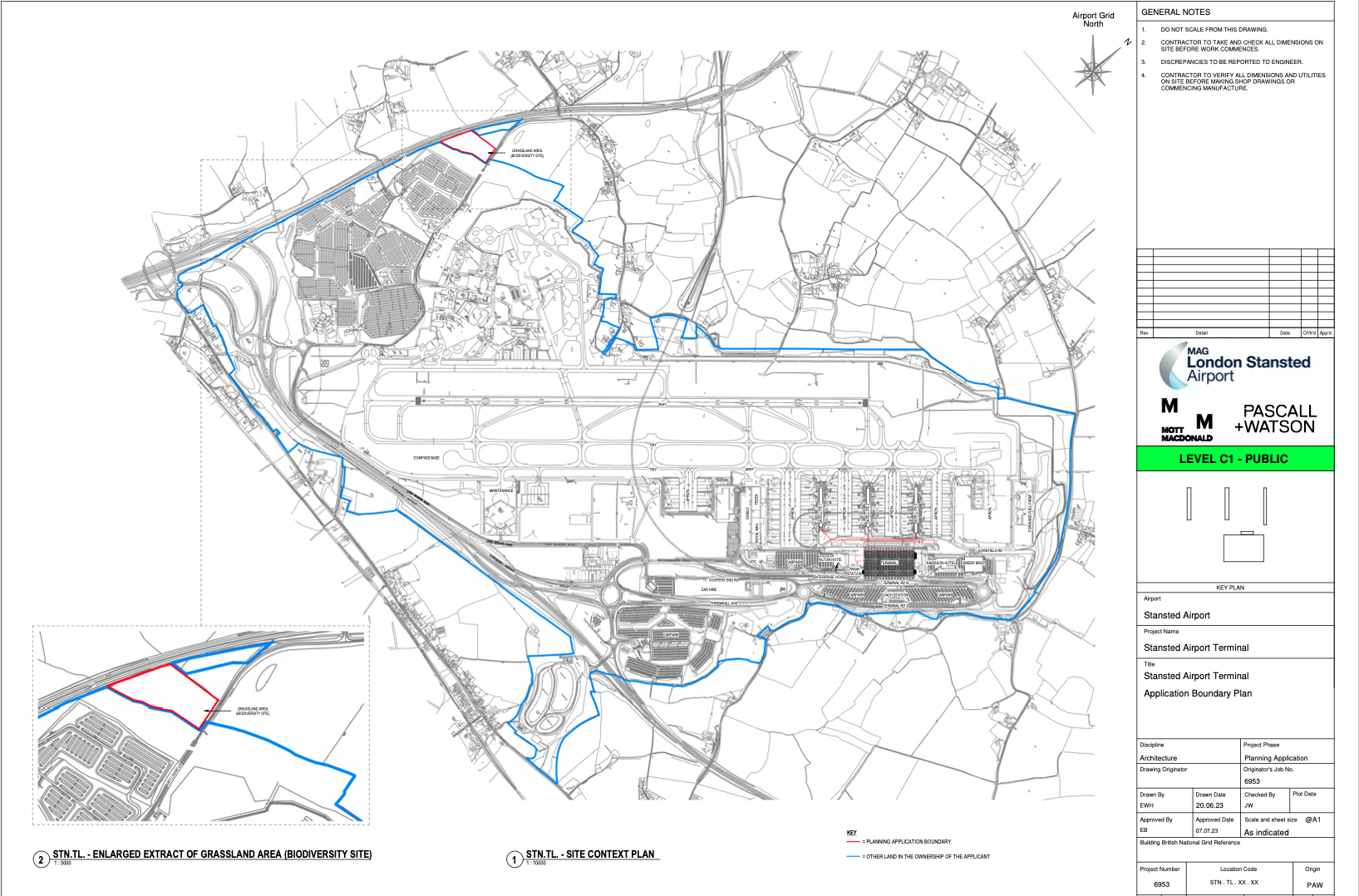 2
2 -
Ok, here is a much more elaborated defence:
**Summary of Appeal:**
1. **No Compliant Notice to Keeper (NTK) Served - No Keeper Liability:**
MET Parking (UK) Ltd failed to fulfil the 'second condition' for keeper liability, as defined in Schedule 4 of the Protection of Freedoms Act (POFA) 2012. Without a proper NTK, they lack lawful authority to pursue any parking charge from me, the registered keeper appellant.
2. **Airport Land Is Not 'Relevant Land':**
Under Schedule 4 of POFA 2012, Airport land falls outside the definition of 'relevant land.' As the location in question is subject to airport bylaws, it is not governed by POFA, and 'keeper liability' is not applicable.
3. **MET Using Airport Byelaw for Claims:**
MET's claim appears to rely on airport byelaws. I challenge them to provide specific details on which byelaw they claim was broken and why this would obligate payment to MET.
4. **Appellant Not Being the Individual Liable:**
MET has not established that the individual they are pursuing is the liable driver. Without proper evidence, POPLA must consider whether the assessor can confidently identify the driver.
5. **Non-Compliant Signage:**
MET's signs are not prominent, clear, or legible from all parking spaces, violating POFA Schedule 4 and the BPA Code of Practice. The entrance signs do not meet the requirement of being visible at the time of parking, and the lack of clear site boundaries renders any contract invalid.
6. **Lack of Standing/Authority from Landowner:**
MET needs to demonstrate written authority from the landowner, as required by Section 7 of the BPA Code of Practice. The mere site agreement as a contractor is insufficient to grant MET the right to sue in their name.
**Detailed Arguments:**
1) **No Compliant Notice to Keeper (NTK) Served - No Keeper Liability:**
MET Parking (UK) Ltd has not fulfilled the 'second condition' for keeper liability as defined in Schedule 4 and as a result, they have no lawful authority to pursue any parking charge from myself, as a registered keeper appellant. There is no discretion on this matter. If Schedule 4 mandatory documents are not served at all, or in time (or if the document omits any prescribed wording) then keeper liability simply does not apply.
The wording in the Protection of Freedoms Act (POFA) 2012 is as follows:
Right to claim unpaid parking charges from keeper of vehicle:
The NTK did not include a warning about the right to recover unpaid charges after 28 days without the charges not being paid or the creditor not knowing both the name of the driver and its current address, as mandated by POFA paragraph 9 (2)(f) (i) and (ii) which states that a NTK must:
9(2)(f) warn the keeper that if, at the end of the period of 28 days beginning with the day after that on which the notice to keeper is given—
(i)the amount of the unpaid parking charges (as specified under paragraph (c) or (d)) has not been paid in full, and
(ii)the creditor does not know both the name of the driver and a current address for service for the driver,
the creditor will (if all the applicable conditions under this Schedule are met) have the right to recover from the keeper so much of that amount as remains unpaid;
- MET has been informed of the correct keeper but failed to comply with POFA since the NTK was sent to me, the registered keeper, instead of the actual keeper of the vehicle that day, violating POFA paragraphs 9(4)(a) and (b) which require the notice to be given by handing, leaving it or posting it to a current address for service for the keeper.
As this operator has evidently failed to serve a NTK to the person they have been notified was the keeper of the vehicle, not only have they chosen to flout the strict requirements set out in PoFA 2012, but they have consequently failed to meet the second condition for keeper liability. Clearly I cannot be held liable to pay this charge as the mandatory series of parking charge documents were not properly given.
2. **Airport Land Is Not 'Relevant Land':**
Under Schedule 4 of PoFA 2012, section 1, it states that:
“(1) This schedule applies where –
(a) The driver of a vehicle is required by virtue of a relevant obligation to pay parking charges in respect of the parking of the vehicle on relevant land”. Following from this, in section 3, PoFA 2012 states that: “(1) In this schedule “relevant land” means any land (including land above or below ground level) other than - … (b) any land … on which the parking of a vehicle is subject to statutory control”. And that: “(3) For the purposes of sub-paragraph (1) (c) the parking of a vehicle on land is “subject to statutory control” if any statutory provision imposes a liability (whether criminal or civil, and whether in the form of a fee or charge or a penalty of any kind) in respect of the parking on that land of vehicles generally or of vehicles of a description that includes the vehicle in question”.
Since byelaws apply to Airport land, all the land to the south of Stansted airport, up to the A120, is covered by airport bylaws and BP Stansted SF Connect Station is within that area, the land is not relevant land within the meaning of PoFA and so is specifically excluded from 'keeper liability' under Schedule 4 of the Protection of Freedoms Act 2012. (Picture of Stansted map boundaries attached) As I am the registered keeper I am not legally liable, as this Act does not apply on this land. I ask MET for strict proof otherwise if they disagree with this point and would require them to show evidence including documentary proof from the airport authorities that this land is not already covered by byelaws. Airport land, being governed by Byelaws, is not relevant land and Keeper Liability under POFA does not apply, and therefore MET are unable to pursue the registered keeper in lieu of the driver’s details.
POPLA assessor Steve Macallan found in 6062356150 in September 2016 that land under statutory control cannot be considered ‘relevant land’ for the purposes of POFA 2012.
‘As the site is not located on ‘relevant land’, the operator is unable to rely on POFA 2012 in order to transfer liability to the hirer. Additionally, as I am not satisfied the appellant was the driver, I am unable to conclude that the operator issued the PCN correctly, and I must allow this appeal.’
Clearly, I cannot be held liable to pay this charge as the mandatory series of parking charge documents were not properly given. POPLA Assessor, if you think that looking at the Notice to Driver instead, and comparing that to the POFA is acceptable (as happened in a very wrong 'Gemini Parking' POPLA decision prior to Christmas that is in the public domain and needs addressing as a terrible POPLA error and woeful lack of POFA training) then you are not correct, must NOT take that step and must refer this case first, to your Lead Adjudicator, because POPLA is not entitled under any rule of law to make a finding against a registered keeper in a case without a Notice to Keeper. This will continue to be stated in appeals until all POPLA Assessors get this simple matter right.
3. **MET Using Airport Byelaw for Claims:**
By claiming charge is liable to them, it appears that MET are attempting to claim this under Airport byelaws. I reject this and put to them strictly to prove on which byelaw they claim is broken, and in any case, why this would result in an obligation to pay MET.!
I also refer to Freedom of Information Act Request – F0013227 whereby the Department for the Secretary of State for Transport has categorically stated that no confirmation or change in laws since the Airports Act 1993 came into force, which empower any person or body other than the courts to impose a penalty for breach of Byelaws 14(1), (2) or (3) made under Section 219 of the Transport Act 2000 (as amended) and made operational on 7 July 2005.!
Therefore, any breach of byelaws is a criminal offence, not a breach of any contract MET may say the driver entered in to. If the driver is found to have breached byelaws 14 (1-3), the resulting penalty is paid to the government, not to MET or the Airport. Further, byelaw offences are decided by the court, not by MET – the parking company or Airport can only allege the breach.
0 -
4. **Appellant Not Being the Individual Liable:**
MET has not shown that the individual who it is pursuing is in fact the driver who was liable for the charge. (ref POPLA case Carly Law 6061796103). In cases with a keeper appellant, yet no POFA 'keeper liability' to rely upon, POPLA must first consider whether they are confident that the assessor knows who the driver is, based on the evidence received. No presumption can be made about liability whatsoever. Any person(s), with the consent of the registered keeper, may drive a vehicle as long as the driver is insured.
Where a charge is aimed only at a driver then, of course, no other party can be told to pay. I am the appellant throughout (as I am entitled to be and as the Registered Keeper), and as there has been no admission regarding who was driving, and no evidence has been produced, it has been held by POPLA on numerous occasions, that a parking charge cannot be enforced against a keeper without a valid NTK.
Not being the owner of the vehicle, under the Airport byelaws the registered keeper of the vehicle cannot assumed to be the owner anymore than they can assumed to be the driver.
As the keeper of the vehicle, it is my right to choose not to name the driver, yet still not be lawfully held liable if MET is not using or complying with Schedule 4. This applies regardless of when the first appeal was made because the fact remains I am only the registered keeper and ONLY Schedule 4 of the POFA (or evidence of who was driving) can cause a registered keeper appellant to be deemed to be the liable party.
The burden of proof rests with MET, because they cannot use the POFA in this case, to show that (as an individual) I have personally not complied with terms in place on the land and show that I am personally liable for their parking charge. They cannot.
Furthermore, the vital matter of full compliance with the POFA 2012 was confirmed by parking law expert barrister, Henry Greenslade, the previous POPLA Lead Adjudicator, in 2015:
Understanding keeper liability
“There appears to be continuing misunderstanding about Schedule 4. Provided certain conditions are strictly complied with, it provides for recovery of unpaid parking charges from the keeper of the vehicle.!
There is no ‘reasonable presumption’ in law that the registered keeper of a vehicle is the driver. Operators should never suggest anything of the sort. Further, a failure by the recipient of a notice issued under Schedule 4 to name the driver, does not of itself mean that the recipient has accepted that they were the driver at the material time. Unlike, for example, a Notice of Intended Prosecution where details of the driver of a vehicle must be supplied when requested by the police, pursuant to Section 172 of the Road Traffic Act 1988, a keeper sent a Schedule 4 notice has no legal obligation to name the driver. If POFA 2012 Schedule 4 is not complied with then keeper liability does not generally pass."
Therefore, no lawful right exists to pursue unpaid parking charges from myself as registered keeper of the vehicle, where an operator is NOT attempting to transfer the liability for the charge using the Protection of Freedoms Act 2012.!
This exact finding was made in 6061796103 against ParkingEye in September 2016, where POPLA Assessor Carly Law found:!
"I note the operator advises that it is not attempting to transfer the liability for the charge using the Protection of Freedoms Act 2012 and so in mind, the operator continues to hold the driver responsible. As such, I must first consider whether I am confident that I know who the driver is, based on the evidence received. After considering the evidence, I am unable to confirm that the appellant is in fact the driver. As such, I must allow the appeal on the basis that the operator has failed to demonstrate that the appellant is the driver and therefore liable for the charge. As I am allowing the appeal on this basis, I do not need to consider the other grounds of appeal raised by the appellant. Accordingly, I must allow this appeal."
5. **Non-Compliant Signage:**
MET signs in this car park are not prominent, clear or legible from all parking spaces and there is no notice of the sum of the parking charge itself. Entrance signs which are mandatory under the code are not sufficiently visible and do not follow paragraph 18.3 of the code: "You must place signs containing the specific parking terms throughout the site, so that drivers are given the chance to read them at the time of parking or leaving their vehicle."
The entry sign is placed at an impractical and dangerous spot where the car clearly needs to be in movement.
The site boundaries are simply not defined, and as there are several different services in the area: BP Station is the only one referenced in the sign. The driver of my vehicle parked in front of the other one, clearly marked as "M&S simply food", and therefore the entrance sign can not be guessed to include this other service, nor the clients can be expected to infer boundaries of the site from such a description.
There was no signs at the petrol pumps nor in front of the entry door of "M&S simply food" which is where the car was parked, nor in any of the forefront parking area of "M&S simply food". Neither there is any sign referencing to BP in the window area corresponding to the shop marked as "M&S simply food", so it is unsound to pretend that clients will consider it as part of the BP site (pictures attached) Therefore there was neither contract nor agreement on the 'parking charge' at all. It is submitted that the driver did not have a fair opportunity to read about any terms involving this huge charge, which is out of all proportion and not saved by the dissimilar 'ParkingEye Ltd v Beavis' case. For a contract to be formed, one of the many considerations is that there must be adequate signage on entering the car park, and furthermore a Notice is not imported into the contract unless brought home “so prominently that the party ‘must’ have known of it” and agreed terms. I contend that this is not the case, and question the fact that the driver saw any sign specifying the amount of the ‘fine’ that would be due, and so there was no consideration or acceptance and no contract agreed between the parties!
In the Beavis case, which turned on specific facts relating only to the signs at that site and the unique interests and intentions of the landowners, the signs were unusually clear and not a typical example for this notorious industry. The Supreme Court were keen to point out the decision related to that car park and those facts only:
In the Beavis case, the £85 charge itself was in the largest font size with a contrasting colour background and the terms were legible, fairly concise and unambiguous. There were 'large lettering' signs at the entrance and all around the car park, according to the Judges.!
This case, by comparison, does not demonstrate an example of a clear defined sign that impressed the Supreme Court Judges and swayed them into deciding that in the specific car park in the Beavis case alone, a contract and 'agreement on the charge' existed.
Here, the signs, if they are placed, are out of the view of anyone parking and entering directly into the "M&S simply food" shop. If they exist somewhere else they are unremarkable, not any place near the pump stations, nor near the "M&S simply food" shop.
It is vital to observe, since 'adequate notice of the parking charge' is mandatory under the POFA Schedule 4 and the BPA Code of Practice, the entrance sign does not mention neither the need to pay, neither the parking charge, so it cannot be assumed that a driver drove past and could read a legible sign, nor parked near one.!
This case is more similar to the signage in POPLA decision 5960956830 on 2.6.16, where the Assessor Rochelle Merritt found as fact that signs in a similar size font in a busy car park where other unrelated signs were far larger, was inadequate:
''the signage is not of a good enough size to afford motorists the chance to read and understand the terms and conditions before deciding to remain in the car park. [...] In addition the operators signs would not be clearly visible from a parking space [...] The appellant has raised other grounds for appeal but I have not dealt with these as I have allowed the appeal.''
Under Lord Denning's Red Hand Rule, the charge (being 'out of all proportion' with expectations of drivers in this car park and which is the most onerous of terms) should have been effectively: 'in red letters with a red hand pointing to it' - i.e. VERY clear and prominent with the terms in large lettering, as was found to be the case in the car park in 'Beavis'. A reasonable interpretation of the 'red hand rule' and the 'signage visibility distance' tables above and the BPA Code of Practice, taking all information into account, would require a parking charge and the terms to be displayed far more transparently, on a lower sign and in far larger lettering. Indeed in the Consumer Rights Act 2015 there is a 'Requirement for transparency':!
(1) A trader must ensure that a written term of a consumer contract, or a consumer notice in writing, is transparent.!
(2) A consumer notice is transparent for the purposes of subsection (1) if it is expressed in plain and intelligible language and it is legible.
The Beavis case signs not being similar to the signs in this appeal at all, I submit that the persuasive case law is in fact 'Vine v London Borough of Waltham Forest [2000] EWCA Civ 106' about a driver not seeing the terms and consequently, she was NOT deemed bound by them.
This judgment is binding case law from the Court of Appeal and supports My argument, not the operator's case:
This was a victory for the motorist and found that, where terms on a sign are not seen and the area is not clearly marked/signed with prominent terms, the driver has not consented to - and cannot have 'breached' - an unknown contract because there is no contract capable of being established. The driver in that case (who had not seen any signs/lines) had NOT entered into a contract. The recorder made a clear finding of fact that the plaintiff, Miss Vine, did not see a sign because the area was not clearly marked as 'private land' and the signs were obscured/not adjacent to the car and could not have been seen and read from a driver's seat before parking.
So, for this appeal, I put MET to strict proof of where the car was parked and (from photos taken in the same lighting conditions) how their signs appeared on that date, at that time, from the angle of the driver's perspective. Equally, I require MET to show how the entrance signs appear from a driver's seat, not stock examples of 'the sign' in isolation/close-up. I submit that full terms simply cannot be read from a car before parking and mere 'stock examples' of close-ups of the (alleged) signage terms will not be sufficient to disprove this. Rather intersting that the pictures that came with the notice had no site entrance photos
6. **Lack of Standing/Authority from Landowner:**
Section 7 of the British Parking Association (BPA) Code of Practice requires parking operators to have the written authority from the landowner to operate on the land. Section 7.1 states:
“If you do not own the land on which you are carrying out parking management, you must have the written authorisation of the landowner (or their appointed agent). The written confirmation must be given before you can start operating on the land in question and give you the authority to carry out all the aspects of car park management for the site that you are responsible for. In particular, it must say that the landowner (or their appointed agent) requires you to keep to the Code of Practice and that you have the authority to pursue outstanding parking charges”.
Section 7.3 states: “The written authorisation must also set out:
a. the definition of the land on which you may operate, so that the boundaries of the land can be clearly defined!
b. any conditions or restrictions on parking control and enforcement operations, including any restrictions on hours of operation
c. any conditions or restrictions on the types of vehicles that may, or may not, be subject to parking control and enforcement!
d. who has the responsibility for putting up and maintaining signs!
e. the definition of the services provided by each party to the agreement.''
I do not believe that MET’s mere site agreement as a contractor issuing PCNs and letters 'on behalf of' an airport or BP station (whoever the real landowner is) gives the parking firm any rights to sue in their own name. This is insufficient to comply with the BPA Code of Practice and not enough to hold me liable in law to pay MET (not that a keeper can be liable anyway on non-relevant land and MET cannot enforce byelaws themselves, only the official authorities or site landowners can, by requiring the driver ONLY, to answer to a real fine at a Magistrates Court). MET have no title in this land and therefore have no standing to enforce 'parking charges' or penalties of any description in any court. No evidence has been supplied lawfully showing that MET are entitled to pursue these charges in their own right.
I require MET to provide a full copy of the contemporaneous, signed & dated (unredacted) contract with the landowner. I say that any contract is not compliant with the requirements set out in the BPA Code of Practice and does not allow them to charge and issue proceedings for this sum for this alleged contravention in this car park. In order to refute this it will not be sufficient for MET merely to supply a site agreement or witness statement, as these do not show sufficient detail (such as the restrictions, charges and revenue sharing arrangements agreed with a landowner) and may well be signed by a non-landholder such as another agent. In order to comply with paragraph 7 of the BPA Code of Practice, a non-landowner private parking company must have a specifically-worded contract with the landowner - not merely an 'agreement' with a non-landholder managing agent - otherwise there is no authority. I put MET to strict proof of compliance with all of the above requirements
0 -
No parking signs anywhere the entry where the car was parked
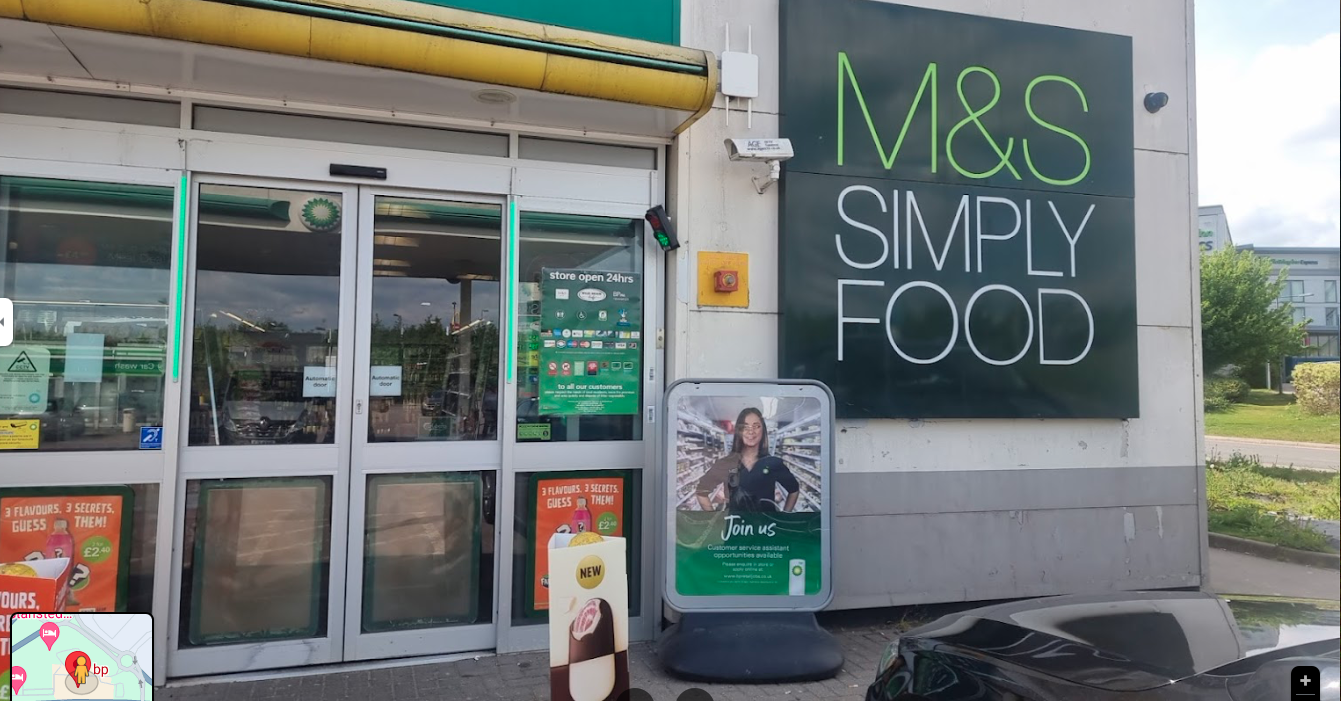
No parking signs anywhere in front of the M&S simply food store (nor reference to that being somehow part of the BP site referenced in the entry sign) 0
0 -
I wouldn't show those first 2 photos at all.PRIVATE 'PCN'? DON'T PAY BUT DON'T IGNORE IT (except N.Ireland).
CLICK at the top or bottom of any page where it says:
Home»Motoring»Parking Tickets Fines & Parking - read the NEWBIES THREAD1










Confirm your email address to Create Threads and Reply

Categories
- All Categories
- 354.6K Banking & Borrowing
- 254.5K Reduce Debt & Boost Income
- 455.5K Spending & Discounts
- 247.5K Work, Benefits & Business
- 604.4K Mortgages, Homes & Bills
- 178.6K Life & Family
- 262K Travel & Transport
- 1.5M Hobbies & Leisure
- 16.1K Discuss & Feedback
- 37.7K Read-Only Boards