We’d like to remind Forumites to please avoid political debate on the Forum.
This is to keep it a safe and useful space for MoneySaving discussions. Threads that are – or become – political in nature may be removed in line with the Forum’s rules. Thank you for your understanding.
PLEASE READ BEFORE POSTING: Hello Forumites! In order to help keep the Forum a useful, safe and friendly place for our users, discussions around non-MoneySaving matters are not permitted per the Forum rules. While we understand that mentioning house prices may sometimes be relevant to a user's specific MoneySaving situation, we ask that you please avoid veering into broad, general debates about the market, the economy and politics, as these can unfortunately lead to abusive or hateful behaviour. Threads that are found to have derailed into wider discussions may be removed. Users who repeatedly disregard this may have their Forum account banned. Please also avoid posting personally identifiable information, including links to your own online property listing which may reveal your address. Thank you for your understanding.
The MSE Forum Team would like to wish you all a Merry Christmas. However, we know this time of year can be difficult for some. If you're struggling during the festive period, here's a list of organisations that might be able to help
📨 Have you signed up to the Forum's new Email Digest yet? Get a selection of trending threads sent straight to your inbox daily, weekly or monthly!
Has MSE helped you to save or reclaim money this year? Share your 2025 MoneySaving success stories!
Maisonette rising + penetrating damp, who is responsible?

rduran1
Posts: 7 Forumite



Hi everyone. I recently bought a maisonette, leasehold. It's a first and second floor maisonette and I also have a entrance hallway on the ground floor. The ground floor shop owns the freehold. I have established a couple of issues with rising and penetrating damp
Rising damp - I've attached a picture of the floor plan and circled where the rising damp is; on the right hand side wall
I've done some researching and found mixed opinions as to whether it is for me to pay for to resolve, whether it's for the freeholder as they are responsible for the foundations etc, or whether it is a shared cost.... Is anyone able to advise?
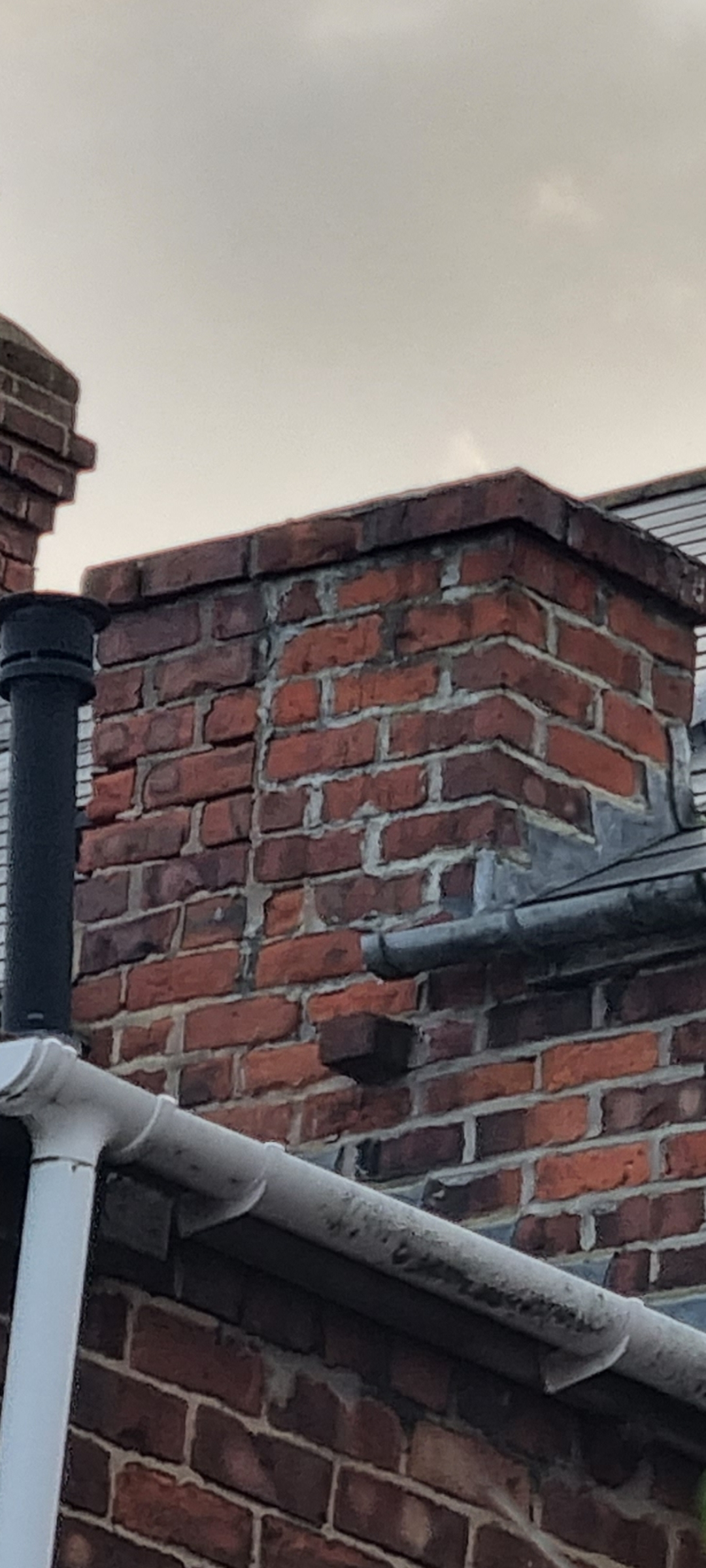
Penetrating damp - there is damp on the wall half way up the stairs going to the second floor. The previous owners were aware of this and said if is due to a leaking chimney stack. They said the had their side (now my side) and surrounding brickwork repointed, so if the damp is still coming through, then the damp should be coming through the neighbours side of the chimney breast... (photo attached where you can see the neighbours side to the left, looks in worse condition)
I'm unsure how to tackle this one, is this the responsibility of the neighbour to fix? What if they refuse, do I need to get a specialist in to provide the damp in my residence is a fault of their property etc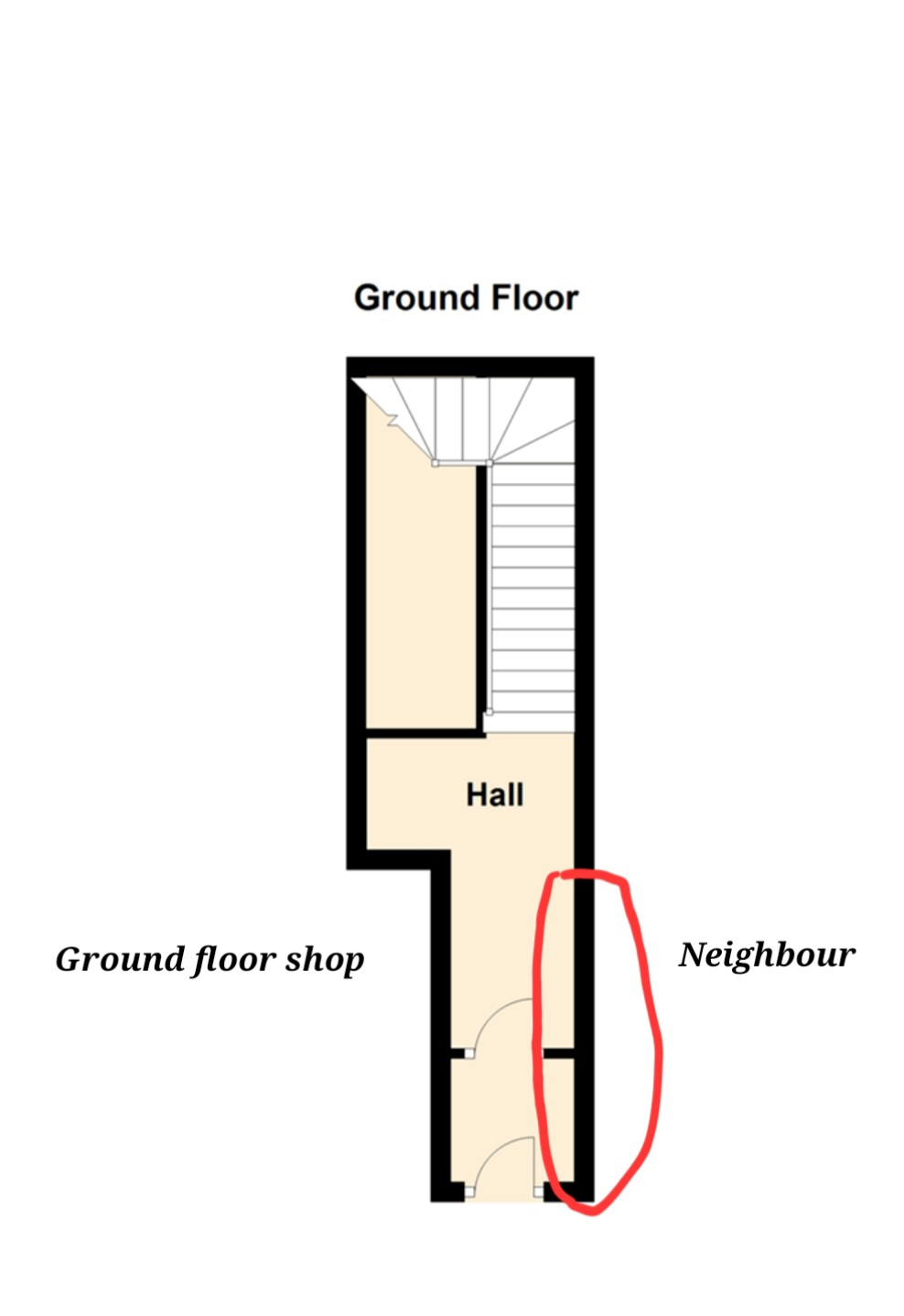
Rising damp - I've attached a picture of the floor plan and circled where the rising damp is; on the right hand side wall
I've done some researching and found mixed opinions as to whether it is for me to pay for to resolve, whether it's for the freeholder as they are responsible for the foundations etc, or whether it is a shared cost.... Is anyone able to advise?
Penetrating damp - there is damp on the wall half way up the stairs going to the second floor. The previous owners were aware of this and said if is due to a leaking chimney stack. They said the had their side (now my side) and surrounding brickwork repointed, so if the damp is still coming through, then the damp should be coming through the neighbours side of the chimney breast... (photo attached where you can see the neighbours side to the left, looks in worse condition)
I'm unsure how to tackle this one, is this the responsibility of the neighbour to fix? What if they refuse, do I need to get a specialist in to provide the damp in my residence is a fault of their property etc
0
Comments
-
Regarding the rising damp (if that's what it is) - it's a case of finding out which "bit of the building" needs to be repaired to cure it.
And then checking the lease to see who is responsible for that "bit of the building".
Why do you believe it's rising damp? Has a surveyor confirmed this? (If so, what type of surveyor?) For example, could it be a leaking pipe?
Regarding the chimney - tell your neighbour that their poorly pointed chimney is causing damp and damage to your property. If you want to get 'heavy', you could say that if they don't fix it in a reasonable time, you'll claim the cost of future damage from them.
0 -
Thanks so much for the replyeddddy said:
Regarding the rising damp (if that's what it is) - it's a case of finding out which "bit of the building" needs to be repaired to cure it.
And then checking the lease to see who is responsible for that "bit of the building".
Why do you believe it's rising damp? Has a surveyor confirmed this? (If so, what type of surveyor?) For example, could it be a leaking pipe?
Regarding the chimney - tell your neighbour that their poorly pointed chimney is causing damp and damage to your property. If you want to get 'heavy', you could say that if they don't fix it in a reasonable time, you'll claim the cost of future damage from them.
I had it surveyed by a chartered building surveyor, not a damp specialist.. I've attached their summary as an image. Would you expect me to cover the costs it takes to get a damp specialist to verify 'which bit of building' that you mentioned?
On the chimney, do they have any grounds to dispute this, or ask me to prove it is their fault? 0
0 -
If it's rising damp on a party wall, I guess the most likely cause is a failed DPC (damp proof course).
The DPC is part of a structural wall. Leases usually (but not always) say that freeholders are responsible for structural walls. But being a party wall, it's likely to be that your freeholder and the freeholder next door are jointly responsible.
But if it's your freeholder's responsibility - hopefully you just inform them, and they investigate and leave them to liaise with the neighbour etc.
But what is on the other side of the damp wall? Is there something that could be leaking? Or is the mains water supply pipe in that area? Or any other plumbing - like central heating pipes?rduran1 said:
Would you expect me to cover the costs it takes to get a damp specialist to verify 'which bit of building' that you mentioned?
In your case, that might be a more complex question to answer.
Generally, if you report a problem to a freeholder, they will get it investigated - because it doesn't cost them anything. They just add the cost to the service charge which leaseholders (including you) have to pay.
But in your case, does the freeholder own and rent out the shop? If so, the freeholder might end up paying part of the cost - so they might be less keen.
If the freeholder refuses to investigate, it gets more messy.rduran1 said:
On the chimney, do they have any grounds to dispute this, or ask me to prove it is their fault?
It doesn't really work like that.
The easiest route is...- You tell them further damage is likely to be caused to your property, if they don't repair their chimney
- If they do nothing, and further damage is caused - you send them a bill (for losses resulting from their negligence)
- If they don't pay the bill - you make a court claim for negligence against them for the money
- You tell the court why you think they were negligent, and what losses their negligence has caused
- They tell the court why they think they weren't negligent (e.g. because their chimney isn't causing the problem)
- The court decides who they agree with
The other route would be getting a court order (or injunction) that orders them to fix their chimney. But that's likely to cost you thousands of pounds.
0 -
This is so helpful, thank you!eddddy said:
If it's rising damp on a party wall, I guess the most likely cause is a failed DPC (damp proof course).
The DPC is part of a structural wall. Leases usually (but not always) say that freeholders are responsible for structural walls. But being a party wall, it's likely to be that your freeholder and the freeholder next door are jointly responsible.
But if it's your freeholder's responsibility - hopefully you just inform them, and they investigate and leave them to liaise with the neighbour etc.
But what is on the other side of the damp wall? Is there something that could be leaking? Or is the mains water supply pipe in that area? Or any other plumbing - like central heating pipes?rduran1 said:
Would you expect me to cover the costs it takes to get a damp specialist to verify 'which bit of building' that you mentioned?
In your case, that might be a more complex question to answer.
Generally, if you report a problem to a freeholder, they will get it investigated - because it doesn't cost them anything. They just add the cost to the service charge which leaseholders (including you) have to pay.
But in your case, does the freeholder own and rent out the shop? If so, the freeholder might end up paying part of the cost - so they might be less keen.
If the freeholder refuses to investigate, it gets more messy.rduran1 said:
On the chimney, do they have any grounds to dispute this, or ask me to prove it is their fault?
It doesn't really work like that.
The easiest route is...- You tell them further damage is likely to be caused to your property, if they don't repair their chimney
- If they do nothing, and further damage is caused - you send them a bill (for losses resulting from their negligence)
- If they don't pay the bill - you make a court claim for negligence against them for the money
- You tell the court why you think they were negligent, and what losses their negligence has caused
- They tell the court why they think they weren't negligent (e.g. because their chimney isn't causing the problem)
- The court decides who they agree with
The other route would be getting a court order (or injunction) that orders them to fix their chimney. But that's likely to cost you thousands of pounds.
I don't have the details of the lease agreement, I'll see if I can get those off the solicitor and check who is responsible for what etc
The otherside of the wall is exactly the same as my side, as that is also a maisonette and I've been inside, so a hallway and then staircase etc.. Which suggests it's the DPC?
There isn't a service charge in place, I've been here 15 months and not paid one
The freeholder owns and works in the shop, I actually purchased the maisonette off them, previously they owned the whole lot
All makes sense on the penetrating damp side of things!
0 -
rduran1 said:
There isn't a service charge in place, I've been here 15 months and not paid one
Maybe the freeholder hasn't done any repairs or maintenance in the last 15 months - so there's nothing to charge you for yet.
But what's happening about buildings insurance? Typically, the freeholder arranges that - then would ask you to pay part of it. (That would be a service charge.) Unless your lease says different.
Anyway, it sounds suspiciously like you might have an 'amateur' freeholder who doesn't have much experience of being a freeholder. In my experience, they can sometimes be very difficult to deal with. So it might be a case of starting by 'informally discussing' the issues with them, and see how things go.
1



Confirm your email address to Create Threads and Reply

Categories
- All Categories
- 352.9K Banking & Borrowing
- 253.9K Reduce Debt & Boost Income
- 454.7K Spending & Discounts
- 246K Work, Benefits & Business
- 602.1K Mortgages, Homes & Bills
- 177.8K Life & Family
- 259.9K Travel & Transport
- 1.5M Hobbies & Leisure
- 16K Discuss & Feedback
- 37.7K Read-Only Boards