We’d like to remind Forumites to please avoid political debate on the Forum.
This is to keep it a safe and useful space for MoneySaving discussions. Threads that are – or become – political in nature may be removed in line with the Forum’s rules. Thank you for your understanding.
📨 Have you signed up to the Forum's new Email Digest yet? Get a selection of trending threads sent straight to your inbox daily, weekly or monthly!
The Forum now has a brand new text editor, adding a bunch of handy features to use when creating posts. Read more in our how-to guide
Crack in ceiling below stud wall

greensalad
Posts: 2,530 Forumite




I'm really having all the fun today...
There has always been a fairly straight crack across our entire kitchen ceiling since we moved in. It goes edge to edge, even down into the coving. I figured it was just where the plasterboard joints had been and somehow had some movement over the years and planned to tackle it whenever we renovate the kitchen.
However today a chunk of the plaster has fallen out of it.
It's directly below our bedroom/en suite separating wall upstairs, which is studwork. It's not wet or anything, and I can't see any evidence of a leak either upstairs or on the ceiling.
Should we be worried? Or just monitor and mitigate when we renovate the kitchen?
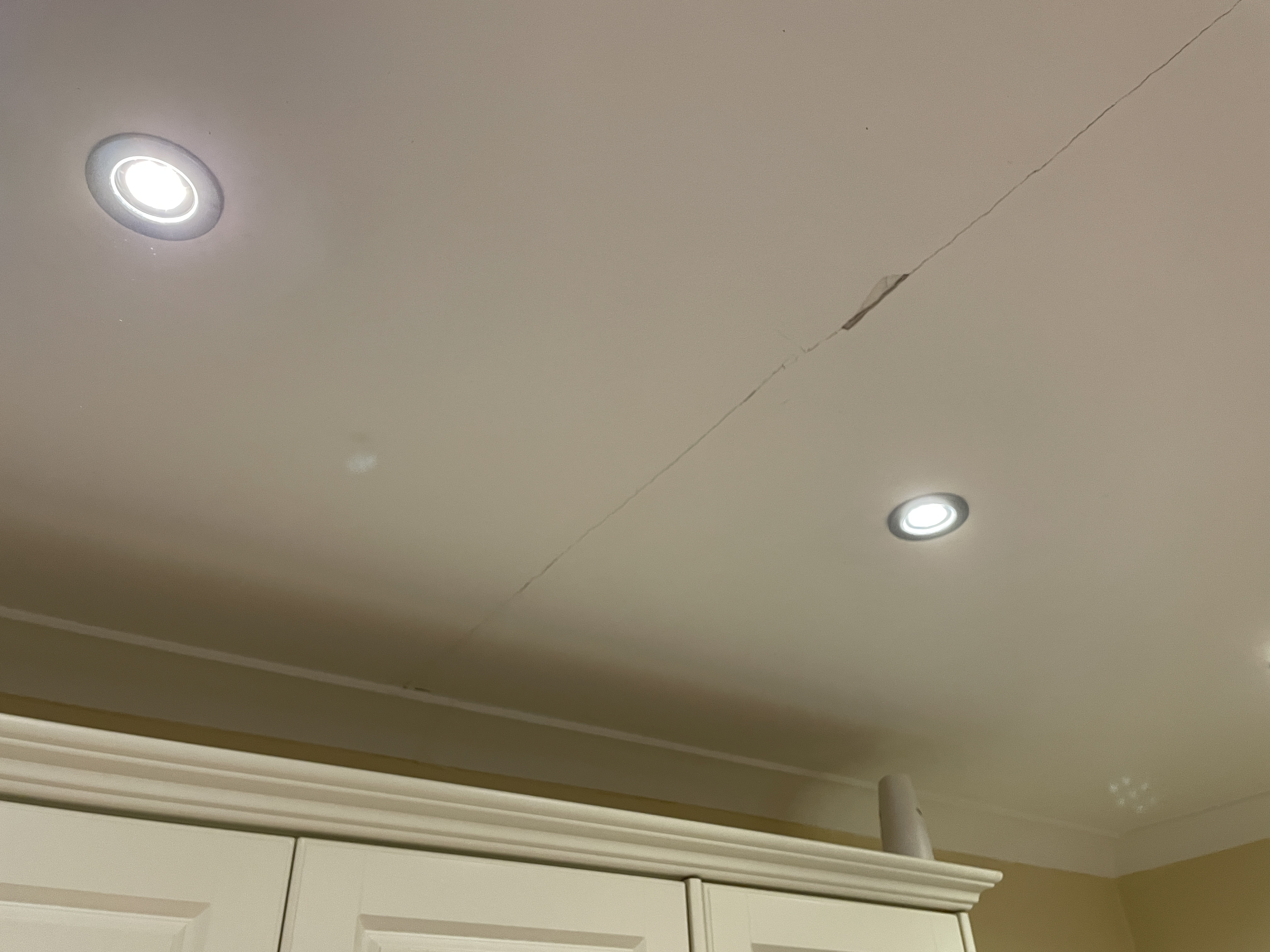

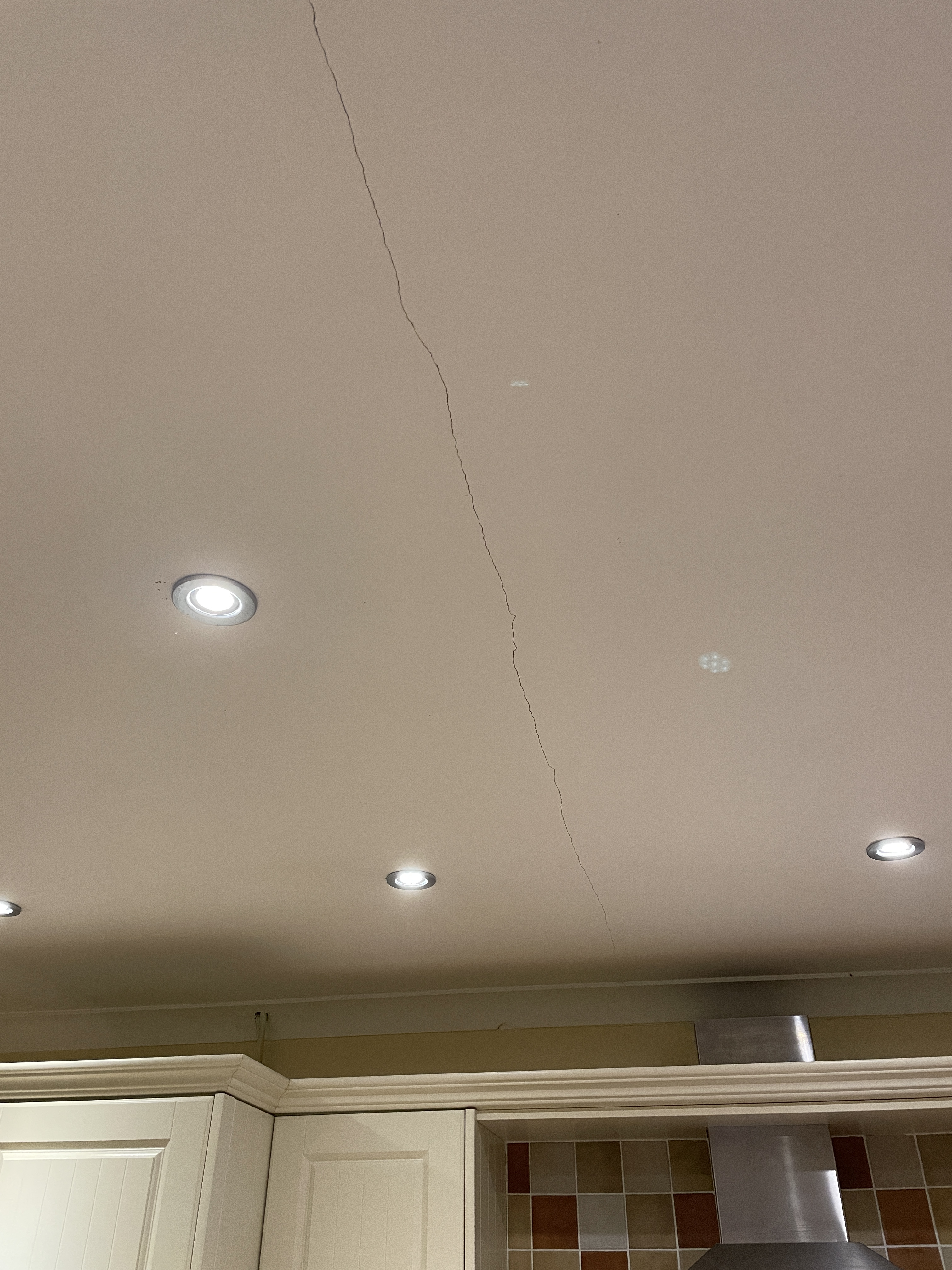
There has always been a fairly straight crack across our entire kitchen ceiling since we moved in. It goes edge to edge, even down into the coving. I figured it was just where the plasterboard joints had been and somehow had some movement over the years and planned to tackle it whenever we renovate the kitchen.
However today a chunk of the plaster has fallen out of it.
It's directly below our bedroom/en suite separating wall upstairs, which is studwork. It's not wet or anything, and I can't see any evidence of a leak either upstairs or on the ceiling.
Should we be worried? Or just monitor and mitigate when we renovate the kitchen?
0
Comments
-
Absolutely nothing to worry about. It’s a crack in the plaster between two plasterboards. Nothing structural or serious, just aesthetic.
easy, cheap fix.1 -
Has any extra weight been put on floor above that area since you moved in, ie fitted wardrobes, new en suite?Play with the expectation of winning not the fear of failure. S.Clarke0
-
Absolutely terrible advice. You can't know that it isn't something structural or serious just from those pictures.aoleks said:Absolutely nothing to worry about. It’s a crack in the plaster between two plasterboards. Nothing structural or serious, just aesthetic.
easy, cheap fix.
0 -
greensalad said:
There has always been a fairly straight crack across our entire kitchen ceiling since we moved in.Is this the house you were asking about making some changes to the upstairs room layout a while back? Or have I got the wrong one?If it is, then is the stud wall above the crack either of the walls which run along the sides of the first floor landing area? IIRC there was a suspicion they might be structural.0 -
Yep it is that house but I don't think that's it!Section62 said:greensalad said:
There has always been a fairly straight crack across our entire kitchen ceiling since we moved in.Is this the house you were asking about making some changes to the upstairs room layout a while back? Or have I got the wrong one?If it is, then is the stud wall above the crack either of the walls which run along the sides of the first floor landing area? IIRC there was a suspicion they might be structural.
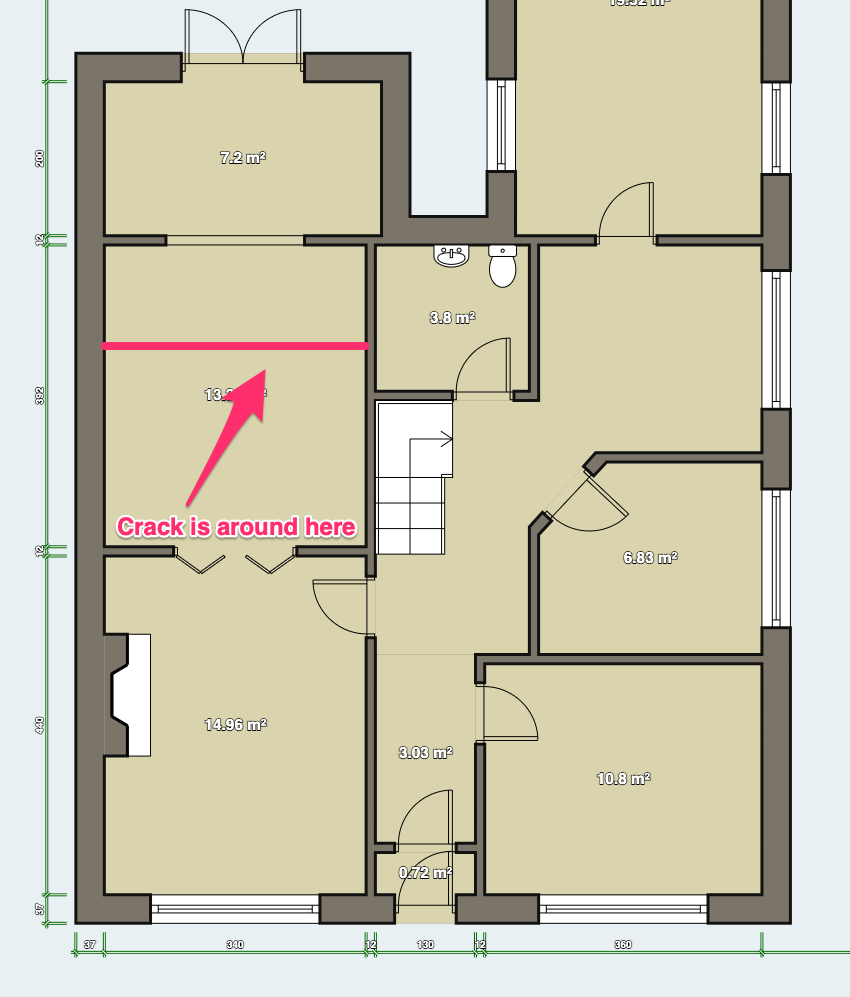
So firstly I've realised it isn't the internal wall between our en suite and bedroom, it's actually matching up with the outer edge of our dormer extension. So it's an external wall with a window in it that is above this point. However that is also stud and timber construction.
I don't think it's caused by any of the work we did upstairs, as that was on the front side of the house and this would be the back wall of the house.
We found the structural timbers when we did the work (we had to change our plans for that reason) but the only edits made to the original walls where cutting two openings in them, which are well away from this issue.0 -
Downstairs:
Upstairs: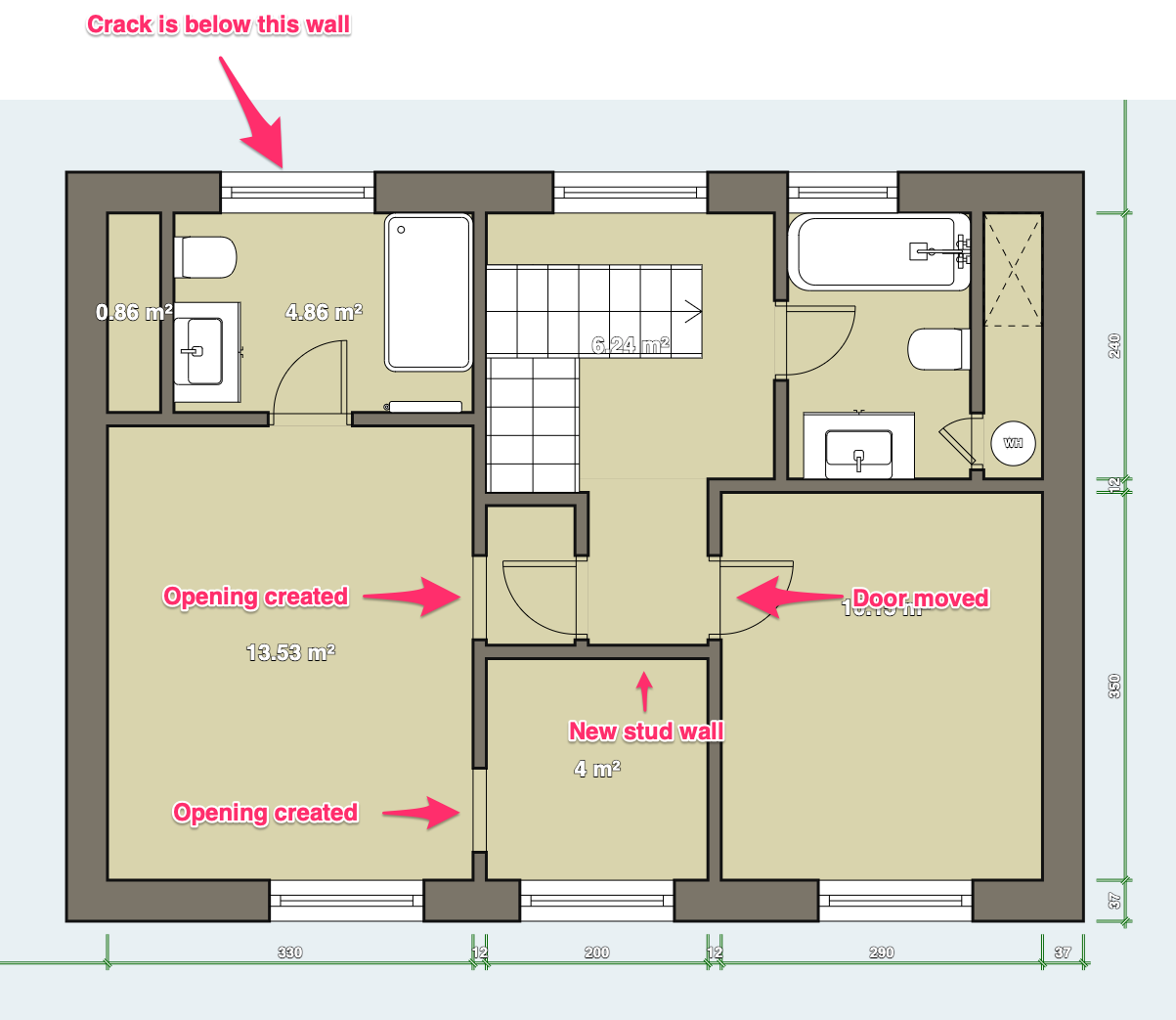
0 -
that external wall on the first floor MUST be resting on something, so you would have some beams/timbers below.
since you didn't touch that, I would stick to my advice that it's mainly cosmetic.0 -
You shouldn't be offering "advice" on something you don't know or understand about. Especially when it relates to a matter of potential structural (in)adequacy that might put people and/or their property at risk.aoleks said:that external wall on the first floor MUST be resting on something, so you would have some beams/timbers below.
since you didn't touch that, I would stick to my advice that it's mainly cosmetic.People who do know what they are talking about wouldn't give that advice.0 -
greensalad said:
Yep it is that house but I don't think that's it!Section62 said:greensalad said:
There has always been a fairly straight crack across our entire kitchen ceiling since we moved in.Is this the house you were asking about making some changes to the upstairs room layout a while back? Or have I got the wrong one?If it is, then is the stud wall above the crack either of the walls which run along the sides of the first floor landing area? IIRC there was a suspicion they might be structural.
So firstly I've realised it isn't the internal wall between our en suite and bedroom, it's actually matching up with the outer edge of our dormer extension. So it's an external wall with a window in it that is above this point. However that is also stud and timber construction.
I don't think it's caused by any of the work we did upstairs, as that was on the front side of the house and this would be the back wall of the house.
We found the structural timbers when we did the work (we had to change our plans for that reason) but the only edits made to the original walls where cutting two openings in them, which are well away from this issue.Are you sure that is the position of the (rear?) external wall? If it is, then the right hand end/corner would appear to be above a window - which for structural/aesthetic resaons is usually avoided.Being stud construction doesn't mean it isn't loadbearing - as per the two internal walls on the first floor. Somehow the roof load has to be carried down to the foundations and this (as was the case in your previous thread) would cause me some concern as the layout lacks some of the features which are the norms of dealing with loads in traditional methods of domestic building.I wouldn't necessarily suggest your alterations are the cause of the crack (especially as it has been there from the start) but it is possible there are structural elements above the kitchen ceiling which have (or are) moving from loads above. This is why the "advice" from aoleks is wrong - the logic he uses incorrectly excludes the possibilty of a pre-existing structural issue.If you are sure the external wall is above the kitchen then you need to get a structural engineer to inspect and advise.0 -
There's a fair chance it's a structural crack. Plasterboard ceiling boards are normally staggered, so any movement doesn't go right across the room.
The fact that it's under the wall suggests a bit of deflection in the beam.1






Confirm your email address to Create Threads and Reply

Categories
- All Categories
- 354.3K Banking & Borrowing
- 254.4K Reduce Debt & Boost Income
- 455.4K Spending & Discounts
- 247.2K Work, Benefits & Business
- 603.9K Mortgages, Homes & Bills
- 178.4K Life & Family
- 261.4K Travel & Transport
- 1.5M Hobbies & Leisure
- 16.1K Discuss & Feedback
- 37.7K Read-Only Boards