We’d like to remind Forumites to please avoid political debate on the Forum.
This is to keep it a safe and useful space for MoneySaving discussions. Threads that are – or become – political in nature may be removed in line with the Forum’s rules. Thank you for your understanding.
Decoupling of electricity and gas prices
Comments
-
jj_43 said:Section62 said:
Feel free to explain...jj_43 said:Section62 said:
So if we do that, UK consumers will be paying more on their bills to fund the additional generation capacity required for resilience, which is currently achieved in part by being linked to our neighbours.jj_43 said:it can be achieved by decoupling our energy from the international markets which will be the solution needed.Also, we are currently (and have been for much of at least the last week) sending about 3GW of electricity to France - about 9% of what is currently on the UK Grid. If we cut outselves off from the international markets we would lose the opportunity for UK consumers to be subsidised by selling energy to other countries that need it. And cutting ourselves off from the Republic of Ireland in particular may have 'political' consequences.We are - whether you like it or not - part of the international energy markets. Changing that won't necessarily lead to a better outcome."If we cut outselves off from the international markets we would lose the opportunity for UK consumers to be subsidised by selling energy to other countries that need it."
lol, repeat lol. It doesn't work like that at all.
ok
the industry model is each energy company has downstream, midstream, upstream p&l.
downstream is the energy retailer to the customer. midstream is the trading unit for the downstream p&l, upstream has all the assets (generation, gas, oil). Each p&l feeds into group, they have strategies, targets, kpi to meet.
downstream will forecast demand, and do hedging. They ask midstream to sell/purchase, who transact at the market price quoted on screen.
downstream will price and create tariffs for the customer. They add up all the costs, including latest commodity costs to form the price and tariff is created.
In these activities there is no decision or conversation such as "upstream are making 8 times more on gas this year" so we have £100m to give to downstream, or lets buy LNG from the US and ship it over to UK and use this cheap gas to provide a cheap tariff to customers that advantage is for the upstream or midstream p&l.Where has it been suggested that such a "decision or conversation" occurs? Or is that just something of your own invention?I refer you to the posts of SparkyGrad and QrizB. Your description of the "industry model" makes no reference - other than perhaps the vague "strategies, targets, kpi" - to the obligations the industry has to keep the lights on, with a supply which conforms to the statutory requirements, and to achieve that 24/7 against a background of variable demand.The cost of security of supply and resilience is factored into what the consumer ends up paying.By linking our grid with that of neighbouring countries we are able to both i) invest less in 'spare' generation capacity and ii) use surplus generation capacity to help our neighbours (at a cost to them)Going 'solo' would mean either accepting a less reliable and stable supply or making further investment to achieve that reliability and stability exclusively from our own resources. Further investment = increased costs.
Because a regulator has told you that you can only be in business selling things (either for £1 or £2) provided you follow certain rules, one of which is ensuring you having enough good quality £1 stuff to sell? (grossly oversimplified, but for reasons of clarity)jj_43 said:as others put it, why would I sell something to you for a £1, when i can sell it for £2?
2 -
Octopus - Octopus Energy Generationpochase said:
If each supplier had/has an upstream that makes billions why did 30 suppliers go bust last year? Did the upstream just feel no longer like having a supply division? Can you just give us a list who the upstream companies were?jj_43 said:Section62 said:
Feel free to explain...jj_43 said:Section62 said:
So if we do that, UK consumers will be paying more on their bills to fund the additional generation capacity required for resilience, which is currently achieved in part by being linked to our neighbours.jj_43 said:it can be achieved by decoupling our energy from the international markets which will be the solution needed.Also, we are currently (and have been for much of at least the last week) sending about 3GW of electricity to France - about 9% of what is currently on the UK Grid. If we cut outselves off from the international markets we would lose the opportunity for UK consumers to be subsidised by selling energy to other countries that need it. And cutting ourselves off from the Republic of Ireland in particular may have 'political' consequences.We are - whether you like it or not - part of the international energy markets. Changing that won't necessarily lead to a better outcome."If we cut outselves off from the international markets we would lose the opportunity for UK consumers to be subsidised by selling energy to other countries that need it."
lol, repeat lol. It doesn't work like that at all.
ok
the industry model is each energy company has downstream, midstream, upstream p&l.
downstream is the energy retailer to the customer. midstream is the trading unit for the downstream p&l, upstream has all the assets (generation, gas, oil). Each p&l feeds into group, they have strategies, targets, kpi to meet.
downstream will forecast demand, and do hedging. They ask midstream to sell/purchase, who transact at the market price quoted on screen.
downstream will price and create tariffs for the customer. They add up all the costs, including latest commodity costs to form the price and tariff is created.
In these activities there is no decision or conversation such as "upstream are making 8 times more on gas this year" so we have £100m to give to downstream, or lets buy LNG from the US and ship it over to UK and use this cheap gas to provide a cheap tariff to customers that advantage is for the upstream or midstream p&l.
as others put it, why would I sell something to you for a £1, when i can sell it for £2?
Just out of interest who are the upstream companies for example for Octopus, Ecotricity or Green Energy UK.
Ecotricity - Generation and Development0 -
"Where has it been suggested that such a "decision or conversation" occurs? Or is that just something of your own invention?"Section62 said:jj_43 said:Section62 said:
Feel free to explain...jj_43 said:Section62 said:
So if we do that, UK consumers will be paying more on their bills to fund the additional generation capacity required for resilience, which is currently achieved in part by being linked to our neighbours.jj_43 said:it can be achieved by decoupling our energy from the international markets which will be the solution needed.Also, we are currently (and have been for much of at least the last week) sending about 3GW of electricity to France - about 9% of what is currently on the UK Grid. If we cut outselves off from the international markets we would lose the opportunity for UK consumers to be subsidised by selling energy to other countries that need it. And cutting ourselves off from the Republic of Ireland in particular may have 'political' consequences.We are - whether you like it or not - part of the international energy markets. Changing that won't necessarily lead to a better outcome."If we cut outselves off from the international markets we would lose the opportunity for UK consumers to be subsidised by selling energy to other countries that need it."
lol, repeat lol. It doesn't work like that at all.
ok
the industry model is each energy company has downstream, midstream, upstream p&l.
downstream is the energy retailer to the customer. midstream is the trading unit for the downstream p&l, upstream has all the assets (generation, gas, oil). Each p&l feeds into group, they have strategies, targets, kpi to meet.
downstream will forecast demand, and do hedging. They ask midstream to sell/purchase, who transact at the market price quoted on screen.
downstream will price and create tariffs for the customer. They add up all the costs, including latest commodity costs to form the price and tariff is created.
In these activities there is no decision or conversation such as "upstream are making 8 times more on gas this year" so we have £100m to give to downstream, or lets buy LNG from the US and ship it over to UK and use this cheap gas to provide a cheap tariff to customers that advantage is for the upstream or midstream p&l.Where has it been suggested that such a "decision or conversation" occurs? Or is that just something of your own invention?I refer you to the posts of SparkyGrad and QrizB. Your description of the "industry model" makes no reference - other than perhaps the vague "strategies, targets, kpi" - to the obligations the industry has to keep the lights on, with a supply which conforms to the statutory requirements, and to achieve that 24/7 against a background of variable demand.The cost of security of supply and resilience is factored into what the consumer ends up paying.By linking our grid with that of neighbouring countries we are able to both i) invest less in 'spare' generation capacity and ii) use surplus generation capacity to help our neighbours (at a cost to them)Going 'solo' would mean either accepting a less reliable and stable supply or making further investment to achieve that reliability and stability exclusively from our own resources. Further investment = increased costs.
Because a regulator has told you that you can only be in business selling things (either for £1 or £2) provided you follow certain rules, one of which is ensuring you having enough good quality £1 stuff to sell? (grossly oversimplified, but for reasons of clarity)jj_43 said:as others put it, why would I sell something to you for a £1, when i can sell it for £2?
- Its from my commercial background, these are the types of conversation held. There is no "oh we made £10m last week exporting energy to France, shall we reduce our tariffs".
I don't know your mates "SparkyGrad and QrizB" I assume they are not in these meetings and listen to what is told them.
"industry model" meaning the typical setup structure of the energy industry that affect your business, i.e. what your main competitors are doing, i.e. the big 5/6, i.e. not Robin Hood energy.
"The cost of security of supply and resilience is factored into what the consumer ends up paying." lol how's that coming along? lol
"By linking our grid with that of neighbouring countries we are able to both i) invest less in 'spare' generation capacity and ii) use surplus generation capacity to help our neighbours (at a cost to them)"
ok so being less resilience, and more dependent upon neighbours and hoping they have spare generation capacity, how's that coming along? - you miss the point that energy is scarce and our neighbours will look at their own interests. You also don't understand that grid linkages set our energy prices to the highest level elsewhere. grid flexibility is great for midstream, the solution you need is demand flexibility, grid capacity forms only a small part of our usage that it can be replaced by demand flexibility, but this small part set the energy prices to the highest levels.
"Going 'solo' would mean either accepting a less reliable and stable supply or making further investment to achieve that reliability and stability exclusively from our own resources. Further investment = increased costs." Everything you state here is the current situation that's with your "dependant on others" approach.
We need more efficient energy usage/lower demand, more generation, better price signals, flexible demand patterns.
Your cosy view that the energy industry are exporting energy for France to lower your bills just isn't true.
0 -
So you want energy customers in the UK paying for additional generation capacity so that energy companies can export it, that's the current situation how's that coming along?[Deleted User] said:
It could, if we have the excess generation that you suggest building.jj_43 said:Section62 said:
So if we do that, UK consumers will be paying more on their bills to fund the additional generation capacity required for resilience, which is currently achieved in part by being linked to our neighbours.jj_43 said:it can be achieved by decoupling our energy from the international markets which will be the solution needed.Also, we are currently (and have been for much of at least the last week) sending about 3GW of electricity to France - about 9% of what is currently on the UK Grid. If we cut outselves off from the international markets we would lose the opportunity for UK consumers to be subsidised by selling energy to other countries that need it. And cutting ourselves off from the Republic of Ireland in particular may have 'political' consequences.We are - whether you like it or not - part of the international energy markets. Changing that won't necessarily lead to a better outcome."If we cut outselves off from the international markets we would lose the opportunity for UK consumers to be subsidised by selling energy to other countries that need it."
lol, repeat lol. It doesn't work like that at all.
0 -
insulation is boring to most. something tells me you prefer PV.QrizB said:jj_43 said:"If we cut outselves off from the international markets we would lose the opportunity for UK consumers to be subsidised by selling energy to other countries that need it."
lol, repeat lol. It doesn't work like that at all.
I loom forward to your insightful analysis of how building enough generation capacity to achieve energy autarchy is somehow more affordasble if we don't sell the surplus.I'm expecting to see it sometime after you post your cost-benefit analysis of retrofitting your current home to Passivhaus standards.0 -
we agree exactly, you would sell in on the market for the highest price. Another poster believes the opposite that such profits are given to the customer. I am referring to the fact that energy companies don't have the conversations referred to in bold.doodling said:Hi,
(Referring to the bit I have bolded) - why would anyone do that when they could sell it on the open market for a higher price? To be blunt, the UK market price for gas reflects the fact that you could buy LNG from the US and ship it to the UK - if that was easy then the UK and US prices would track each other with the only differential being shipping costs.jj_43 said:Section62 said:
Feel free to explain...jj_43 said:Section62 said:
So if we do that, UK consumers will be paying more on their bills to fund the additional generation capacity required for resilience, which is currently achieved in part by being linked to our neighbours.jj_43 said:it can be achieved by decoupling our energy from the international markets which will be the solution needed.Also, we are currently (and have been for much of at least the last week) sending about 3GW of electricity to France - about 9% of what is currently on the UK Grid. If we cut outselves off from the international markets we would lose the opportunity for UK consumers to be subsidised by selling energy to other countries that need it. And cutting ourselves off from the Republic of Ireland in particular may have 'political' consequences.We are - whether you like it or not - part of the international energy markets. Changing that won't necessarily lead to a better outcome."If we cut outselves off from the international markets we would lose the opportunity for UK consumers to be subsidised by selling energy to other countries that need it."
lol, repeat lol. It doesn't work like that at all.
ok
the industry model is each energy company has downstream, midstream, upstream p&l.
downstream is the energy retailer to the customer. midstream is the trading unit for the downstream p&l, upstream has all the assets (generation, gas, oil). Each p&l feeds into group, they have strategies, targets, kpi to meet.
downstream will forecast demand, and do hedging. They ask midstream to sell/purchase, who transact at the market price quoted on screen.
downstream will price and create tariffs for the customer. They add up all the costs, including latest commodity costs to form the price and tariff is created.
In these activities there is no decision or conversation such as "upstream are making 8 times more on gas this year" so we have £100m to give to downstream, or lets buy LNG from the US and ship it over to UK and use this cheap gas to provide a cheap tariff to customers that advantage is for the upstream or midstream p&l.
as others put it, why would I sell something to you for a £1, when i can sell it for £2?
Not to mention that buying LNG is not a simple process at the moment - you risk being outbid right up until the moment that the ship is actually unloading the stuff - if the LNG seller gets a better offer they will turn that ship around.
The LNG price difference between Europe and the US that currently exists reflects the constraints in shipping as you state. And in the long term if this was allowed to play out the arb should reduce to zero and just reflect shipping costs. As you state being outbid last minute doesn't produce a reliable supply.
For the arb to disappear you would need £300bn+ invested LNG facilities, who's going to pay for that? (the energy customer) and with the US seeing their gas prices starting to increase will ban exports, or likely restrict exports helping keep the arb for current LNG shippers.
0 -
You mean this company that makes billions? A company that was purchased By Octopus in 2021?jj_43 said:
Octopus - Octopus Energy Generationpochase said:
If each supplier had/has an upstream that makes billions why did 30 suppliers go bust last year? Did the upstream just feel no longer like having a supply division? Can you just give us a list who the upstream companies were?jj_43 said:Section62 said:
Feel free to explain...jj_43 said:Section62 said:
So if we do that, UK consumers will be paying more on their bills to fund the additional generation capacity required for resilience, which is currently achieved in part by being linked to our neighbours.jj_43 said:it can be achieved by decoupling our energy from the international markets which will be the solution needed.Also, we are currently (and have been for much of at least the last week) sending about 3GW of electricity to France - about 9% of what is currently on the UK Grid. If we cut outselves off from the international markets we would lose the opportunity for UK consumers to be subsidised by selling energy to other countries that need it. And cutting ourselves off from the Republic of Ireland in particular may have 'political' consequences.We are - whether you like it or not - part of the international energy markets. Changing that won't necessarily lead to a better outcome."If we cut outselves off from the international markets we would lose the opportunity for UK consumers to be subsidised by selling energy to other countries that need it."
lol, repeat lol. It doesn't work like that at all.
ok
the industry model is each energy company has downstream, midstream, upstream p&l.
downstream is the energy retailer to the customer. midstream is the trading unit for the downstream p&l, upstream has all the assets (generation, gas, oil). Each p&l feeds into group, they have strategies, targets, kpi to meet.
downstream will forecast demand, and do hedging. They ask midstream to sell/purchase, who transact at the market price quoted on screen.
downstream will price and create tariffs for the customer. They add up all the costs, including latest commodity costs to form the price and tariff is created.
In these activities there is no decision or conversation such as "upstream are making 8 times more on gas this year" so we have £100m to give to downstream, or lets buy LNG from the US and ship it over to UK and use this cheap gas to provide a cheap tariff to customers that advantage is for the upstream or midstream p&l.
as others put it, why would I sell something to you for a £1, when i can sell it for £2?
Just out of interest who are the upstream companies for example for Octopus, Ecotricity or Green Energy UK.
Ecotricity - Generation and Development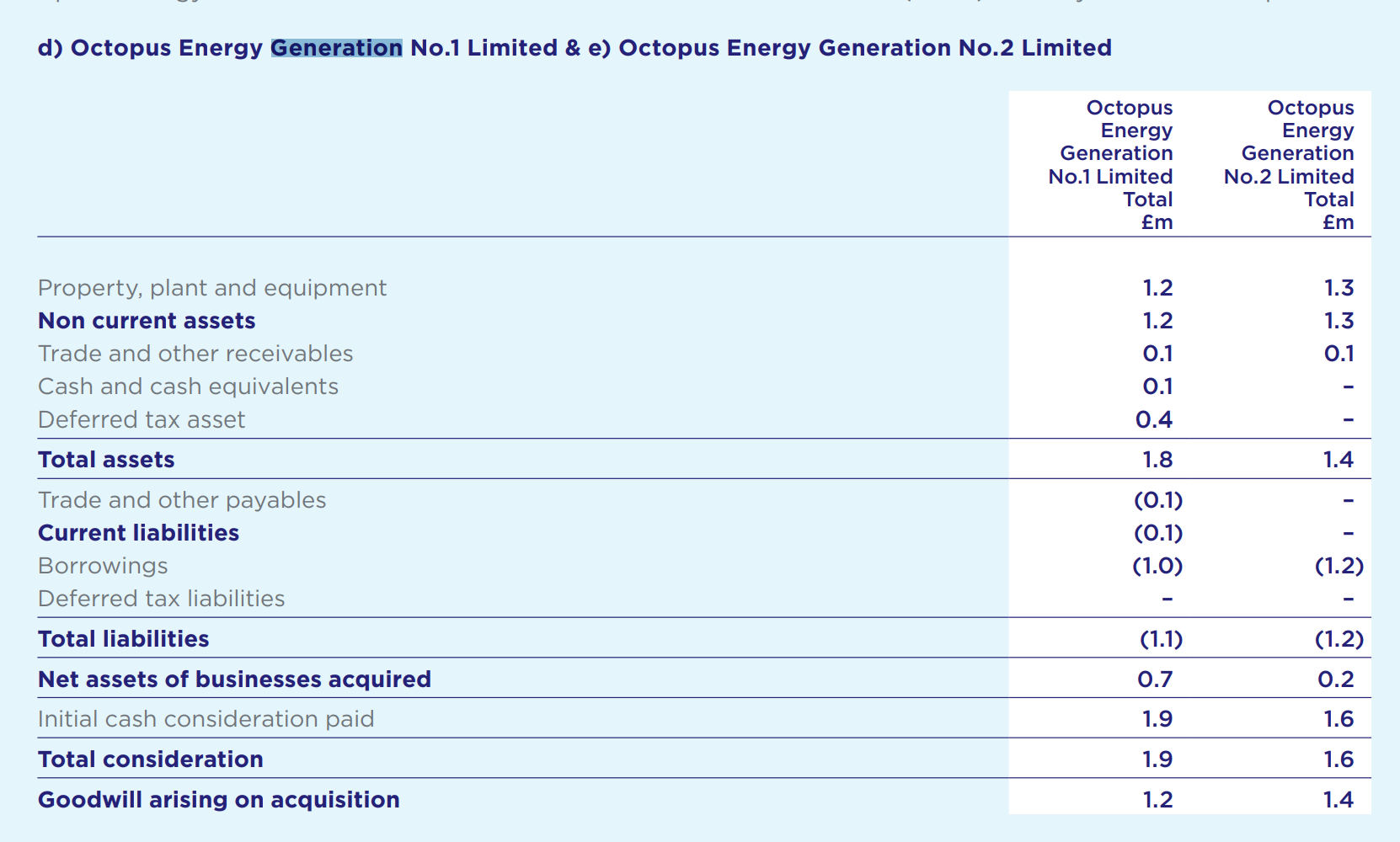
0 -
jj_43 said:
insulation is boring to most. something tells me you prefer PV.QrizB said:jj_43 said:"If we cut outselves off from the international markets we would lose the opportunity for UK consumers to be subsidised by selling energy to other countries that need it."
lol, repeat lol. It doesn't work like that at all.
I loom forward to your insightful analysis of how building enough generation capacity to achieve energy autarchy is somehow more affordasble if we don't sell the surplus.I'm expecting to see it sometime after you post your cost-benefit analysis of retrofitting your current home to Passivhaus standards.
Should I take that as a "no", then? You don't want to share your experience in achieving a Passivhaus retrofit with the MSEers?
N. Hampshire, he/him. Octopus Intelligent Go elec & Tracker gas / Vodafone BB / iD mobile. Kirk Hill Co-op member.Ofgem cap table, Ofgem cap explainer. Economy 7 cap explainer. Gas vs E7 vs peak elec heating costs, Best kettle!
2.72kWp PV facing SSW installed Jan 2012. 11 x 247w panels, 3.6kw inverter. 37 MWh generated, long-term average 2.6 Os.1 -
You seem to have got confused. I was asking who (here) suggested such a "decision or conversation" took place, which you said wasn't something that happened. Now you are saying it does happen, even though nobody here said it did (or didn't).jj_43 said:"Where has it been suggested that such a "decision or conversation" occurs? Or is that just something of your own invention?"
- Its from my commercial background, these are the types of conversation held. There is no "oh we made £10m last week exporting energy to France, shall we reduce our tariffs".
Not sure what this refers to, but you still overlook the point that the industry operates in a regulated environment where the companies involved are subject to expectations which go beyond just making money. Nobody mentioned Robin Hood, is that just a diversion tactic?jj_43 said:"industry model" meaning the typical setup structure of the energy industry that affect your business, i.e. what your main competitors are doing, i.e. the big 5/6, i.e. not Robin Hood energy.jj_43 said:"The cost of security of supply and resilience is factored into what the consumer ends up paying." lol how's that coming along? lolI don't see it as something to "lol" about, it is a serious issue causing quite a lot of concern to people like MSE forum members. Some considerationfor others wouldn't go amiss.In response to your question, I'd say we are in a better position than we would be if we adopted your 'go it alone' approach.
Fairly well at the moment?jj_43 said:"By linking our grid with that of neighbouring countries we are able to both i) invest less in 'spare' generation capacity and ii) use surplus generation capacity to help our neighbours (at a cost to them)"
ok so being less resilience, and more dependent upon neighbours and hoping they have spare generation capacity, how's that coming along?
I haven't missed that point. My assessment is whilst our neighbours will (to some extent) look after their own interests there are also aware of the mutual benefits from neighbours continuing to trade with each other. Each country will balance their short and long term needs and objectives, knowing that shafting a neighbour now may be repaid by karma later. I specifically made the point that your 'go it alone' approach would have political consequences in terms of the supply to the Republic of Ireland.jj_43 said:- you miss the point that energy is scarce and our neighbours will look at their own interests.
I think I do understand that, and I think I've made that clear in several posts I've made. I'm not sure how you could have reached that conclusion. I've made the point that being subject to fluctuations in the international energy market is overall likely to be worth it for the benefits of having access to the international energy market.jj_43 said:You also don't understand that grid linkages set our energy prices to the highest level elsewhere.
So the 'meat' of your argument isn't that I'm wrong about how the current situation is, instead you are proposing that people should get used to the idea of turning on a switch and nothing happening, ir is it they should get used to not being able to afford to use energy when they want to use it?jj_43 said:grid flexibility is great for midstream, the solution you need is demand flexibility, grid capacity forms only a small part of our usage that it can be replaced by demand flexibility, but this small part set the energy prices to the highest levels.
"Going 'solo' would mean either accepting a less reliable and stable supply or making further investment to achieve that reliability and stability exclusively from our own resources. Further investment = increased costs." Everything you state here is the current situation that's with your "dependant on others" approach.
We need more efficient energy usage/lower demand, more generation, better price signals, flexible demand patterns.
I think that misrepresents what I said. But I would say that if we didn't trade [electricity] with our neighbours then ultimately we would be paying higher prices. And therefore I stand by my comment that exports act as a form of subsidy to consumers.jj_43 said:Your cosy view that the energy industry are exporting energy for France to lower your bills just isn't true.
0 -
The interconnectors with other markets only work (make money by selling electricity) when the prices in the two markets at either end are different. At the moment we are selling electricity to France because they have even bigger problems than we do and therefore their electricity market price is even higher than ours. This is contrary to historical use, where we have mostly imported their nuclear generated electricity.4.3kW PV, 3.6kW inverter. Octopus Agile import, gas Tracker. Zoe. Ripple x 3. Cheshire0










Confirm your email address to Create Threads and Reply

Categories
- All Categories
- 355.3K Banking & Borrowing
- 254.7K Reduce Debt & Boost Income
- 455.9K Spending & Discounts
- 248K Work, Benefits & Business
- 605.2K Mortgages, Homes & Bills
- 178.8K Life & Family
- 262.9K Travel & Transport
- 1.5M Hobbies & Leisure
- 16.1K Discuss & Feedback
- 37.7K Read-Only Boards