We’d like to remind Forumites to please avoid political debate on the Forum.
This is to keep it a safe and useful space for MoneySaving discussions. Threads that are – or become – political in nature may be removed in line with the Forum’s rules. Thank you for your understanding.
📨 Have you signed up to the Forum's new Email Digest yet? Get a selection of trending threads sent straight to your inbox daily, weekly or monthly!
The Forum now has a brand new text editor, adding a bunch of handy features to use when creating posts. Read more in our how-to guide
Traditional Boiler with Hot Water Tank - Can I plumb a shower?
Comments
-
You are doing well to have an 18 year old electric shower. I've averaged 15 years on ours, so in your shoes, I would be gearing up for a sudden failure! First one was just a benign death - temperature started fluctuating too much to put up with. But the second one went to an emergency overflow situation, with water pouring out of the casing, even when powered off. I had to plumb in a stop valve on the cold water feed to the shower as there was no other way to stop the flow without turning the whole house off. I sometimes wonder if plumbers deliberately leave out a means of isolation, just to ensure future call-outs!FrankRizzo said:Yeh I know what you mean. Unfortunately the bath needs replaced and wallboards will be mounted at the same time. Plus the current electric shower is 18 years old and is no longer white and has went yellow. 1
1 -
Wow thanks for that heads up - exactly what you said with yours, mine is also not plumbed in with an isolation valve. Although I think my electric shower might be plumbed into the cold water tank, so might not be a disaster if water escaped from the casing and we are not home.0
-
Thanks that looks great! But just checked YouTube video below and looks like you have to switch on each time you have a shower, shame it doesn't automatically switch on.FreeBear said:One option for increasing water pressure is one of these pumps - https://showerpowerbooster.co.uk/Various options available starting at ~£84 for a single pump up to £200 for twin pumps on both hot & cold.0 -
FrankRizzo said:
Thanks that looks great! But just checked YouTube video below and looks like you have to switch on each time you have a shower, shame it doesn't automatically switch on.FreeBear said:One option for increasing water pressure is one of these pumps - https://showerpowerbooster.co.uk/Various options available starting at ~£84 for a single pump up to £200 for twin pumps on both hot & cold.There is a flow switch inside the pump, so it can be left powered on 24/7.The guy in that vid does say he has a negative head (which is unusual, but heyho), hence the reason for turning it on/off at the socket.Any language construct that forces such insanity in this case should be abandoned without regrets. –
Erik Aronesty, 2014
Treasure the moments that you have. Savour them for as long as you can for they will never come back again.1 -
Thats great, i think this will be a solution for me until such times I need to get a new boiler.
What is a negative head?0 -
FrankRizzo said: What is a negative head?When your cold water storage tank is lower than the tap, you have a negative head. It is something that should be avoided where possible.For the vast majority of people that have a hot water cylinder, the cold water (header) tank is sited in the loft so that you end up with a positive head at the tap. The alternative is a sealed hot water tank that is fed directly from the incoming cold water mains or to fit a booster pump.Any language construct that forces such insanity in this case should be abandoned without regrets. –
Erik Aronesty, 2014
Treasure the moments that you have. Savour them for as long as you can for they will never come back again.1 -
Thanks. My cold water tank is in the loft and hot water cylinder is on the same floor as my bathroom. My cold water tank has a smaller tank beside it as well - would that be the header tank?0
-
The larger of the two tanks will be the header tank feeding the hot water cylinder.The smaller one will be a header tank for the heating system.So two header tanks, both storing cold water, but for different parts of your plumbing - It can be confusing..Just to confuse matters a little further, if you have your own private water supply (e.g. from a bore hole), you may have a third tank storing cold water that is piped to your cold taps.Any language construct that forces such insanity in this case should be abandoned without regrets. –
Erik Aronesty, 2014
Treasure the moments that you have. Savour them for as long as you can for they will never come back again.1 -
Thanks for all your help. Appreciated during these tough times0
-
...and sometimes the header tank for the hot water cylinder is also feeding some of your cold taps, rather than these being directly fed by the mains.FreeBear said:The larger of the two tanks will be the header tank feeding the hot water cylinder.The smaller one will be a header tank for the heating system.So two header tanks, both storing cold water, but for different parts of your plumbing - It can be confusing..Just to confuse matters a little further, if you have your own private water supply (e.g. from a bore hole), you may have a third tank storing cold water that is piped to your cold taps.1






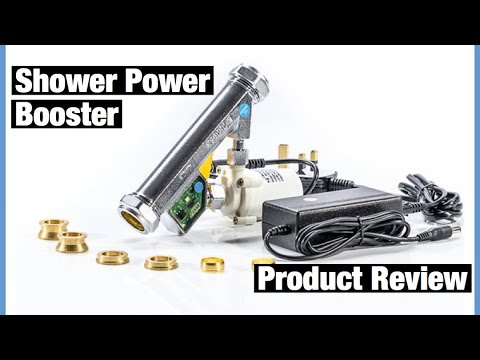 https://www.youtube.com/watch?v=Ap07CkvyYXg



Confirm your email address to Create Threads and Reply

Categories
- All Categories
- 354.6K Banking & Borrowing
- 254.5K Reduce Debt & Boost Income
- 455.5K Spending & Discounts
- 247.5K Work, Benefits & Business
- 604.3K Mortgages, Homes & Bills
- 178.6K Life & Family
- 261.9K Travel & Transport
- 1.5M Hobbies & Leisure
- 16.1K Discuss & Feedback
- 37.7K Read-Only Boards