We’d like to remind Forumites to please avoid political debate on the Forum.
This is to keep it a safe and useful space for MoneySaving discussions. Threads that are – or become – political in nature may be removed in line with the Forum’s rules. Thank you for your understanding.
📨 Have you signed up to the Forum's new Email Digest yet? Get a selection of trending threads sent straight to your inbox daily, weekly or monthly!
The Forum now has a brand new text editor, adding a bunch of handy features to use when creating posts. Read more in our how-to guide
Roof Structure Questions

PoGee
Posts: 795 Forumite



What does the roof frame sit on? Is it the fascias? That's what the old roof looks like. The fascias are wooden at the moment and roofers have been quoting me on plastic ones. When a roof gets redone with plastic fascias, does the roof sit on the plastic ones?
I'm asking because one roofer said that any 'sistering' to the rotten beam ends, would be attached to the ceiling beams as 'there's not too much weight'. I think he's talking about the weight of the roof.
If he attached the new pieces of wood to the ceiling joists, would that be a problem if I decided to turn the loft into a bedroom?
I'm asking because one roofer said that any 'sistering' to the rotten beam ends, would be attached to the ceiling beams as 'there's not too much weight'. I think he's talking about the weight of the roof.
If he attached the new pieces of wood to the ceiling joists, would that be a problem if I decided to turn the loft into a bedroom?
0
Comments
-
Your roof sits on a wall plate, on the inner wall (depending on age and construction of house)
ceiling joists usually also sit on this wall plate.
fascia is usually fixed to the end of the rafters, he’s talking about the weight of the fascia which is fixed to each rafter so to be fair it won’t be holding a lot of weight, having said that I would be bolting on the new pieces not just screwing them.Maybe, just once, someone will call me 'Sir' without adding, 'You're making a scene.'2 -
Did some work on this house a few years ago. The plate was a length of 8x2 sat at the front of the wall. The fascia was fixed to the plate and the rafters were just cut at an angle to sit on the plate. No birds mouth.
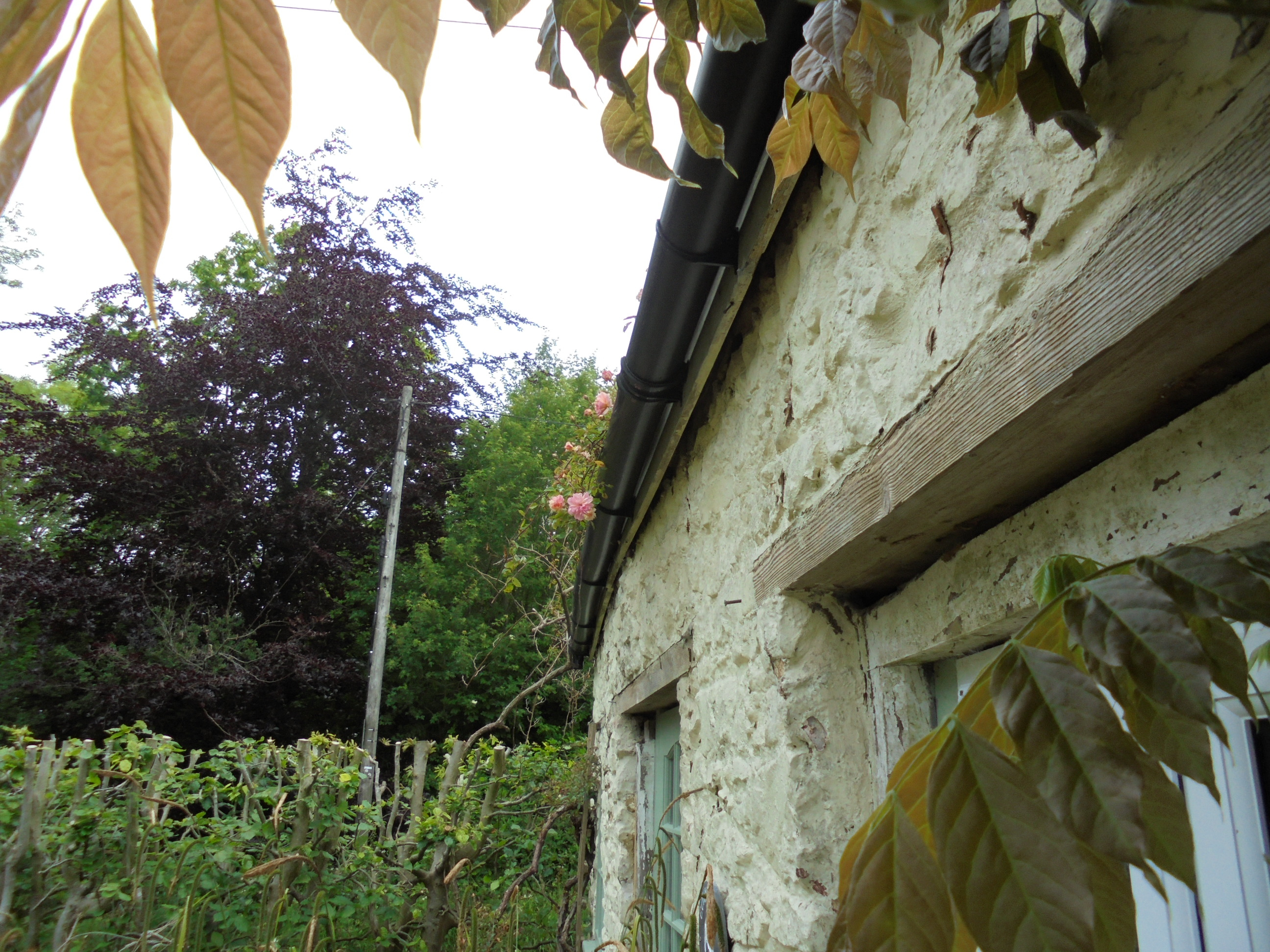
2 -
Yeah it’s always a hard one to say unless you see the property, I’ve come across assorts of configurations especially in older properties but they have stood the test of time!stuart45 said:Did some work on this house a few years ago. The plate was a length of 8x2 sat at the front of the wall. The fascia was fixed to the plate and the rafters were just cut at an angle to sit on the plate. No birds mouth.
Maybe, just once, someone will call me 'Sir' without adding, 'You're making a scene.'1 -
As long as it doesn't get blown away in high winds/ causes no leaks, I suppose.0
-
The rafters nearly always sit or a 4X2 inch timber board called a wallplate and that sits on the TOP of the wall not the side of it. To see this wallplate you have go into the roof space and follow the rafters right down to the eaves as far as you can go. A V-shaped notch is cut in the rafters where they are supported at the wallplate so that they cannot slip.1
-
I have another question or two. It's been quite difficult getting quotes - a fair number of non-responders and a couple of the ones that did respond have dodgy reviews. I know a Polish builder who did great work on the kitchen and bathroom of my rental property. I haven't heard of him in years but think he's still working as a builder. If a builder has no public liability insurance, would that be a problem? I don't know if he has or not but I'd err towards 'no'.
He's a great builder but when it comes to providing warranties, he can be a bit iffy. Can I, as a homeowner, pay extra to get the warranty insured, if I asked him to do the re-roof?0 -
I can’t answer your question concerning yourself covering liability, but as a tradesmen I wouldn’t dream of ever doing a job without insurance it would be a million to one chance that I ever use it but it’s there just in case I personally would be very uncomfortable about using someone who was uninsured.Maybe, just once, someone will call me 'Sir' without adding, 'You're making a scene.'1
-
Especially working at height on a roof....travis-powers said:I can’t answer your question concerning yourself covering liability, but as a tradesmen I wouldn’t dream of ever doing a job without insurance it would be a million to one chance that I ever use it but it’s there just in case I personally would be very uncomfortable about using someone who was uninsured.
1 -
Remember insurance will not provide cover for the tradesman/builder doing a bad job or going bust after taking a large deposit, or for missing deadlines etc etc. It is there to cover the builder say if a slate fell off a roof while the builder was working on that roof and injured a member of the public or even the customer.
It is also worth noting that if there are large scale alterations being done to a property while the house is still being occupied, many standard builder's insurance policies will provide insufficient cover.0





Confirm your email address to Create Threads and Reply

Categories
- All Categories
- 354.3K Banking & Borrowing
- 254.4K Reduce Debt & Boost Income
- 455.4K Spending & Discounts
- 247.3K Work, Benefits & Business
- 604K Mortgages, Homes & Bills
- 178.4K Life & Family
- 261.5K Travel & Transport
- 1.5M Hobbies & Leisure
- 16K Discuss & Feedback
- 37.7K Read-Only Boards