We’d like to remind Forumites to please avoid political debate on the Forum.
This is to keep it a safe and useful space for MoneySaving discussions. Threads that are – or become – political in nature may be removed in line with the Forum’s rules. Thank you for your understanding.
📨 Have you signed up to the Forum's new Email Digest yet? Get a selection of trending threads sent straight to your inbox daily, weekly or monthly!
The Forum now has a brand new text editor, adding a bunch of handy features to use when creating posts. Read more in our how-to guide
BEIS COMMITTEE REPORT - ENERGY MARKET
![[Deleted User]](https://us-noi.v-cdn.net/6031891/uploads/defaultavatar/nFA7H6UNOO0N5.jpg)
[Deleted User]
Posts: 0 Newbie



in Energy
For those who have an interest in the regulation of our energy market, this well-written report is something of an eye opener. It shows how Ofgem was ploughing its own furrow and ignoring all warning signs in the belief that the risks of supplier failure were small. Regulation was in name only. The most telling point is that had the previous Ofgem CEO still been in post, the Committee would have demanded his dismissal.
The section on Avro Energy will be a MBA course topic for many years to come. Sadly, action to hold the Directors to account seems to rest with the Administrator.
They are also comments on the cost of ‘ring fencing’ consumer credits which would only add to the cost of future energy bills.
https://committees.parliament.uk/publications/23255/documents/169712/default/
They are also comments on the cost of ‘ring fencing’ consumer credits which would only add to the cost of future energy bills.
https://committees.parliament.uk/publications/23255/documents/169712/default/
2
Comments
-
There is absolutely no question credit balances need to be managed differently, the administration costs of doing that is tiny compared to the cost of the actual energy and the costs of refunding credit accounts on SOLR arrangements. Really ofgem should have done this from the start. It might increase bills by zero point something %.The problem with Ofgem (and Ofcom), is they are there to give the impression they are regulating the companies for the consumers, but their actually primary mandate is to increase retail competition, Ofgem decided to take risks in doing so, but it was their primary mandate so they did it. This gives the illusion of competition, but as we now know that isnt real competition, as the area that dictates the cost are the wholesaler energy extractors.
Now Ofgem primary concern is preventing more companies from collapsing, so they have granted cap increases for claims of higher network maintenance costs, and changed the interval from 6 to 3 months so to look after the retail suppliers worried about selling at a loss. They have also made a change making it harder for consumer prices to go down when customers move between suppliers, the new supplier has to heavily compensate the old supplier.There is a group planning to take Ofgem to court for ignoring human rights laws when setting the cap.
https://www.telegraph.co.uk/money/consumer-affairs/energy-price-cap-rise-will-breach-human-rights1/If Ofgem were to lose this challenge, their options will be likely either reduce the cap disregarding the impact on the companies, setup a social tariff, or remove the cap entirely.
0 -
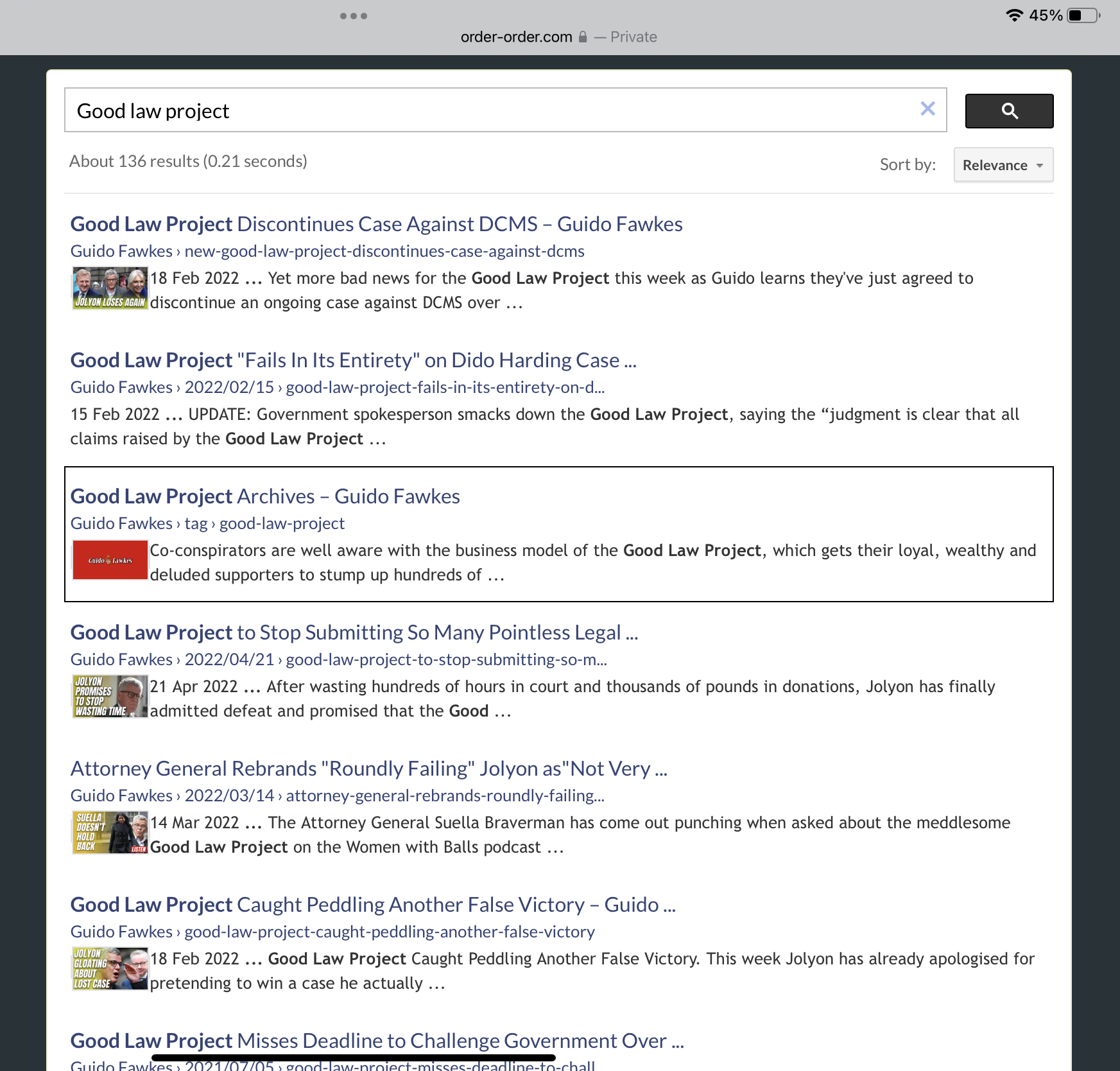
The GLP doesn’t have a particularly good record of winning its cases:
0 -
Already paragraph 1 of the summary answers the question regarding recovering the cost for the Bulb administration, it can be added to the energy bills.
If the cost of £2.7 billion was £96 per customer (£8 pm added to the standing charge for 2 years) the cost of 2billion could add another 1.5 year of higher standing charges,1 -
Unless I have mis-read that part of the Report, there is a suggestion that Treasury Rules prevent suppliers in SRA from hedging which I assume is partly the reason why the Administrator is finding it so difficult to sell the company on, and Octopus Energy wants a £Bn handout.pochase said:Already paragraph 1 of the summary answers the question regarding recovering the cost for the Bulb administration, it can be added to the energy bills.
If the cost of £2.7 billion was £96 per customer (£8 pm added to the standing charge for 2 years) the cost of 2billion could add another 1.5 year of higher standing charges,2 -
Yes, so that would add another few months to the standing charge....0
-
It is not the administration cost that is the issue, it is that properly hedging the energy needs of the customers has a cost, if you remove the suppliers ability to use the customer credit balances then there is a potentially significant funding cost to be carried...Chrysalis said:There is absolutely no question credit balances need to be managed differently, the administration costs of doing that is tiny compared to the cost of the actual energy and the costs of refunding credit accounts on SOLR arrangements. Really ofgem should have done this from the start. It might increase bills by zero point something %.
1 -
Hindsight seems a wonderful way to bash ofgem and the failed supply companies.
Their model was:
Buy forward some gas/electricity at a certain price
Sell it to consumers at a fixed price giving a small mark up but still undercutting the cap prices.
They attracted the consumers who shop on price and knew this so when said customers reach the end of the fixed/hedged period there was a sensible assumption that they would then take a new cheap fix.
No one anticipated that:
1) The market distorting cap because it is a backward looking metric would actually end up cheaper than the current market rate
2) And that this would mean that (a) the customers who were expected to leave at the end of their cheap fix would not do so and (b) it would not be possible to cover their demand at the cap price simply by purchasing on the wholesale market
I didn't anticipate this (I expected I would always be able to roll over to another cheap fix), the suppliers didn't anticipate this, ofgem didn't anticipate this - can any of us really claim we saw this coming.
Whereas the competition certainly brought real benefits, the big 'six' suppliers used inertia to try and hang on to lucrative SVR customers and offered sightly cheaper fixes plus much cheaper 'white label' fixes, competitive behaviour that was driven by needing to respond to the new entrants. Most people certainly thought the problem with the market was those who couldn't be bother to shop around, not the non even thought about risk that the cap mechanism might lead to a situation where companies who had not hedged the cap went broke.
The big suppliers are seizing the moment to try and restrict competition going forward through 'ring-fenced' customer funds and 'clawback against future cheap fixes' should prices fall. Very much in their interest to stop competition.
TLDR: It was a black swan event that no one had foreseen and it is unclear whether regulation should ever be designed for such 'long tail' eventualitiesI think....1 -
That was true for some of the failed suppliers, but in one very notable case there was zero attempt to hedge anything, just sell cheap and hope, which is not something that should ever be allowed to happen again...michaels said:Hindsight seems a wonderful way to bash ofgem and the failed supply companies.
Their model was:
Buy forward some gas/electricity at a certain price
Sell it to consumers at a fixed price giving a small mark up but still undercutting the cap prices.
2 -
Not sure Guido is a very unbiased source of information on that.Dolor said:The GLP doesn’t have a particularly good record of winning its cases:
Some absolutely shocking behaviour outlined in the BEIS report, incredible that Ofgem paid no attention to what was happening.Remember the saying: if it looks too good to be true it almost certainly is.2 -
No hindsight needed here. These were amounts removed from Avro that were financed by customer balances as per the report.michaels said:Hindsight seems a wonderful way to bash ofgem and the failed supply companies.
Avro Group also made significant payments to other companies controlled by Jake and Philip Brown. In the year to June 2020, they paid Sendito Marketing (owned and directed by Jake and Philip Brown) £2,000,000.151 In the year to June 2019, Avro paid Sendito Marketing £2,250,000.152 In the year to June 2020, Avro Group made interest free loans to Berkeley Swiss Ltd (owned and directed by Jake and Philip Brown) of £830,754.153 T he significant payments to Sendito Marketing (£4,250,000 in 2019 and 2020 alone) were classed as management charges
Remember the saying: if it looks too good to be true it almost certainly is.0






Confirm your email address to Create Threads and Reply

Categories
- All Categories
- 354.3K Banking & Borrowing
- 254.4K Reduce Debt & Boost Income
- 455.4K Spending & Discounts
- 247.3K Work, Benefits & Business
- 604K Mortgages, Homes & Bills
- 178.4K Life & Family
- 261.5K Travel & Transport
- 1.5M Hobbies & Leisure
- 16K Discuss & Feedback
- 37.7K Read-Only Boards