We’d like to remind Forumites to please avoid political debate on the Forum.
This is to keep it a safe and useful space for MoneySaving discussions. Threads that are – or become – political in nature may be removed in line with the Forum’s rules. Thank you for your understanding.
📨 Have you signed up to the Forum's new Email Digest yet? Get a selection of trending threads sent straight to your inbox daily, weekly or monthly!
The Forum now has a brand new text editor, adding a bunch of handy features to use when creating posts. Read more in our how-to guide
Leak at soil stack - what are my options?

rubble2
Posts: 590 Forumite



We have just had our soffits, facias and rain water goods replaced ( were white, now black) so I was looking at what would be involved in painting the white plastic soil stack black to match when I noticed a wet patch on the brickwork.
Looking closer there seems to be evidence of a bead of water in the mortar crack directly underneath where the waste pipe exits the wall.
Running the water in the bath/shower and the wash basin along with flushing the toilet doesn't result in any obvious leaks at the various visible pipe joints so I am thinking that the water is leaking at a joint somewhere inside the cavity wall and soaking the bricks from the inside.
There is absolutely no visible signs of damp inside the bathroom and no damp on the kitchen ceiling below. To be honest the problem could have been present for some time and not been noticed (it actually looks more obvious in the photo's than with the naked eye.
I replaced the bathroom about two years ago but I really don't think the leak originated that long ago, I have looked at the only connection I made to the waste system and that is completely dry. The toilet waste connects to a female socket level with the bathroom floor, the waste pipe then descends vertically into the floor space, and must then do a 90 degree turn parallel with the floor/ceiling and then another 90 degree turn through the cavity wall to connect with the stack.
I don't know whether to lift the bathroom floor or attack it externally by getting some bricks removed. What do you think? Thanks.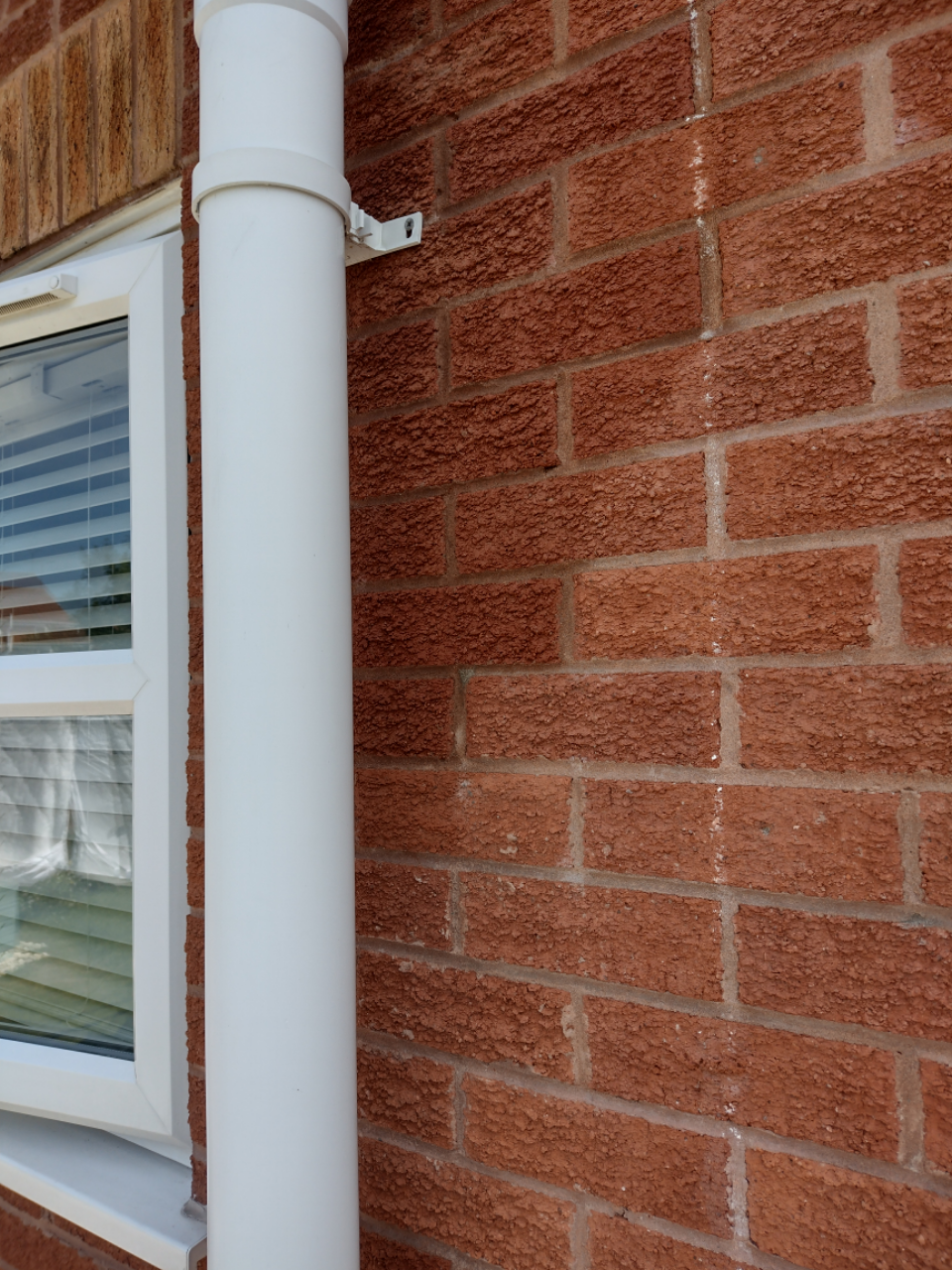
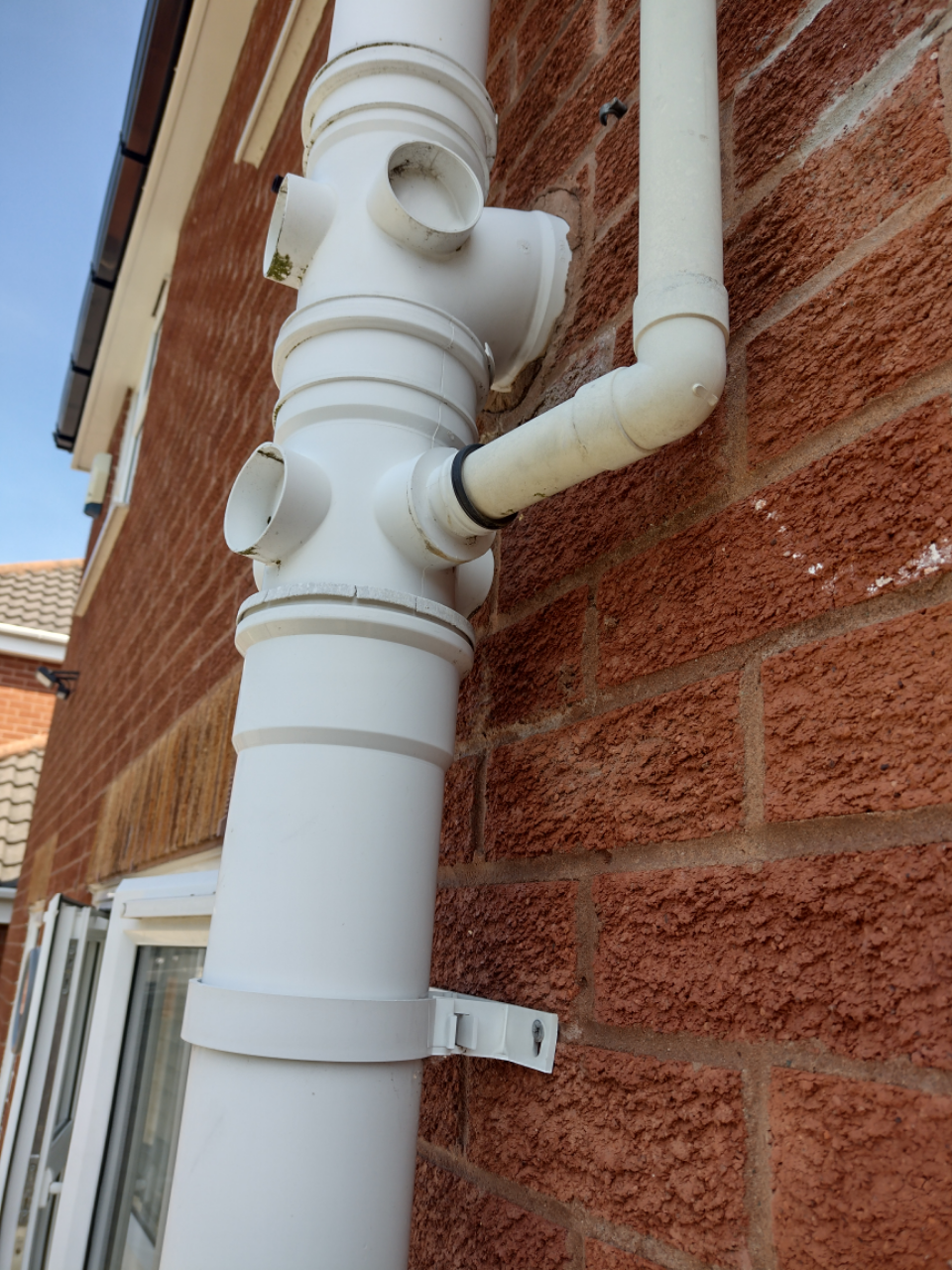
Looking closer there seems to be evidence of a bead of water in the mortar crack directly underneath where the waste pipe exits the wall.
Running the water in the bath/shower and the wash basin along with flushing the toilet doesn't result in any obvious leaks at the various visible pipe joints so I am thinking that the water is leaking at a joint somewhere inside the cavity wall and soaking the bricks from the inside.
There is absolutely no visible signs of damp inside the bathroom and no damp on the kitchen ceiling below. To be honest the problem could have been present for some time and not been noticed (it actually looks more obvious in the photo's than with the naked eye.
I replaced the bathroom about two years ago but I really don't think the leak originated that long ago, I have looked at the only connection I made to the waste system and that is completely dry. The toilet waste connects to a female socket level with the bathroom floor, the waste pipe then descends vertically into the floor space, and must then do a 90 degree turn parallel with the floor/ceiling and then another 90 degree turn through the cavity wall to connect with the stack.
I don't know whether to lift the bathroom floor or attack it externally by getting some bricks removed. What do you think? Thanks.
0
Comments
-
What is above the toilet soil pipe connection? Is there an overflow pipe from the toilet cistern, or from a tank in the loft?rubble2 said:
I don't know whether to lift the bathroom floor or attack it externally by getting some bricks removed. What do you think? Thanks.
1 -
I'd start by cutting out some brickwork.1
-
Actually there are, when they replaced the gutters they asked if the overflows were still needed, I said that the were and he said that he had directed them into the new gutters. You can't actually see them now from ground level but to my knowledge they have never leaked before. I will see if I can get a better look from the bottom of the garden - thanks.Section62 said:
What is above the toilet soil pipe connection? Is there an overflow pipe from the toilet cistern, or from a tank in the loft?rubble2 said:
I don't know whether to lift the bathroom floor or attack it externally by getting some bricks removed. What do you think? Thanks.
Update :- I can see the overflows where they protrude from the roofline but are are about 1 metre further along from the soil stack.0 -
Should there actually be joints in the waste pipes that are inside the cavity wall? it seems like a risky method to me0
-
There shouldn't be a joint in the wall apart from the one you can see in the branch where the pipe comes through the wall.
Overflow pipes are better where they can be seen.1 -
Given that we want to change the stack to black and looking at the condition of some of the gaskets you can see in the second picture I am wondering if we should bite the bullet and gat the whole stack replaced with a new black one?
Any ideas on cost involved? and is it a plumber job or a general builder?0 -
rubble2 said: Should there actually be joints in the waste pipes that are inside the cavity wall? it seems like a risky method to meNo, there should never be joints hidden inside a wall.But looking at the second picture, the collar of the toilet waste connection is partially buried in the wall - Quite possible this is the source of the leak, especially if the pipework inside has been disturbed at any point. Chip away at the mastic & mortar surrounding the Tee and see if the wall is damp in that area.
Any language construct that forces such insanity in this case should be abandoned without regrets. –
Erik Aronesty, 2014
Treasure the moments that you have. Savour them for as long as you can for they will never come back again.2 -
It's a plumbers job, although it's quite simple to replace the branch.rubble2 said:Given that we want to change the stack to black and looking at the condition of some of the gaskets you can see in the second picture I am wondering if we should bite the bullet and gat the whole stack replaced with a new black one?
Any ideas on cost involved? and is it a plumber job or a general builder?1 -
Bad idea having them into the gutter as if the tanks overflow you won’t know if the rwp is directly into the gully. That’s why they are called a warning pipe.rubble2 said:
Actually there are, when they replaced the gutters they asked if the overflows were still needed, I said that the were and he said that he had directed them into the new gutters. Y
Afew weeks ago I got called to a customer who had a astronomical water bill, checked out it was the Cws tank been overflowing for months, 2 yrs ago the cowboy builders directed them into the gutter. problem solved but she still had to pay her water bill.A thankyou is payment enough .4 -
90 percent of the time the will either be a branch or soil bend partially in the wall.
Chip out the mortar around the branch, if leaking try using gap filling cement or a good sealant.
Long term solution is to replace.A thankyou is payment enough .2






Confirm your email address to Create Threads and Reply

Categories
- All Categories
- 354.3K Banking & Borrowing
- 254.4K Reduce Debt & Boost Income
- 455.4K Spending & Discounts
- 247.3K Work, Benefits & Business
- 604K Mortgages, Homes & Bills
- 178.4K Life & Family
- 261.5K Travel & Transport
- 1.5M Hobbies & Leisure
- 16K Discuss & Feedback
- 37.7K Read-Only Boards