We’d like to remind Forumites to please avoid political debate on the Forum.
This is to keep it a safe and useful space for MoneySaving discussions. Threads that are – or become – political in nature may be removed in line with the Forum’s rules. Thank you for your understanding.
📨 Have you signed up to the Forum's new Email Digest yet? Get a selection of trending threads sent straight to your inbox daily, weekly or monthly!
The Forum now has a brand new text editor, adding a bunch of handy features to use when creating posts. Read more in our how-to guide
Best way to finish an oak worktop.

JohnB47
Posts: 2,739 Forumite



I have Oak worktop in the kitchen. It was fitted around 10 years ago and is now looking a bit sad. Quite a few areas where the original oil has worn away and others that are black stained when wet tins were left sitting on it. I've also discovered that a solution of bicarb of soda left on a glass bottom or spoon set on it it eats through the finish - see below.
I used Junkers Rustic Oil originally and followed the instructions on the tin, which were to apply three coats, wiping off excess each time and leaving it to dry between coats. There was no thinning of first coat mentioned.
The result was a sort of varnished look - definitely a skin on there and I'm wondering if I overdid it.
So, any recommendations? I tried other products on a scrap piece of the worktop that I kept but the missus wants the Junkers used again.
What should the worktop look like after all is done - matt with some texture showing or with a coating like it had been varnished?
I used Junkers Rustic Oil originally and followed the instructions on the tin, which were to apply three coats, wiping off excess each time and leaving it to dry between coats. There was no thinning of first coat mentioned.
The result was a sort of varnished look - definitely a skin on there and I'm wondering if I overdid it.
So, any recommendations? I tried other products on a scrap piece of the worktop that I kept but the missus wants the Junkers used again.
What should the worktop look like after all is done - matt with some texture showing or with a coating like it had been varnished?
0
Comments
-
I've got an Iroko worktop and draining board over a butler sink.
Originally I used Treatex oil, which is quite quick drying but now I use only linseed oil. It goes deeper into the wood than treatex and although it needs to be done more often it's better for the timber.1 -
Osmo top oil, I wouldn’t use anything else. They offer a variety of finishes too so you can pick the one that works for you.1
-
Used linseed oil myself on an oak post - Found it took several days to go from sticky/tacky to dry. Gives a nice satin sheen, and worth the wait.stuart45 said: Originally I used Treatex oil, which is quite quick drying but now I use only linseed oil. It goes deeper into the wood than treatex and although it needs to be done more often it's better for the timber.
Any language construct that forces such insanity in this case should be abandoned without regrets. –
Erik Aronesty, 2014
Treasure the moments that you have. Savour them for as long as you can for they will never come back again.1 -
Thanks guys but I wasn't really asking for suggestions for alternative treatments. When I said "Any recommendations" I meant recommendations for how to apply the oil - eg thin the first coat? I also asked:
"What should the worktop look like after all is done - matt with some texture showing or with a coating like it had been varnished?"0 -
If the pores of the wood are still filled with a previous treatment, then any new oil will not soak in - only to any places where the pores have become open. So treating new wood I would expect the oil to soak in - but if the interior is saturated by old treatment you may be looking just at a surface coat - and the more layers you apply the more surface you will get. Personally, I would start by making the surface as even as possible - if only a couple of spots are worn then maybe just treating those areas, but if it is pretty bad I would scrape or sand the whole surface to an even finish, scrub and bleach out dark marks, sand smooth any raised grain from water. Then treat the whole surface.Junkers is a urethane - I expect you will get a surface build up.If it is too shiny you can take the shine off with something like this https://www.3m.co.uk/3M/en_GB/p/d/v000139794/ (much finer than the green scouring pads!) or maybe 600 grit sandpaper. A good idea to do this between coats too.
But a banker, engaged at enormous expense,Had the whole of their cash in his care.
Lewis Carroll1 -
Thank you. I do intend to sand down the whole worktop, so most of the old oil would be removed.theoretica said:If the pores of the wood are still filled with a previous treatment, then any new oil will not soak in - only to any places where the pores have become open. So treating new wood I would expect the oil to soak in - but if the interior is saturated by old treatment you may be looking just at a surface coat - and the more layers you apply the more surface you will get. Personally, I would start by making the surface as even as possible - if only a couple of spots are worn then maybe just treating those areas, but if it is pretty bad I would scrape or sand the whole surface to an even finish, scrub and bleach out dark marks, sand smooth any raised grain from water. Then treat the whole surface.Junkers is a urethane - I expect you will get a surface build up.If it is too shiny you can take the shine off with something like this https://www.3m.co.uk/3M/en_GB/p/d/v000139794/ (much finer than the green scouring pads!) or maybe 600 grit sandpaper. A good idea to do this between coats too.
You mentioned "scrub and bleach out dark marks". Do you mean using actual bleach, or maybe something like HG Mould Spray? The worst marks on the worktop have been caused by wet cans being left on it. Here's a picture of the worst bit.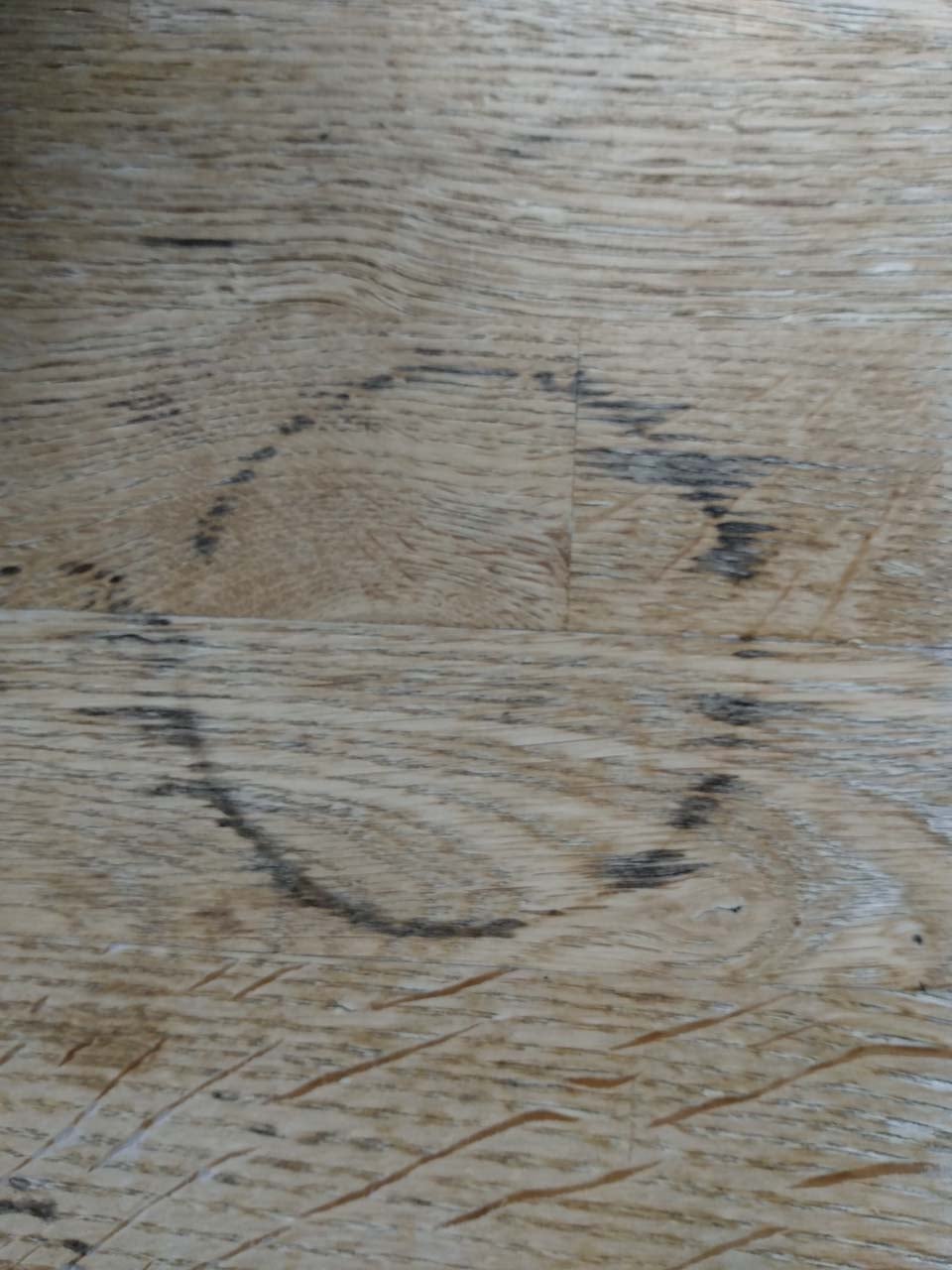
0 -
2
-
Thanks. That video is incredibly useful. I might even buy one or both of the scraper tools mentioned.1
-
JohnB47 said:
Thank you. I do intend to sand down the whole worktop, so most of the old oil would be removed.theoretica said:If the pores of the wood are still filled with a previous treatment, then any new oil will not soak in - only to any places where the pores have become open. So treating new wood I would expect the oil to soak in - but if the interior is saturated by old treatment you may be looking just at a surface coat - and the more layers you apply the more surface you will get. Personally, I would start by making the surface as even as possible - if only a couple of spots are worn then maybe just treating those areas, but if it is pretty bad I would scrape or sand the whole surface to an even finish, scrub and bleach out dark marks, sand smooth any raised grain from water. Then treat the whole surface.Junkers is a urethane - I expect you will get a surface build up.If it is too shiny you can take the shine off with something like this https://www.3m.co.uk/3M/en_GB/p/d/v000139794/ (much finer than the green scouring pads!) or maybe 600 grit sandpaper. A good idea to do this between coats too.
You mentioned "scrub and bleach out dark marks". Do you mean using actual bleach, or maybe something like HG Mould Spray? The worst marks on the worktop have been caused by wet cans being left on it. Here's a picture of the worst bit.I would try citric acid on it - or vinegar - or both... Oxalic acid is supposed to be effective, but is also less safe.Oak+iron gives a black colour - use for ebonising oak, and oak gall ink, so while the stain might be mould if it didn't happen for other wet things it might be an indication of more complicated wood chemistry.But a banker, engaged at enormous expense,Had the whole of their cash in his care.
Lewis Carroll1






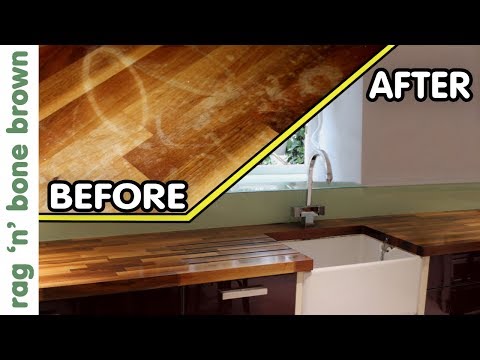 https://www.youtube.com/watch?v=07v4aZa36Qc
Confirm your email address to Create Threads and Reply

Categories
- All Categories
- 354.3K Banking & Borrowing
- 254.4K Reduce Debt & Boost Income
- 455.4K Spending & Discounts
- 247.3K Work, Benefits & Business
- 604K Mortgages, Homes & Bills
- 178.4K Life & Family
- 261.5K Travel & Transport
- 1.5M Hobbies & Leisure
- 16K Discuss & Feedback
- 37.7K Read-Only Boards