We’d like to remind Forumites to please avoid political debate on the Forum.
This is to keep it a safe and useful space for MoneySaving discussions. Threads that are – or become – political in nature may be removed in line with the Forum’s rules. Thank you for your understanding.
📨 Have you signed up to the Forum's new Email Digest yet? Get a selection of trending threads sent straight to your inbox daily, weekly or monthly!
The Forum now has a brand new text editor, adding a bunch of handy features to use when creating posts. Read more in our how-to guide
Fitting of a traditional toilet

samphe
Posts: 140 Forumite


We’re in the middle of getting a new bathroom fitted. We’ve gone for a tradition style suite. I’m a bit disappointed with the pipe that the fitter has said he’s had to fit (I think he said it was an outlet pipe). None of the toilets in this style I’ve seen online have anything like this.
Is this normal? Is there anyway around it?
I’ve included a photo. 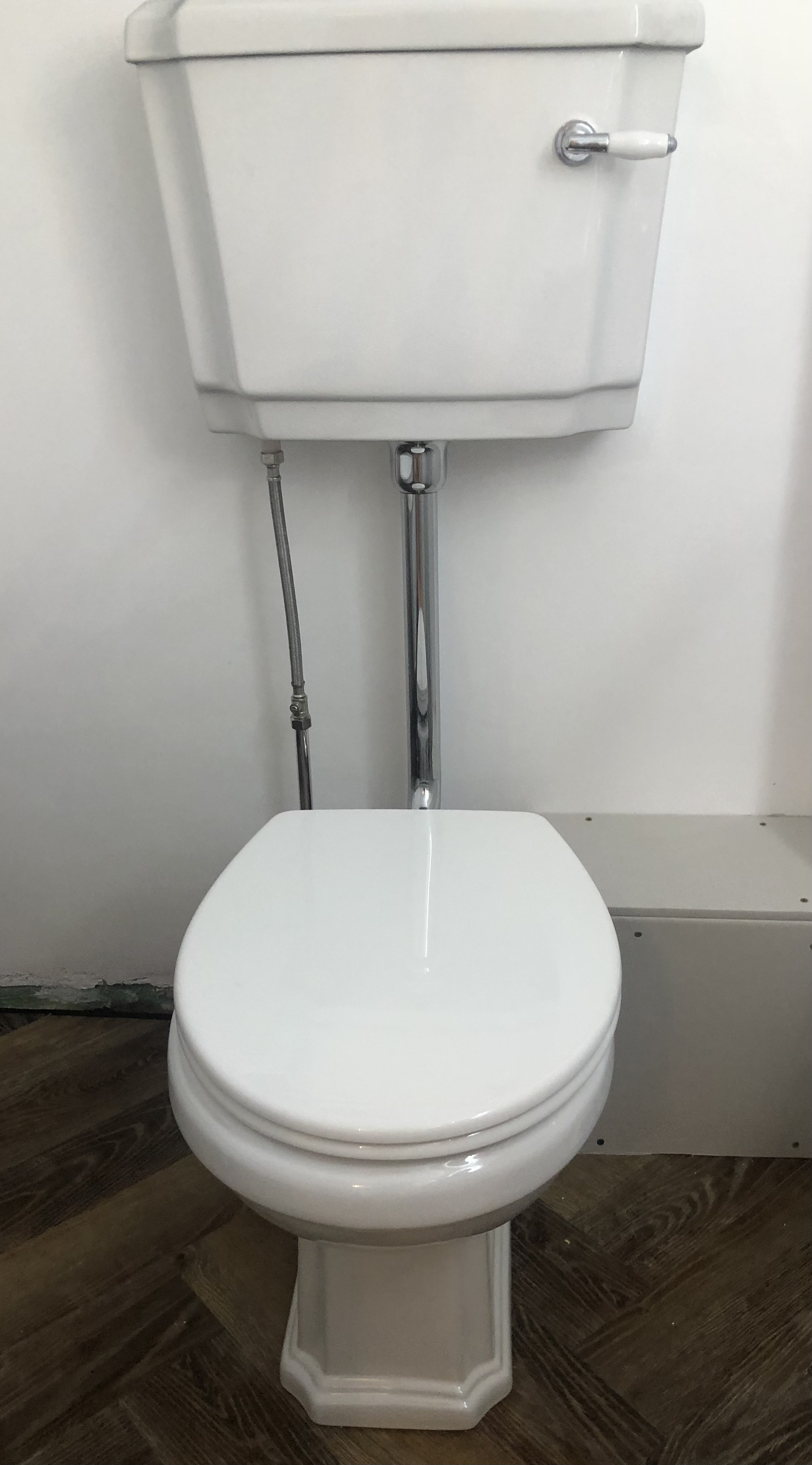
0
Comments
-
It's the water inlet pipe. The only way round it is to bury the pipe in the wall.1
-
I assume you mean the cold water feed on the left? Ultimately unless there’s a second entry point on the cistern you can’t really hide it entirely. However I’d have done away with the flexible hose, hidden the majority of the pipe in the wall and had it come out just below the point at which it joined the cistern. Making it chrome would allow it to blend in. It is more work though as you’d have to channel into the wall and make good after.
I agree the current solution is ugly.1 -
It's not very elegant, but I guess the fitter was stuck because of the long outlet pipe that looks like it was part of the installation kit.
I guess the inlet could be put into a box.0 -
Botch.The pipe (most of it) has to be in the wall. In the worst case scenario it has to be hidden behind the big pipe and connected without a hose or with a very short one.ETA: Having said that, it's a more complex job, costing more and the result is pretty predictable if you didn't specify what exactly your wanted. I think a good plumber should have asked you at least.1
-
Like water, he's taken the path of least Resistance3
-
grumbler said: Botch.The pipe (most of it) has to be in the wall. In the worst case scenario it has to be hidden behind the big pipe and connected without a hose or with a very short one.Agreed. It is neither visually appealing or a job well done.Burying the pipe is one option, but it needs to be plastic coated to protect the copper from attack by plaster or cement - I find 20mm conduit to be just the right size for 15mm pipe. Exiting from the wall neatly is also going to be an issue - A conduit box recessed in to the wall and some real neat plumbing could work. But who ever does it will need to make solder connections before putting the pipe anywhere near plastic (compression or push fit fittings might be a bit too bulky).
Any language construct that forces such insanity in this case should be abandoned without regrets. –
Erik Aronesty, 2014
Treasure the moments that you have. Savour them for as long as you can for they will never come back again.0 -
A solution would have been to use an actual plumber. 'Cos that is utter carp.
Did they express any shame? They should have - they should have KNOWN and EXPLAINED from the outset what this would look like (IE completely unacceptable), and whether they could offer an alternative. If they couldn't, they should have passed on this JOB.
They've used rigid chromed pipe for the lower part? So why not fit the isolating valve at skirting board level (to hide it) and use a couple of chrome elbows at t'top to crank out the pipe? I don't know how well these elbows cope with heat, but there is also a chrome push-fit option, still hugely better than what's there. And almost certainly a SS alternative too.
Worst case would be to use rigid copper for neatness, and then paint it wall colour. But, a FLEXI?! Stretched to its full glorious awesomeness?!Another 'solution' could be to sleeve that existing supply pipe in a straight length of chrome flush tube, but that will look clunky.Or, as mentioned above, hide a rigid copper pipe behind the chrome downpipe, and then crank it out using a couple of solder elbows (one of them a 'tap' connector) at the last moment just under cistern level.
Anyone here used chromed solder fittings? Did they survive the torch?
1 -
-
I have a traditional cistern, but it has been there since 1953. The inlet pipe is installed properly with vertical and horizontal runs and painted to match the wall. It looks neat and not at all unsightly. As others have said get a plumber who can do a proper job.0
-
It'd look much better using solid pipe bent to run flat against the wall with the valve hidden low down.
1






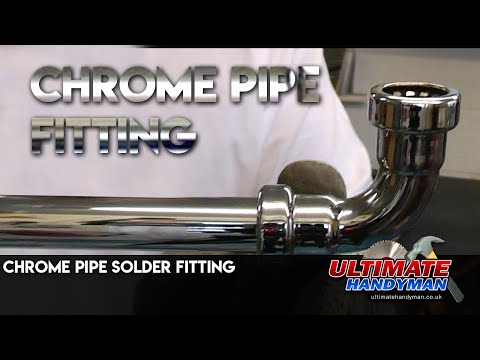 https://youtu.be/L07eN3Ml3NY
Confirm your email address to Create Threads and Reply

Categories
- All Categories
- 354.3K Banking & Borrowing
- 254.4K Reduce Debt & Boost Income
- 455.4K Spending & Discounts
- 247.3K Work, Benefits & Business
- 604K Mortgages, Homes & Bills
- 178.4K Life & Family
- 261.5K Travel & Transport
- 1.5M Hobbies & Leisure
- 16K Discuss & Feedback
- 37.7K Read-Only Boards