We’d like to remind Forumites to please avoid political debate on the Forum.
This is to keep it a safe and useful space for MoneySaving discussions. Threads that are – or become – political in nature may be removed in line with the Forum’s rules. Thank you for your understanding.
📨 Have you signed up to the Forum's new Email Digest yet? Get a selection of trending threads sent straight to your inbox daily, weekly or monthly!
Cracks in walls and ceilings

XEO25
Posts: 183 Forumite



Looking for some advice please...
We moved into our new home (1930s 3 bed semi / fixer upper) 5 months ago. There was fairly extensive cracking in the upper plastered walls and ceilings when we moved in, and I think it might be getting worse but hard to tell. The house was empty for over 1 year before we moved in, not sure if this could have contributed.
A survey (level 2) said it could be movement or just blown plaster - not very useful. We purchased anyway without further investigations, rightly or wrongly.
The cracks are more prominent in the front living room, front hall, and front box room. Other rooms have some cracks but they are smaller.
There's no obvious cracks on the outside walls, although 60% is pebbledash.
I've attached some photos of the front room. It basically has really bad cracking around the window and door, and also a fine crack going all the way round where the wall meets the ceiling. The first picture is the hall ceiling, the rest are front living room.
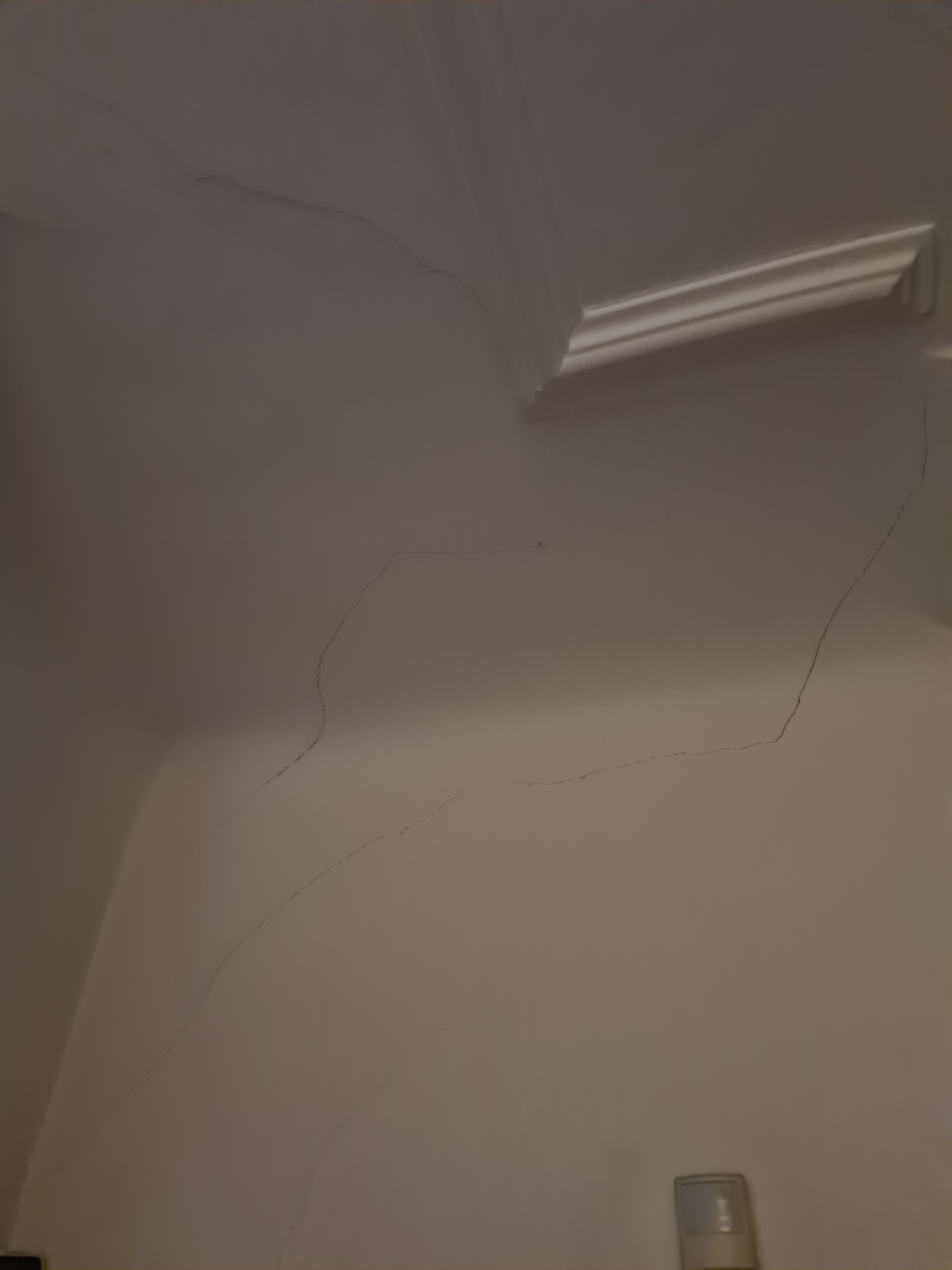
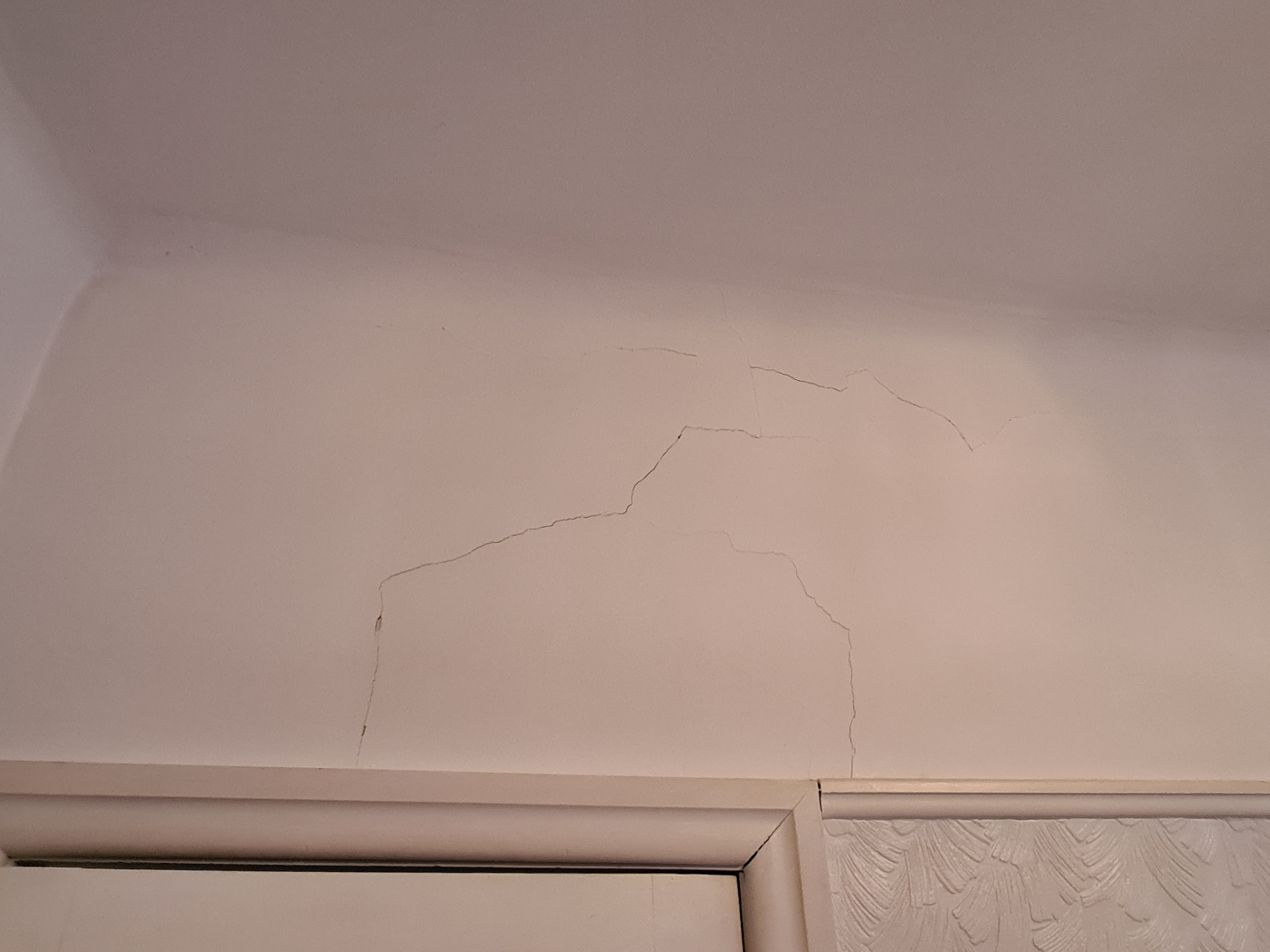
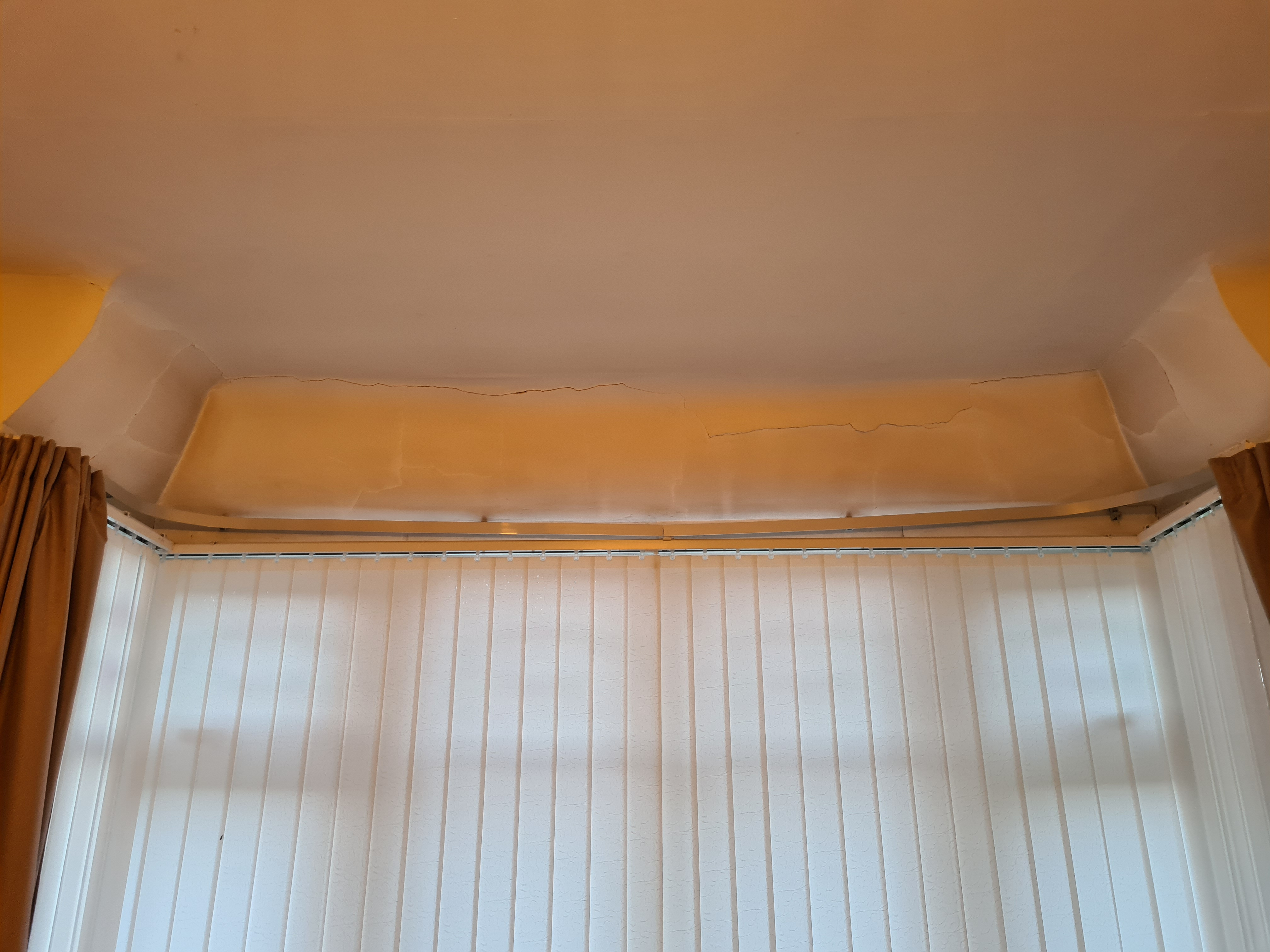
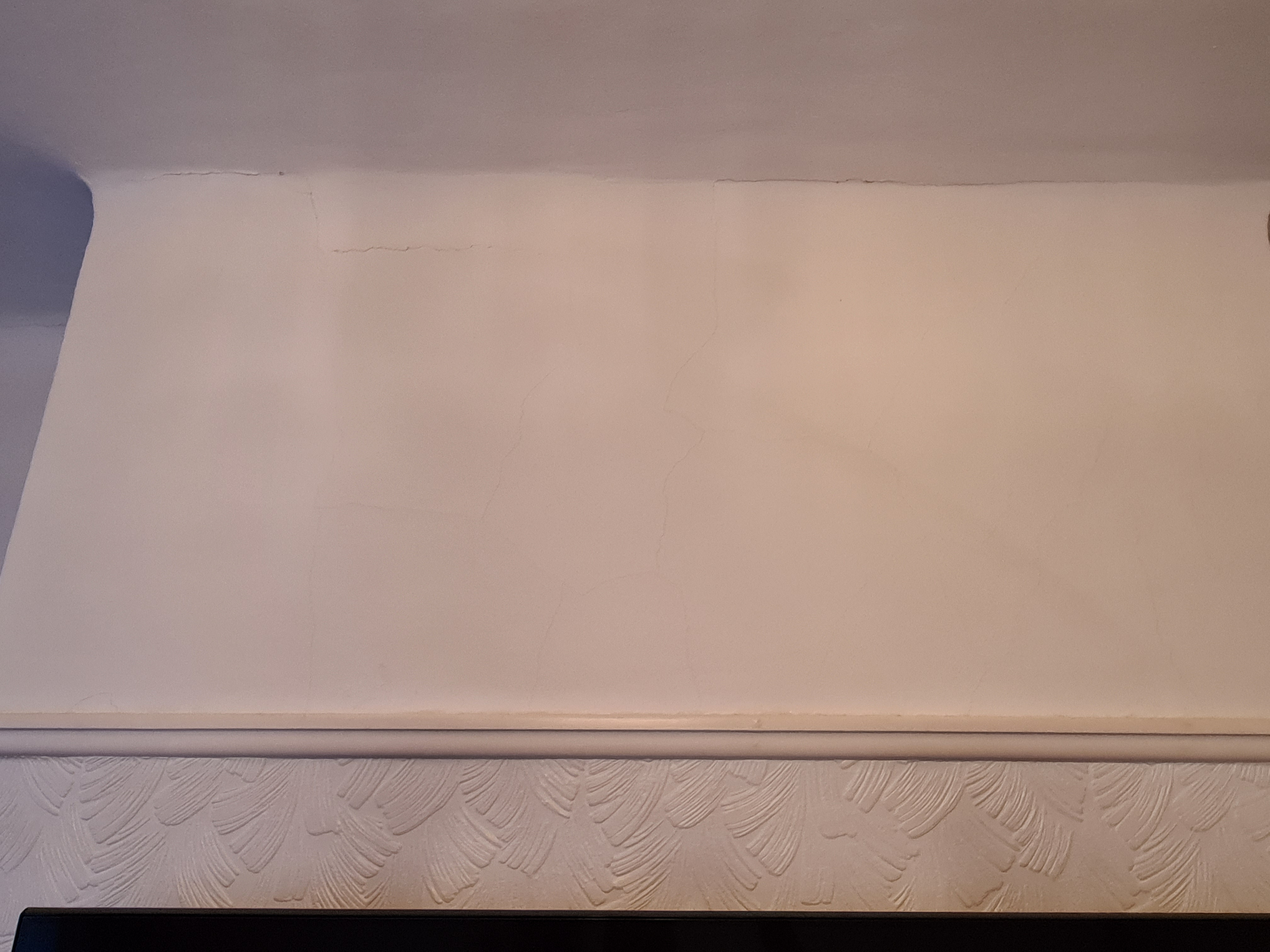
I assumed the logical next step would be a structural engineer, but having called one for a quote he said he would pretty much just check behind the plaster for cracks in the brickwork, which seems like something I could do myself?
Any advice greatly appreciated
We moved into our new home (1930s 3 bed semi / fixer upper) 5 months ago. There was fairly extensive cracking in the upper plastered walls and ceilings when we moved in, and I think it might be getting worse but hard to tell. The house was empty for over 1 year before we moved in, not sure if this could have contributed.
A survey (level 2) said it could be movement or just blown plaster - not very useful. We purchased anyway without further investigations, rightly or wrongly.
The cracks are more prominent in the front living room, front hall, and front box room. Other rooms have some cracks but they are smaller.
There's no obvious cracks on the outside walls, although 60% is pebbledash.
I've attached some photos of the front room. It basically has really bad cracking around the window and door, and also a fine crack going all the way round where the wall meets the ceiling. The first picture is the hall ceiling, the rest are front living room.
I assumed the logical next step would be a structural engineer, but having called one for a quote he said he would pretty much just check behind the plaster for cracks in the brickwork, which seems like something I could do myself?
Any advice greatly appreciated
0
Comments
-
A 1930s house is going to suffer from some blown plaster and it could also move a little in extremes of wet and dry weather, especially if it's like our old place with shallow foundations. This doesn't mean it will fall down.Even looking behind plaster won't necessarily tell you much. When I stripped areas of cracked plaster in two places on my 1970s bungalow I found quite deep cracks in the blocks, but that was 8 years ago and after replastering there's been no more cracking. Presumably that movement was early in the building's life.I think the key is monitoring. If the cracks open up gradually and don't appear to be stopping then you have a problem, but otherwise re-plastering parts or whole walls may be all that's needed.1
-
Thanks really helpful.Woolsery said:A 1930s house is going to suffer from some blown plaster and it could also move a little in extremes of wet and dry weather, especially if it's like our old place with shallow foundations. This doesn't mean it will fall down.Even looking behind plaster won't necessarily tell you much. When I stripped areas of cracked plaster in two places on my 1970s bungalow I found quite deep cracks in the blocks, but that was 8 years ago and after replastering there's been no more cracking. Presumably that movement was early in the building's life.I think the key is monitoring. If the cracks open up gradually and don't appear to be stopping then you have a problem, but otherwise re-plastering parts or whole walls may be all that's needed.
I did actually fill the cracks in the box room and paint over during first couple of weeks, and they haven't came back. Not sure if 4/5 months is long enough though.0 -
If they are Thermalite blocks they could have cracked before they were even plastered. Well known for shrinkage cracks.Woolsery said:When I stripped areas of cracked plaster in two places on my 1970s bungalow I found quite deep cracks in the blocks, but that was 8 years ago and after replastering there's been no more cracking. Presumably that movement was early in the building's life.1 -
Yes, they are grey aerated blocks, but not the big white Thermalite ones we used in the late 80s to do an extension. Didn't get any cracks on those though.
0 -
The long white ones might have been Durox blocks. They are slightly better than Thermalite with regard to cracks, but a bit more of a pain to lay.
Using a weaker mix helps prevent them cracking. Quite a few builders have stopped using Thermalites.0



Confirm your email address to Create Threads and Reply

Categories
- All Categories
- 354.8K Banking & Borrowing
- 254.5K Reduce Debt & Boost Income
- 455.6K Spending & Discounts
- 247.7K Work, Benefits & Business
- 604.6K Mortgages, Homes & Bills
- 178.7K Life & Family
- 262.3K Travel & Transport
- 1.5M Hobbies & Leisure
- 16.1K Discuss & Feedback
- 37.7K Read-Only Boards