We’d like to remind Forumites to please avoid political debate on the Forum.
This is to keep it a safe and useful space for MoneySaving discussions. Threads that are – or become – political in nature may be removed in line with the Forum’s rules. Thank you for your understanding.
📨 Have you signed up to the Forum's new Email Digest yet? Get a selection of trending threads sent straight to your inbox daily, weekly or monthly!
The Forum now has a brand new text editor, adding a bunch of handy features to use when creating posts. Read more in our how-to guide
Damp caused by renovations?
Comments
-
'Damp proofing' doesn't work. If they waterproof render a wall up to a metre high it blocks the damp from showing - it does not remove the damp.Beedoo said:
Started in Sept and finished in Jan. There was an immediate damp mark when they finished which they painted over saying it was now dry.Doozergirl said:Okay. What is on the other side of that wall? Can you take photos of that as well?How recent is recent?
this is ground floor. Actually semi basement and that is the side of an old blocked fireplace. What confuses me is how it’s only where they have done work. It’s previously been damp proofed and we’ve never had any problems till now.The only way to stop damp is to stop whatever is 'leaking'. Putting a raincoat on indoors does not stop rain coming through a hole in the roof, even if it appears to keep your skin dry. In effect, these renovations have cut a little hole in that waterproof coat. You could blame someone for cutting the coat but the leak is the root of the problem.If damp proofing render has been put on previously then you have an ongoing damp issue that has been hidden by that render. The render has been removed and replaced by something more porous that is better able to breathe (and subsequently transfer moisture) and it suddenly starts to suck as much of that damp through because the water is desperate to escape.I do not think that your sparky/builder is responsible here. I think the house has had snake oil salesmen in and the damp has been 'unleashed' so to speak by the removal of waterproof render.You need to be looking at the chimney as the culprit. Check ground levels and pointing outside, also need to check the chimney itself for any breaks in the flashing or flaunching around the pot.Photos of outside, please!Everything that is supposed to be in heaven is already here on earth.
1 -
There are a lot of assumptions in there about what work was done. I don’t know exactly what was done I will have to look into it as it was before our time.Doozergirl said:
'Damp proofing' doesn't work. If they render a wall up to a metre high it blocks the damp from showing - it does not remove the damp.Beedoo said:
Started in Sept and finished in Jan. There was an immediate damp mark when they finished which they painted over saying it was now dry.Doozergirl said:Okay. What is on the other side of that wall? Can you take photos of that as well?How recent is recent?
this is ground floor. Actually semi basement and that is the side of an old blocked fireplace. What confuses me is how it’s only where they have done work. It’s previously been damp proofed and we’ve never had any problems till now.If that is what has been done previously then you have an ongoing damp issue that has been hidden by render. The render has been removed and replaced by something more porous that is better able to breathe (and subsequently transfer moisture) and it suddenly starts to suck as much of that damp through because the water is desperate to escape.I do not think that your sparky/builder is responsible here. I think the house has had snake oil salesmen in and the damp has been 'unleashed' so to speak.You need to be looking at the chimney as the culprit. Check ground levels and pointing outside, also need to check the chimney itself for any breaks in the flashing or flaunching around the pot.Photos of outside, please!
Again surely the contractor would at least come and check they hadn’t caused the issue as part of their guarantee? If it’s confirmed they haven’t that’s a different issue but he seems to be washing his hands completely0 -
Photo of outside.Doozergirl said:Okay. What is on the other side of that wall? Can you take photos of that as well?How recent is recent?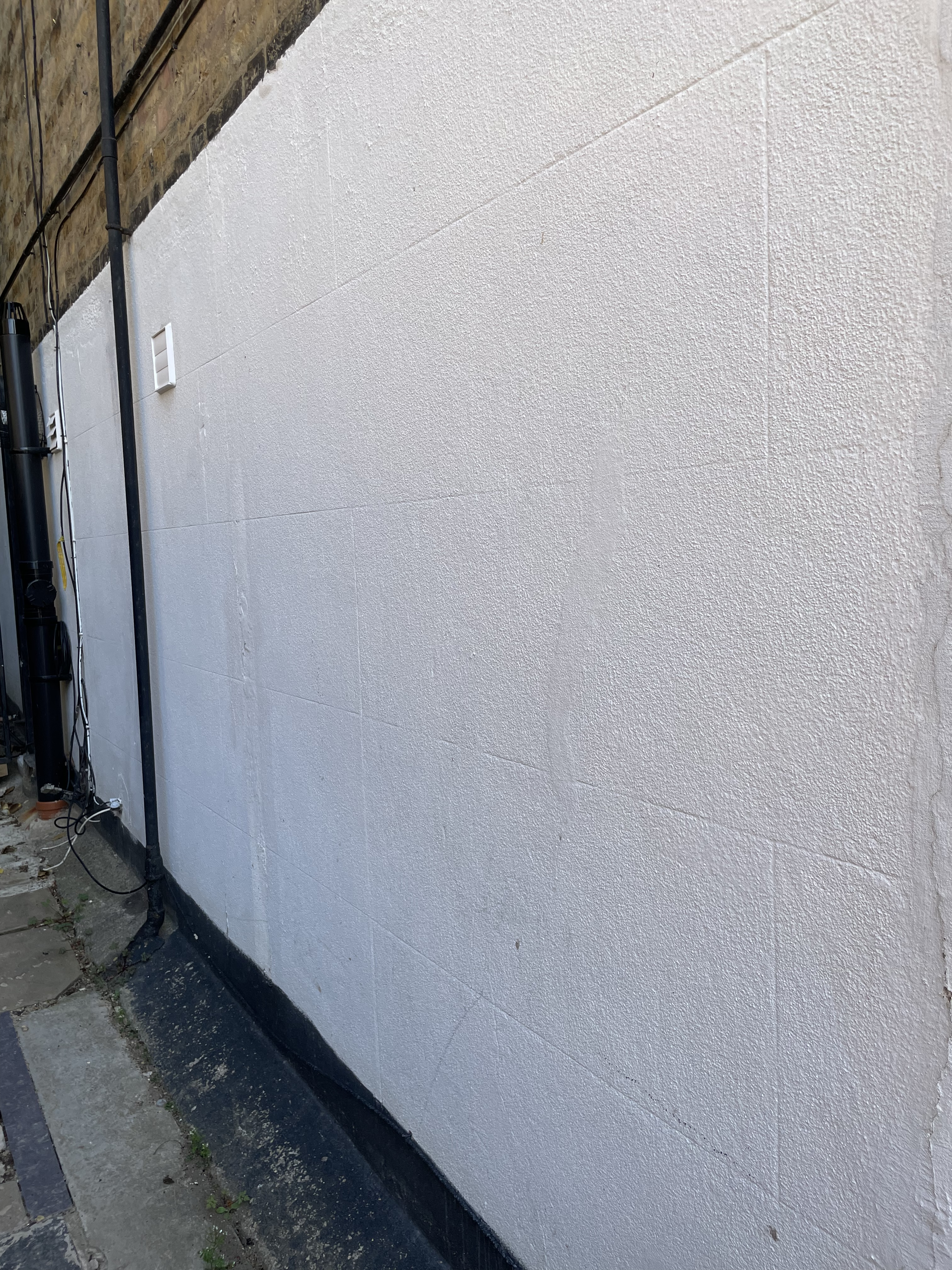 0
0 -
I have edited my analogy somewhat in my previous post. I edit every post I make straight away, pretty much!Beedoo said:
There are a lot of assumptions in there about what work was done. I don’t know exactly what was done I will have to look into it as it was before our time.Doozergirl said:
'Damp proofing' doesn't work. If they render a wall up to a metre high it blocks the damp from showing - it does not remove the damp.Beedoo said:
Started in Sept and finished in Jan. There was an immediate damp mark when they finished which they painted over saying it was now dry.Doozergirl said:Okay. What is on the other side of that wall? Can you take photos of that as well?How recent is recent?
this is ground floor. Actually semi basement and that is the side of an old blocked fireplace. What confuses me is how it’s only where they have done work. It’s previously been damp proofed and we’ve never had any problems till now.If that is what has been done previously then you have an ongoing damp issue that has been hidden by render. The render has been removed and replaced by something more porous that is better able to breathe (and subsequently transfer moisture) and it suddenly starts to suck as much of that damp through because the water is desperate to escape.I do not think that your sparky/builder is responsible here. I think the house has had snake oil salesmen in and the damp has been 'unleashed' so to speak.You need to be looking at the chimney as the culprit. Check ground levels and pointing outside, also need to check the chimney itself for any breaks in the flashing or flaunching around the pot.Photos of outside, please!
Again surely the contractor would at least come and check they hadn’t caused the issue as part of their guarantee? If it’s confirmed they haven’t that’s a different issue but he seems to be washing his hands completelyDamp proofing companies all do the same thing. They inject a water based waterproofing agent into the bricks. From many years of uncovering old 'damp proofing' works, it does absolutely nothing to waterproof anything What they also do is hack back the original lime plaster to a metre high and replace it with a render that is waterproof. That is what stops the damp from showing. If the ingress is bad enough then at some point over the longer term that damp will show above the metre line.If you break the render, it will show through immediately.There is a real lack of knowledge around damp because somehow this industry has been allowed to take hold and hardly anyone in the building trade thinks to use common sense anymore. It's easier to charge the customer to plaster over the issue, quite literally. What should be done is to find the cause and stop it. There are all sorts of things that can cause dampness, especially around a chimney as it brings roofing issues with it as well, but one of the most common causes are the ground level being too high outside...Everything that is supposed to be in heaven is already here on earth.
0 -
Although it is understandable you are focused on the plaster problem, you have got to question the safety of that switch at the moment and whether it can remain in that location.Play with the expectation of winning not the fear of failure. S.Clarke1
-
Where along that wall is this socket?Beedoo said:
Photo of outside.Doozergirl said:Okay. What is on the other side of that wall? Can you take photos of that as well?How recent is recent?0 -
All of that render and the ramp away from the house is attempted damp proofing. It's not original. 🤦🏼♀️Beedoo said:
Photo of outside.Doozergirl said:Okay. What is on the other side of that wall? Can you take photos of that as well?How recent is recent?Where is the floor level inside compared to that?Concrete is brittle and houses move, so it's cracking which can cause ingress even if there wasn't a problem before.There's some external evidence of damp there in the form of the vertical line forward of the soil stack.None of that should be on the wall. The house is suffocating, especially if it's also been rendered inside. If there are leak problems from the chimney stack above as well, you'd not see it.Everything that is supposed to be in heaven is already here on earth.
1 -
And why did they fit the sockets on a different wall to that requested?
If I laid out where I wanted switches and sockets, and my sparky changed it without discussing it first, I'd likely be very peeved. There might be a 'reason', but I'd want it run past me first.
And I would NEVER choose an external wall if an internal wall were an option.0 -
I assume it was easier. To be honest the location didn’t bother us so we didn’t raise it. Obviously if we had known what we know now we would have. And agreed they should have discussed it with us firstBendy_House said:And why did they fit the sockets on a different wall to that requested?
If I laid out where I wanted switches and sockets, and my sparky changed it without discussing it first, I'd likely be very peeved. There might be a 'reason', but I'd want it run past me first.
And I would NEVER choose an external wall if an internal wall were an option.0 -
Sounds scary. Given that we had large scale renovations and they could see all this would you expect them to be wise to not messing with that wall especially as we didn’t ask them to?Doozergirl said:
All of that render and the ramp away from the house is attempted damp proofing. It's not original. 🤦🏼♀️Beedoo said:
Photo of outside.Doozergirl said:Okay. What is on the other side of that wall? Can you take photos of that as well?How recent is recent?Where is the floor level inside compared to that?Concrete is brittle and houses move, so it's cracking which can cause ingress even if there wasn't a problem before.There's some external evidence of damp there in the form of the vertical line forward of the soil stack.None of that should be on the wall. The house is suffocating, especially if it's also been rendered inside. If there are leak problems from the chimney stack above as well, you'd not see it.I see now it’s not entirely their fault but I do feel like they should have been advising us appropriately and not putting switches in a risky place
what action do you advise?0










Confirm your email address to Create Threads and Reply

Categories
- All Categories
- 354.3K Banking & Borrowing
- 254.4K Reduce Debt & Boost Income
- 455.4K Spending & Discounts
- 247.3K Work, Benefits & Business
- 604K Mortgages, Homes & Bills
- 178.4K Life & Family
- 261.5K Travel & Transport
- 1.5M Hobbies & Leisure
- 16K Discuss & Feedback
- 37.7K Read-Only Boards