We’d like to remind Forumites to please avoid political debate on the Forum.
This is to keep it a safe and useful space for MoneySaving discussions. Threads that are – or become – political in nature may be removed in line with the Forum’s rules. Thank you for your understanding.
📨 Have you signed up to the Forum's new Email Digest yet? Get a selection of trending threads sent straight to your inbox daily, weekly or monthly!
The Forum now has a brand new text editor, adding a bunch of handy features to use when creating posts. Read more in our how-to guide
Fitting a replacement skirting board advice

PierremontQuaker03
Posts: 345 Forumite




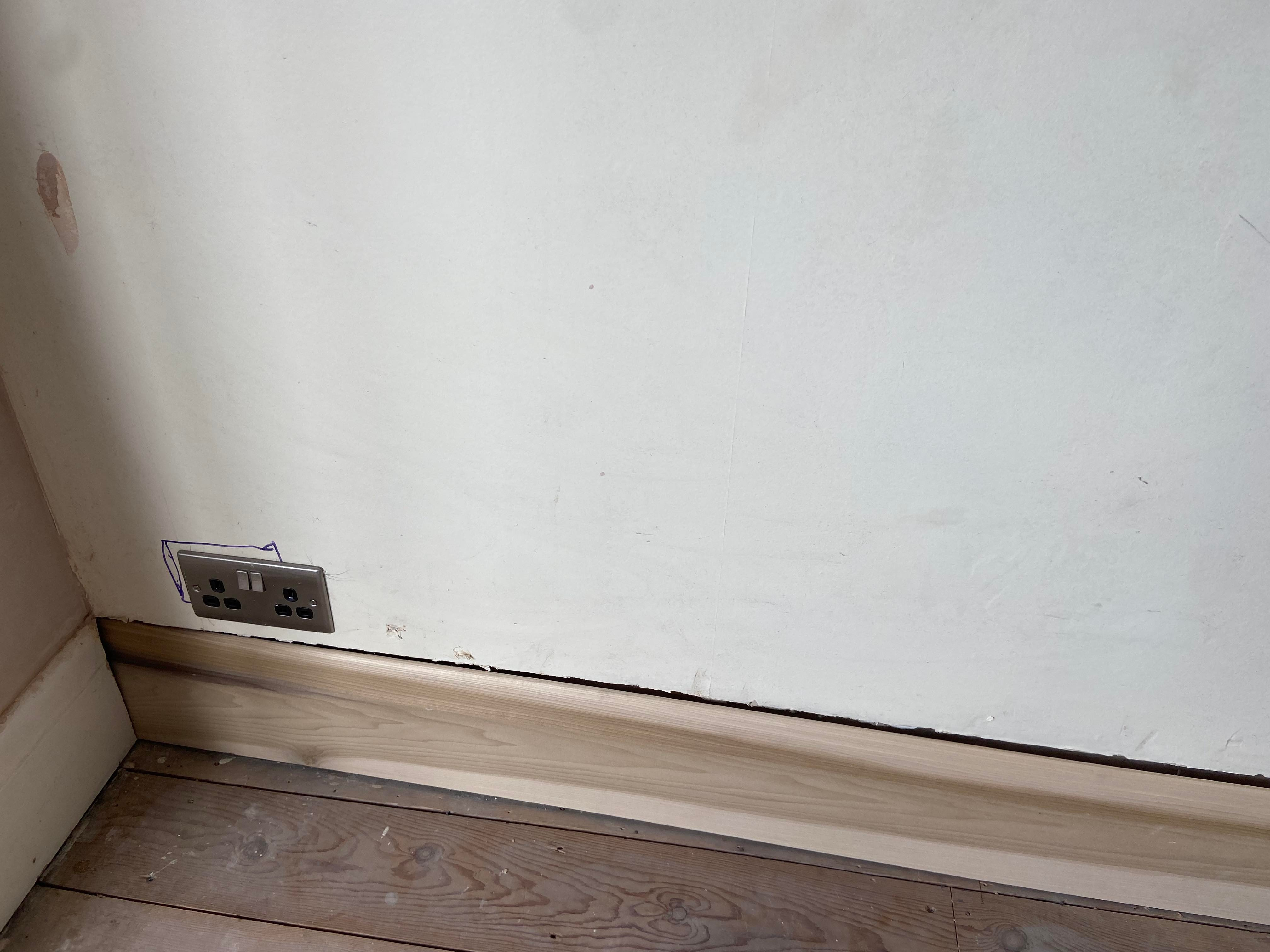
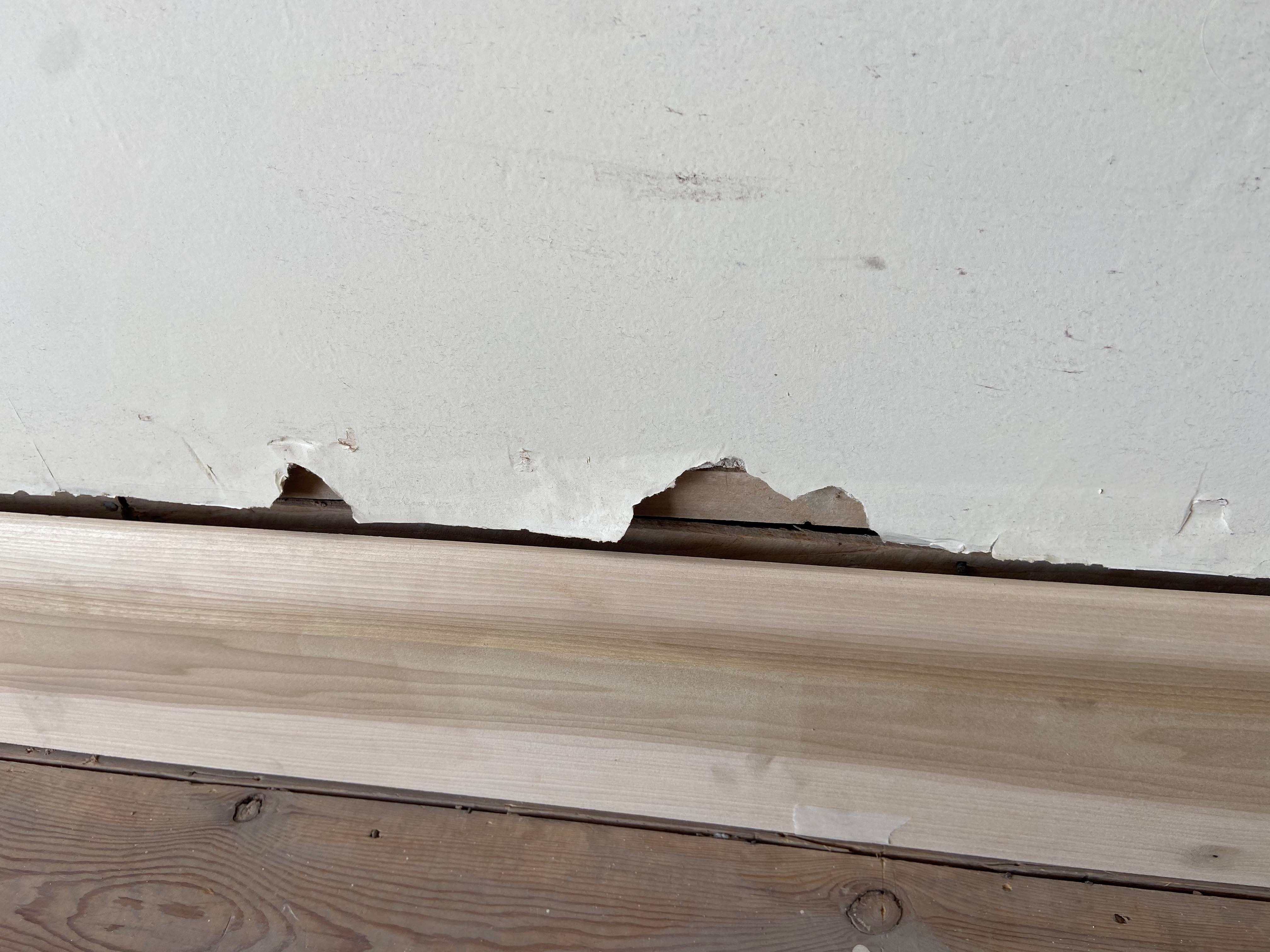
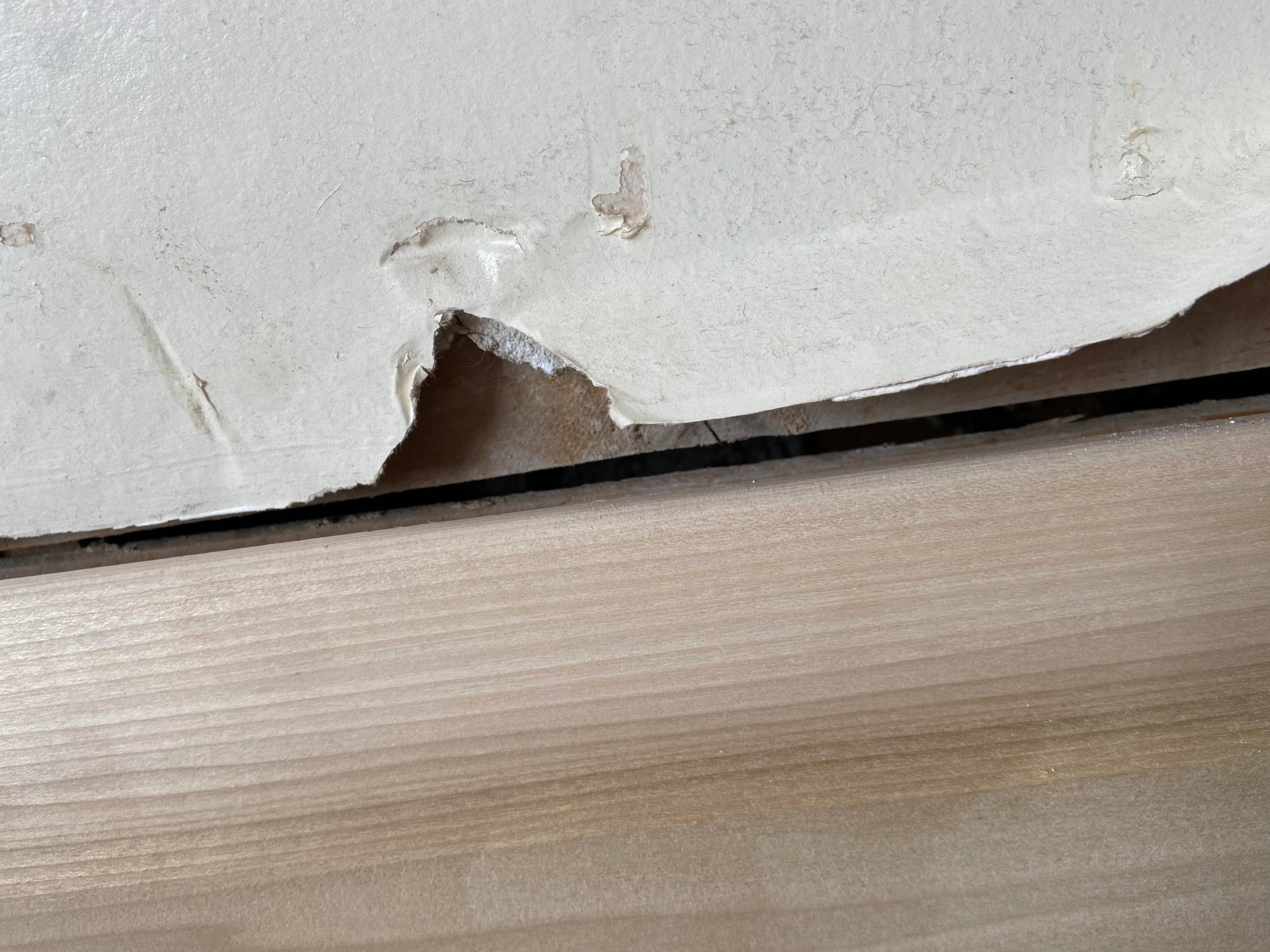
Hi All, I have removed the original skirting board and replaced it with a new one (yet to fit it). Some of the plaster is giving way at the bottom (the wall is lined and has been painted). I am wondering if I should just remove all the lining paper on this section of wall so that when the skirting board has been fitted then replacement plaster can be put in to patch up before painting a new colour. Or shall I leave the lining paper on a majority of the wall and just take the lining paper off in a straight line across the bottom where it is less brittle or round the parts that are loose - but I suppose then there will be a clear separation between the two when painting (the bottom of the wall will not be seen much as I will have a bed and two sets of draws either side. Secondly, the skirting board, any advice how to fit? I take it glue/adhesive is the way to go now? Thanks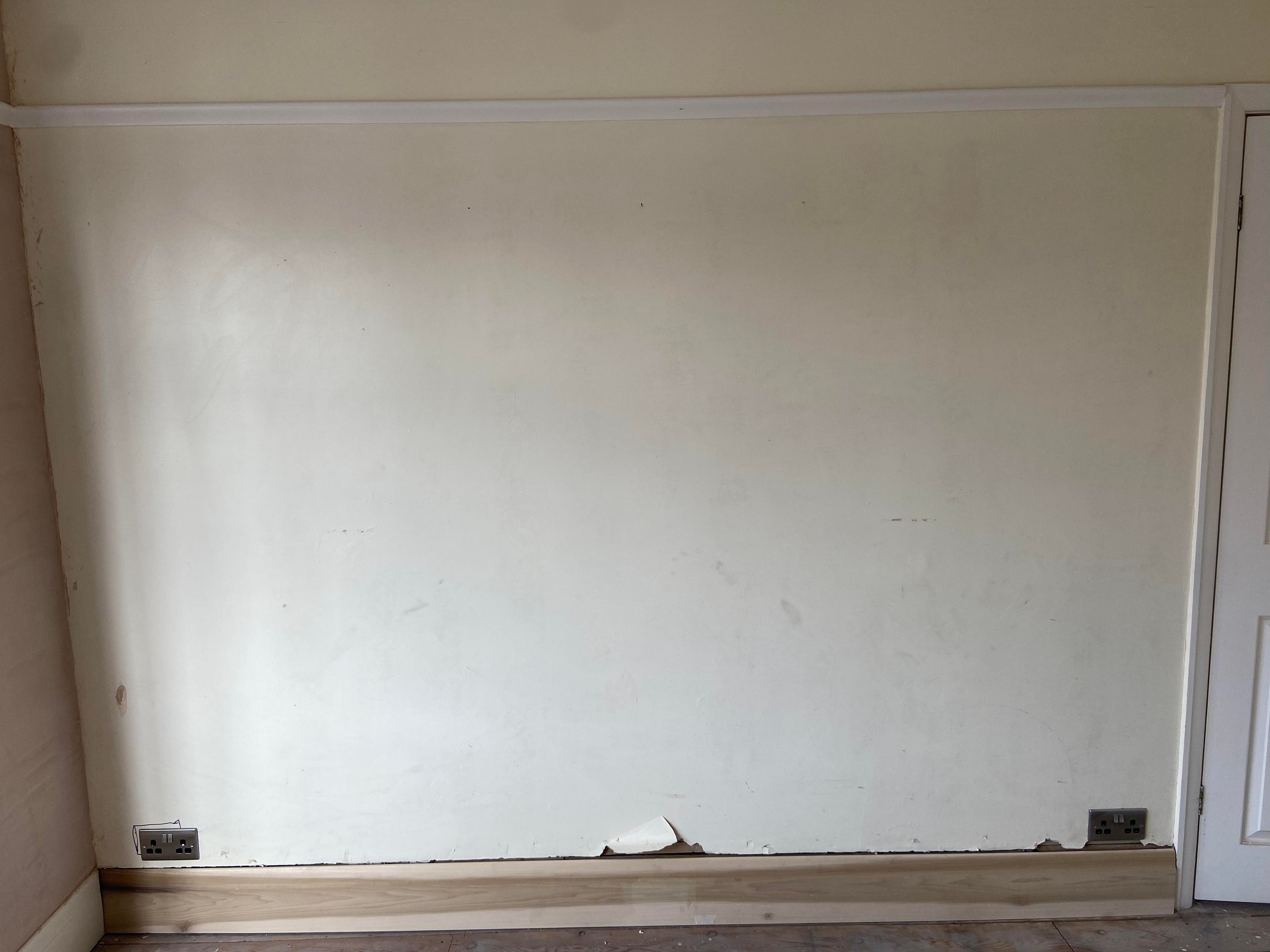
0
Comments
-
Oooo... Lath & plaster wall....Normally, the plaster goes (nearly) down to the floor and the skirting is used to hide the gap. I would suggest removing the skirting and any lining paper, and then fill with plaster - Bonding plaster will be quicker & cheaper than using lime and can be applied in thick layers.If you plan on painting the skirting, put some pencil marks on the floorboards to show where the vertical studs are located. Screws every other stud half way up the skirting will hold it in place. Countersink the screw holes, and then put a thin smear of filler over the heads before painting (worth priming & undercoating the skirting before fixing to the wall).Any language construct that forces such insanity in this case should be abandoned without regrets. –
Erik Aronesty, 2014
Treasure the moments that you have. Savour them for as long as you can for they will never come back again.2 -
FreeBear said:Oooo... Lath & plaster wall....Normally, the plaster goes (nearly) down to the floor and the skirting is used to hide the gap. I would suggest removing the skirting and any lining paper, and then fill with plaster - Bonding plaster will be quicker & cheaper than using lime and can be applied in thick layers.If you plan on painting the skirting, put some pencil marks on the floorboards to show where the vertical studs are located. Screws every other stud half way up the skirting will hold it in place. Countersink the screw holes, and then put a thin smear of filler over the heads before painting (worth priming & undercoating the skirting before fixing to the wall).
Can bonding plaster be used if it is an outside wall? Have heard it can cause problems with moisture.
0 -
morhen said: Can bonding plaster be used if it is an outside wall? Have heard it can cause problems with moisture.Gypsum plaster doesn't like damp conditions - The gypsum is water soluble, and will turn to a powdery mush after a while. If there are any concerns about a damp wall (i.e. solid brick or stone), then lime plaster is much more preferable.A lime plaster is a bit more expensive to purchase, but is very forgiving - It doesn't go off & harden as quick as a gypsum plaster would. And if made from lime putty, will keep indefinitely in a sealed tub.
Any language construct that forces such insanity in this case should be abandoned without regrets. –
Erik Aronesty, 2014
Treasure the moments that you have. Savour them for as long as you can for they will never come back again.1 -
mmmm Are sockets not too low ??? should be installed at least 450mm up from the floor level of a room/350mm from corners.
Looks like plaster board is too short?
Is that raw unfinished plasterboard?? eg not plastered yet..(there is a paper covering on plaster board)
If my assumptions are correct i would move sockets up to conform to building regs , patch in new piece of plasterboard so it reaches floor. Put top coat / finish on raw plasterboard. Affix skirting using nails or screws. Job done lol
I would also mitre corner of the skirting. If it was an older house would possibly consider replacing all skirting in room with broad profile skirting save on patching in new plasterboard.(if it was going too look ok)
You could just bodge it , slap the skirting on with no nails/screws and fill the gap with filler.
0 -
Building regulations do not apply retrospectively, so no requirement to move the sockets (provided they pre-date).justwhat said:mmmm Are sockets not too low ??? should be installed at least 450mm up from the floor level of a room/350mm from corners.
Looks like plaster board is too short?
Is that raw unfinished plasterboard?? eg not plastered yet..(there is a paper covering on plaster board)
If my assumptions are correct i would move sockets up to conform to building regs , patch in new piece of plasterboard so it reaches floor. Put top coat / finish on raw plasterboard. Affix skirting using nails or screws. Job done lol
I would also mitre corner of the skirting. If it was an older house would possibly consider replacing all skirting in room with broad profile skirting save on patching in new plasterboard.(if it was going too look ok)
You could just bodge it , slap the skirting on with no nails/screws and fill the gap with filler.
It doesn't look like plasterboard to me, the paper is far too thick an the lath can be seen behind the plaster, also it would be highly irregular to fit a picture rail to bare plasterboard. I'm certain Freebear is correct about it being lath and plaster.
Finally skirting board should not be mitred for internal corners (like shown), they should be shaped to butt up flush (one board flush to wall, the other profiled to overlap without any gap).1 -
Remove the skirting board.Plaster the wall down to the floor leaving a small gap at the bottom. It may be easier to remove some lathe and screw a strip of plasterboard instead first.Fix the skirting board back.Any chance it is a hollow plastic skirting board? If so, it's almost impossible to marry it with usual skirting board and it needs special corner fittings. Use the same skirting board around the room.0
-
daivid said: It doesn't look like plasterboard to me, the paper is far too thick an the lath can be seen behind the plaster,<meh> It might be plasterboard, but there are a couple of wisps visible in one of the images that suggest hair. If the OP takes a closer look, if it is PB, there will be a layer of paper at the back.And yes, internal joints on skirting should always be scribed - It is not difficult, and you always end up with a neater job. A scribed joint also allows the skirting to expand/contract without it bowing out in the middle of the wall.
Any language construct that forces such insanity in this case should be abandoned without regrets. –
Erik Aronesty, 2014
Treasure the moments that you have. Savour them for as long as you can for they will never come back again.0









Confirm your email address to Create Threads and Reply

Categories
- All Categories
- 354.3K Banking & Borrowing
- 254.4K Reduce Debt & Boost Income
- 455.4K Spending & Discounts
- 247.3K Work, Benefits & Business
- 604K Mortgages, Homes & Bills
- 178.4K Life & Family
- 261.5K Travel & Transport
- 1.5M Hobbies & Leisure
- 16K Discuss & Feedback
- 37.7K Read-Only Boards