We’d like to remind Forumites to please avoid political debate on the Forum.
This is to keep it a safe and useful space for MoneySaving discussions. Threads that are – or become – political in nature may be removed in line with the Forum’s rules. Thank you for your understanding.
📨 Have you signed up to the Forum's new Email Digest yet? Get a selection of trending threads sent straight to your inbox daily, weekly or monthly!
The Forum now has a brand new text editor, adding a bunch of handy features to use when creating posts. Read more in our how-to guide
Wiring new ceiling light LED
Comments
-
That looks as if it's possibly the last light on a "Loop in" lighting circuit or you may have part or all radial wiring on the lighting circuit(s). How many Green Earth leads are there is it 2 or 3?
One of the two black wires should be the "Switched Live" which brings power from the light switch and should (have) been identified with a red or brown sleeve. The other is the neutral wire which is connected to the lighting circuit. If your tests leads are long enough you can test for continuity between the black lead terminating in the light switch and the black leads at the ceiling to identify which is the "Switched Live" with POWER OFF at the Mains of course
The two red wires are both live, one will be connected to the circuit to bring power to the ceiling rose (which has been removed) the other goes to the light switch which when switched on connects the power to the black "Switched Live" mentioned previously.0 -
If I'm testing which one is the switched live with a multimeter how is this done? Do I put black prong on one black wire and the red prong on the other wire to check?Nearlyold said:That looks as if it's possibly the last light on a "Loop in" lighting circuit or you may have part or all radial wiring on the lighting circuit(s). How many Green Earth leads are there is it 2 or 3?
One of the two black wires should be the "Switched Live" which brings power from the light switch and should (have) been identified with a red or brown sleeve. The other is the neutral wire which is connected to the lighting circuit. If your tests leads are long enough you can test for continuity between the black lead terminating in the light switch and the black leads at the ceiling to identify which is the "Switched Live" with POWER OFF at the Mains of course
The two red wires are both live, one will be connected to the circuit to bring power to the ceiling rose (which has been removed) the other goes to the light switch which when switched on connects the power to the black "Switched Live" mentioned previously.0 -
WITH POWER OFF at the fuse board - You need to put one Multimeter probe on one of the black wires in the ceiling and the other probe on the black wire terminal in the light switch that controls that light with the switch in the off position, Your leads may not be long enough so you'll need either some proper flying lead extensions of a suitable length or make up a length of wire with a couple of crocodile clips or similar on the ends to suit.
Set your Multimeter to test for continuity if it has that function or to a suitable resistance range and test for continuity ie resistance. The pairing with continuity/virtually no resistance will be the "Switched Live" at the ceiling and the No Continuity/high/infinite resistance pairing will be the Neutral Black Wire at the ceiling.
The switched Live at both ends requires a short piece of Red or Brown sleeving to be slipped onto the wire for future identification
If you're not absolutely sure of what you are doing and why then get an electrician in.1 -
Nearlyold said:
The switched Live at both ends requires a short piece of Red or Brown sleeving to be slipped onto the wire for future identification
If you're not absolutely sure of what you are doing and why then get an electrician in.
Adding sleeving to one of the black wires is potentially dangerous unless a polarity test has been carried out first.
As I said previously, it is dangerous to make assumptions, especially with old wiring of unknown condition. The first assumption - that the OP actually has a "switched live" has already been made by others and accepted by the OP. This is how people end up getting hurt or killed.
And it isn't clear why identifying the "switched live" is necessary in this case. If the polarity of the supply to the light fitting is important, then just identifying which wire is believed to be the "switched live" isn't enough. There is still a risk of the OP toasting the light fitting, and possibly themselves.
I have to agree with the advice to get an electrician in.
0 -
Another way to see which is the switched live, with the power off, is to use the meter's continuity test to see which of the two black wires connects with the reds when the switch is turned on and off.One wire is connected to the live, via the switch. The other black is neutral.Stick some red or brown sleeving on the switched live for future reference.From the photo, it looks to me as though the reds have been connected together by twisting and covering in tape. If that's the case, then it's nasty. It should be done properly using a terminal block or Wago connector.If it sticks, force it.
If it breaks, well it wasn't working right anyway.0 -
Such as referring to an old rewirable consumer unit as "perfectly safe"?Section62 said:
Accuracy gets more important when you talk about something like electricity which has the capability to kill if a misunderstanding leads to something being done which shouldn't be done. But it is also important to make sure the person you are communicating with is understanding the words you are using, rather than assuming they will because they are the technically correct ones.0 -
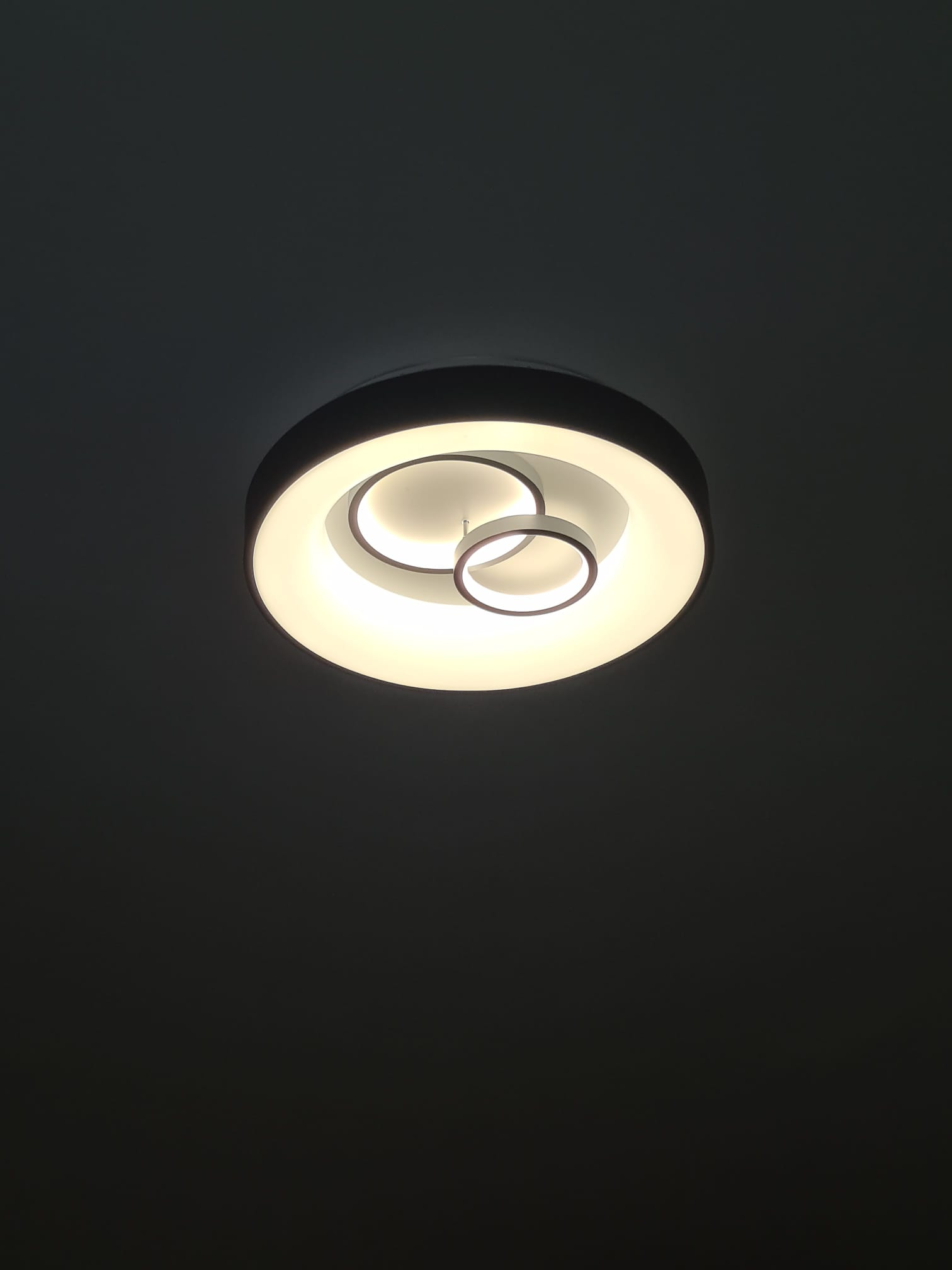
Thanks for the help all, managed to get it sorted without killing myself

4 -
I'm not sure what your point is. Live conductor has a very specific definition - i.e. intended to carry current in normal use (other than, by convention, a PEN conductor). And the nominal phase to Earth voltage is 230V.grumbler said:
Well, did you ever measure the voltage between Neutral and Earth? It's close to zero (if there are no faults). Between Line and Earth it's 240.Risteard said:grumbler said:binft said:
see belowgrumbler said:
Positive/negative indicates 12V - if this really is the case. Hard to believe. Can you post a photo or a link?binft said:
New led lamp is straight positive/negative connection no other cables so that's why I thought it would be a straight swap as they are indicated to be this kind of swap when you read the description on them.Cornucopia said:Those cables are ancient - the color scheme before the last one. Google says pre-1977. You might want to get a professional opinion on whether re-wiring would be recommended.
As always, mains voltages are dangerous, and it's bad idea to work with wiring unless you know what you are doing.
It will (probably) be the two black wires you need, unless your new fitting has metal parts and requires an Earth connection (that will be the green).
I assume where you say "normal 12v" that's a typo. This is of course 240v mains wiring. If your LED unit needs 12v, then you need a transformer, too.
and this is the old light connection that had the two black cables in itBoth are 240V Live and Neutral, not positive and negative. Live is AC (alternating voltage)ETA: I don't think that this is really important, but it's still worth finding out which one of two black wires is switched live and connect it to the brown (L) wire of the lamp. Most likely, it doesn't matter which wire is connected to which.
Neutral is every bit as much a live conductor as a phase conductor is.0










Confirm your email address to Create Threads and Reply

Categories
- All Categories
- 354.1K Banking & Borrowing
- 254.3K Reduce Debt & Boost Income
- 455.3K Spending & Discounts
- 247.1K Work, Benefits & Business
- 603.8K Mortgages, Homes & Bills
- 178.4K Life & Family
- 261.3K Travel & Transport
- 1.5M Hobbies & Leisure
- 16.1K Discuss & Feedback
- 37.7K Read-Only Boards