We’d like to remind Forumites to please avoid political debate on the Forum.
This is to keep it a safe and useful space for MoneySaving discussions. Threads that are – or become – political in nature may be removed in line with the Forum’s rules. Thank you for your understanding.
📨 Have you signed up to the Forum's new Email Digest yet? Get a selection of trending threads sent straight to your inbox daily, weekly or monthly!
The Forum now has a brand new text editor, adding a bunch of handy features to use when creating posts. Read more in our how-to guide
Damp Proof Rods Quote / Advice

TamVilla80
Posts: 596 Forumite



Evening all. Just want to pick your brains, please?!
We have a patch of damp in our 1901 mid terrace house (no surprise really), it's always there but worse at some times, we can see a salty deposit come through sometimes, its probably about 1.5 meters long / 45 cm high. It's on a external wall, it's on the wall of the tunnel between us and the neighbours.
Today we had a quote from a local damp specialist but I'm cynical! He came and said we need to insert damp proof rods 5 inched apart all around the outside (13meters) and that the plaster needs chipping out to 1.5 meters high and redoing on just the one room. Quoted over £1,800 but today's 'special offer' would be £1,150.
I'm not one for sales tactics so automatically he has my back up! My questions really are if the problem is only a 1.5 meter strip on one wall, does the whole front / side need doing? (I did ask this but he just said 'might as well so we dont have to come back) and, do they need to do the internal part as I have an excellent plasterer that could do the job better.
What cost would you expect for the work (13 meters) does it need doing like this / is the wrong course of action? Any help or advice would be appreciated! Thank you
We have a patch of damp in our 1901 mid terrace house (no surprise really), it's always there but worse at some times, we can see a salty deposit come through sometimes, its probably about 1.5 meters long / 45 cm high. It's on a external wall, it's on the wall of the tunnel between us and the neighbours.
Today we had a quote from a local damp specialist but I'm cynical! He came and said we need to insert damp proof rods 5 inched apart all around the outside (13meters) and that the plaster needs chipping out to 1.5 meters high and redoing on just the one room. Quoted over £1,800 but today's 'special offer' would be £1,150.
I'm not one for sales tactics so automatically he has my back up! My questions really are if the problem is only a 1.5 meter strip on one wall, does the whole front / side need doing? (I did ask this but he just said 'might as well so we dont have to come back) and, do they need to do the internal part as I have an excellent plasterer that could do the job better.
What cost would you expect for the work (13 meters) does it need doing like this / is the wrong course of action? Any help or advice would be appreciated! Thank you
0
Comments
-
Could you post us a picture of the affected area, inside and out? Showing entire walls where possible, definitely the ground level.Everything that is supposed to be in heaven is already here on earth.
1 -
Look to see where the damp proof course is in relation to the path up the alley - If there is one (1901 is on the cusp on when DPCs became commonplace), it should be in the mortar bed just under the front door sill. If this is a concrete path, and above the DPC, damp will be a continuous problem that no "treatments" will cure. In this situation, the correct cure is to lower the level of the path.If you are plastering the walls internally, use a pure lime plaster and avoid using a modern vinyl paint on it. Lime plaster is better suited to areas that suffer from the occasional damp. Gypsum plasters (the pink or brown stuff) are water soluble and turn to a powdery mush within a year or three.Any language construct that forces such insanity in this case should be abandoned without regrets. –
Erik Aronesty, 2014
Treasure the moments that you have. Savour them for as long as you can for they will never come back again.1 -
Inserting the rods might arguably do nothing to change the damp in the wall. Replacing the interior plaster will make it all look nice and mask the problem for long enough for the "damp specialist" to be long gone, when you realise the mistake. Follow Freebear's advice and also have a good look at the structure of the tunnel - it should be inherently dry and not causing water penetration, but the ground surface may have risen over time as new path treatments have been laid.1
-
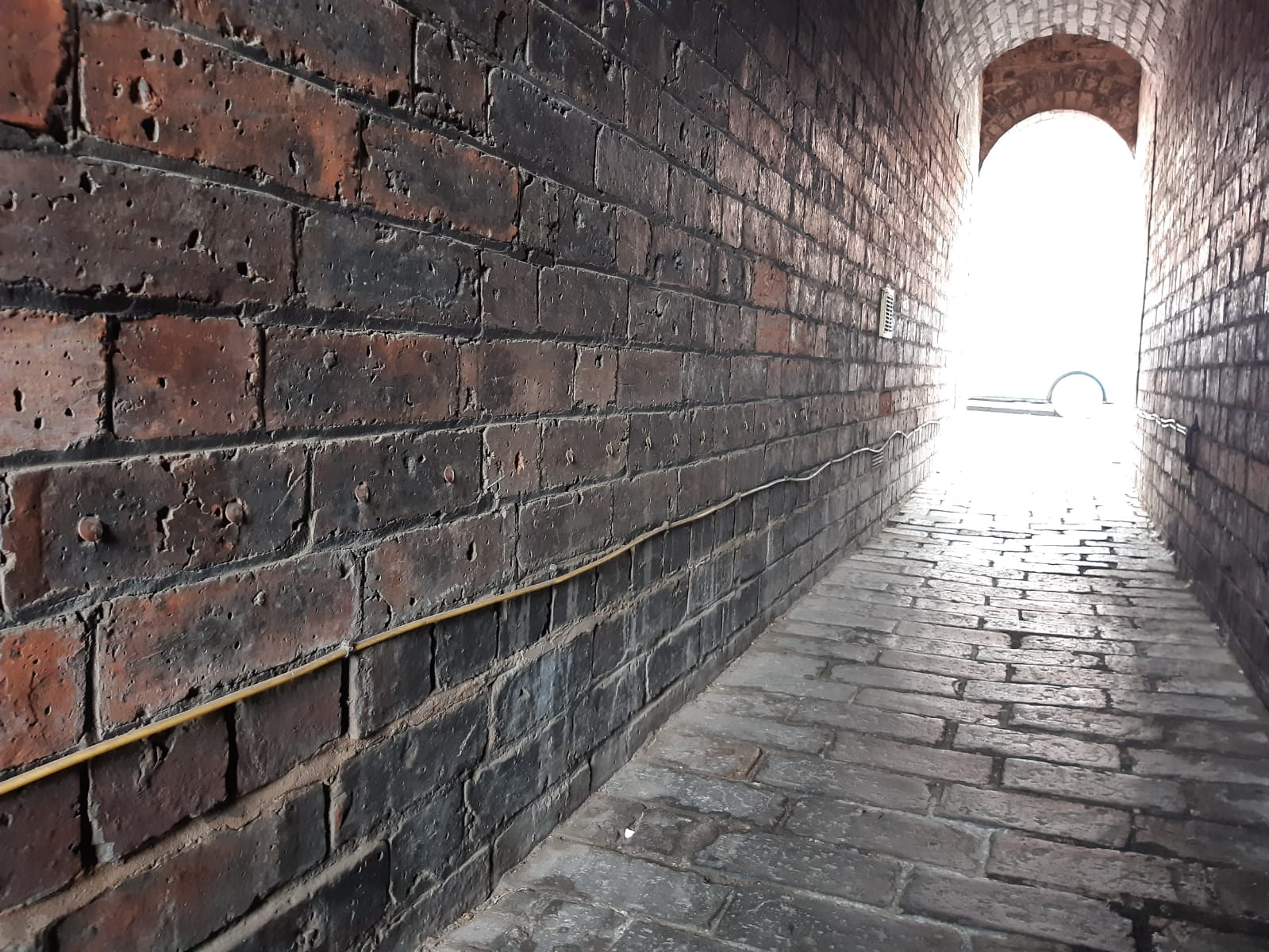
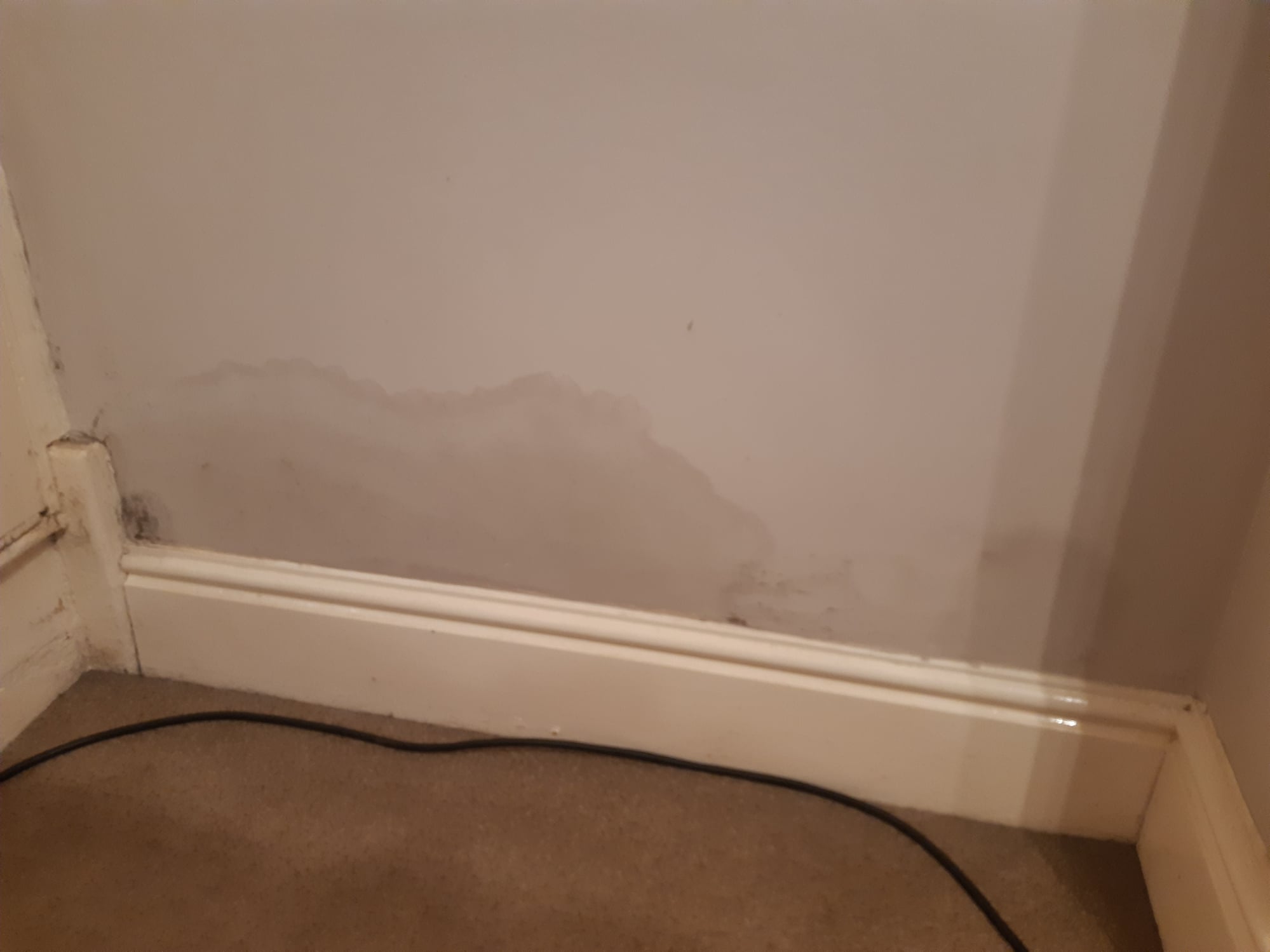
Thanks for the replies! There are some dots along the alleyway so think something has been done previously, it's the original path so guess that the level should be ok?0 -
Do you have a suspended wooden floor? Where's the internal floor level in relation to the ground outside?Are there any pipes behind the plaster?Outside doesn't look damp, nor does it really look like it has the opportunity to be. Is it close to the front of the house at that point? Any rainwater pipes somewhere near?The holes are a previously injected DPC, which should tell you all you need to know about how useful these 'damp proofing' treatments really are.Everything that is supposed to be in heaven is already here on earth.
0 -
Doozergirl said: The holes are a previously injected DPC, which should tell you all you need to know about how useful these 'damp proofing' treatments really are.Wonder if it has had the waterproof render/plaster slapped on the internal wall as well..The paving in the passageway looks as if it may be original, so I doubt that is the cause of the problem. More likely, a previous owner had a damp "survey" carried out and got conned in to having the "treatments" done. Maybe as a condition for a mortgage... I'd be tempted to go back to bare brick internally and replaster with lime.Any language construct that forces such insanity in this case should be abandoned without regrets. –
Erik Aronesty, 2014
Treasure the moments that you have. Savour them for as long as you can for they will never come back again.1 -
The floor is the original tiles under the carpet and is above the level of the path. No pipes in the wall, the main water supply to us / neighbours runs under the path up the alley. The damp point is about half way the alley.
If we were to take off the damaged plaster and replace with lime, would we have to do the whole wall or just the bottom?
0 -
As it's an external 9 inch solid wall, you may have condensation forming in that spot.0
-
If it was condensation, would that draw the salts out? It can look a bit fuzzy sometimes?
What would be the best way to stop it?
Sorry for all the questions, as you can probably tell, I havent a clue!0 -
It can do, but salts tend to stop mould forming. The salts can come from the mortar, render or bricks. Lime plaster as mentioned can help.1






Confirm your email address to Create Threads and Reply

Categories
- All Categories
- 354.3K Banking & Borrowing
- 254.4K Reduce Debt & Boost Income
- 455.4K Spending & Discounts
- 247.3K Work, Benefits & Business
- 604K Mortgages, Homes & Bills
- 178.4K Life & Family
- 261.5K Travel & Transport
- 1.5M Hobbies & Leisure
- 16.1K Discuss & Feedback
- 37.7K Read-Only Boards