We’d like to remind Forumites to please avoid political debate on the Forum.
This is to keep it a safe and useful space for MoneySaving discussions. Threads that are – or become – political in nature may be removed in line with the Forum’s rules. Thank you for your understanding.
PLEASE READ BEFORE POSTING: Hello Forumites! In order to help keep the Forum a useful, safe and friendly place for our users, discussions around non-MoneySaving matters are not permitted per the Forum rules. While we understand that mentioning house prices may sometimes be relevant to a user's specific MoneySaving situation, we ask that you please avoid veering into broad, general debates about the market, the economy and politics, as these can unfortunately lead to abusive or hateful behaviour. Threads that are found to have derailed into wider discussions may be removed. Users who repeatedly disregard this may have their Forum account banned. Please also avoid posting personally identifiable information, including links to your own online property listing which may reveal your address. Thank you for your understanding.
📨 Have you signed up to the Forum's new Email Digest yet? Get a selection of trending threads sent straight to your inbox daily, weekly or monthly!
The Forum now has a brand new text editor, adding a bunch of handy features to use when creating posts. Read more in our how-to guide
Buying property with historical subsidence - underpinned 20 years ago...

tui85
Posts: 17 Forumite


Hello,
I'm looking at buying a property that was underpinned 20 years ago as a result of subsidence. As yet I am unaware of the cause of this subsidence. We have the following documents regarding the historical subsidence:
- a Certificate of Structural Adequacy. This is a letter from the sellers structural engineer confirming what work was completed (traditional mass concrete underpinning on 20/03/00) and that the work appeared to have achieved its objective. Dated 4 months after the work was completed (21/07/00)
- A cover letter from the structural engineer (full letter not enclosed) advising that the "full extent of the remedial works were not in fact carried out at Mrs xxxx was unable to fund the total cost and a reduced schedule was agreed". This is of course concerning. This is dated October 2020. 7 months after the work was completed.
The property is a 1930s detached house, spilt into 2 flats. We are looking at the ground floor flat. It is the "front and flank" of the property that has been underpinned.
Given that the subsidence appears to have been remedied 20 years ago, and assuming that our structural report shows that there has been no further movement, would you feel comfortable moving forward with such a purchase?
We are of course digging deeper ourselves and looking to get all information we possibly can as to the cause of the subsidence and importantly what "remdial work was not carried out"....
Any advice greatly appreciated.
I'm looking at buying a property that was underpinned 20 years ago as a result of subsidence. As yet I am unaware of the cause of this subsidence. We have the following documents regarding the historical subsidence:
- a Certificate of Structural Adequacy. This is a letter from the sellers structural engineer confirming what work was completed (traditional mass concrete underpinning on 20/03/00) and that the work appeared to have achieved its objective. Dated 4 months after the work was completed (21/07/00)
- A cover letter from the structural engineer (full letter not enclosed) advising that the "full extent of the remedial works were not in fact carried out at Mrs xxxx was unable to fund the total cost and a reduced schedule was agreed". This is of course concerning. This is dated October 2020. 7 months after the work was completed.
The property is a 1930s detached house, spilt into 2 flats. We are looking at the ground floor flat. It is the "front and flank" of the property that has been underpinned.
Given that the subsidence appears to have been remedied 20 years ago, and assuming that our structural report shows that there has been no further movement, would you feel comfortable moving forward with such a purchase?
We are of course digging deeper ourselves and looking to get all information we possibly can as to the cause of the subsidence and importantly what "remdial work was not carried out"....
Any advice greatly appreciated.
0
Comments
-
I would not be unduly worried, though I would consider carefully.It seems that despite the 'reduced' schedule of works, it "appeared to have achieved its objective".When getting a survey done (and I would get a survey done!) I would use a surveyor willing to speak to you first, and after, and willing to focus specifically on the issue. A cheap standard off-the-shelf survey will look at and tick the standard areas, but you'd want some very specific feedback on subsidence.Provided the survey does not show any signs of movement (recent cracks etc), or of 'covering up' (eg recent repointing) in the affected area you should be fine.But consider also insurance. You'll probably have to declare the subsidence and this may affect a) whether a specific insurer is willing to provide cover and b) might increase premiums.
1 -
(When you say "This is dated October 2020. 7 months after the work was completed." - I guess you mean October 2000.)
I assume it's a leasehold flat. You probably need to investigate the buildings insurance...- Who is responsible for buildings insurance? It's usually the freeholder
- Has the subsidence history been declared?
- Is there ongoing cover for subsidence, and if so, is the excess 'normal'? (You might not get a mortgage if there is no subsidence cover and/or the excess is high)
- ... and is the premium 'affordable'?
If a house had a subsidence issue 20 years ago, and no problems since, there are quite a few insurers who would insure a house on normal terms (but also quite a few that wouldn't). I'm not sure about insurers for houses converted into blocks of flats.
On a more general level, it might be worth getting a structural engineers inspection.1 -
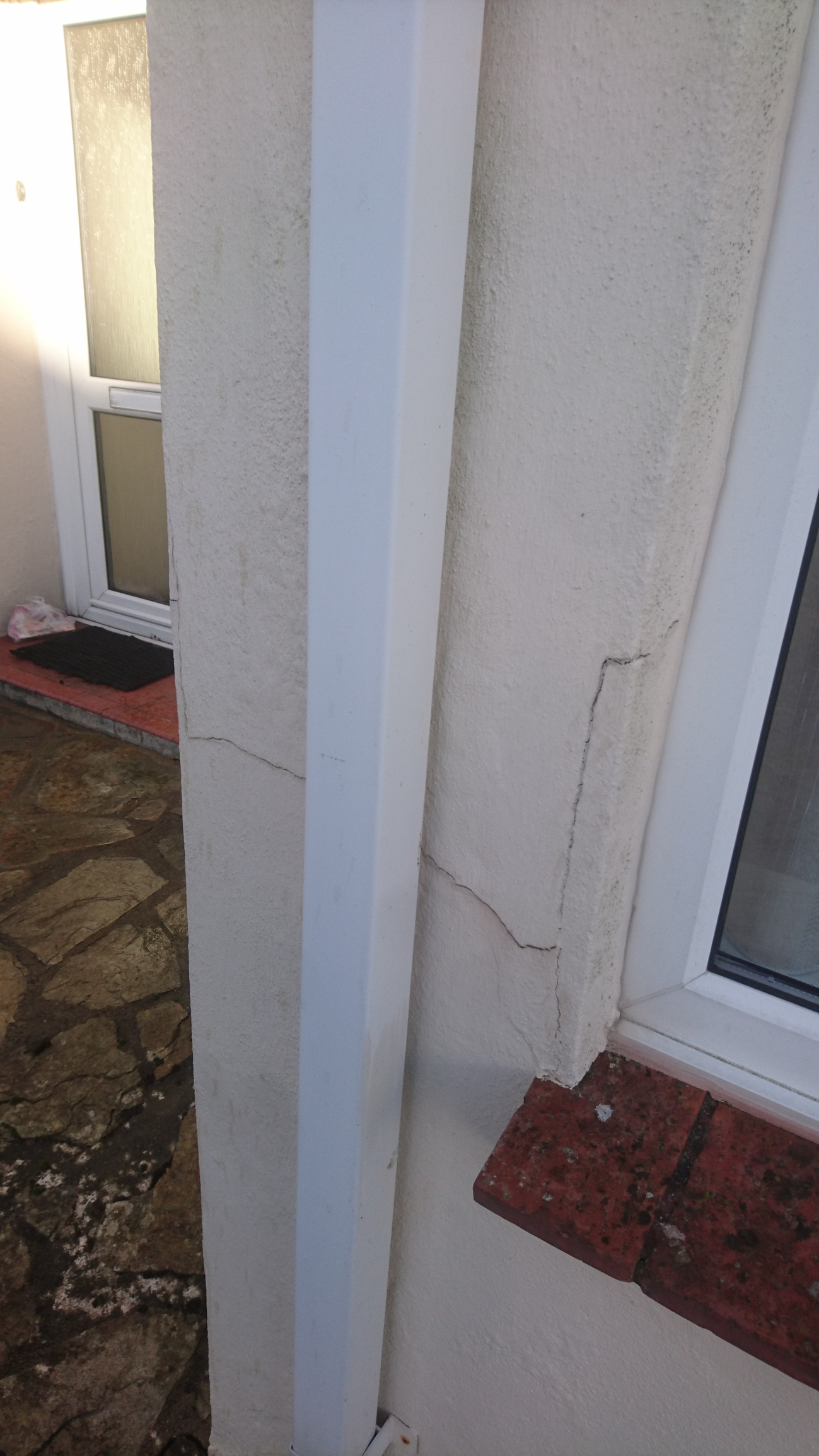
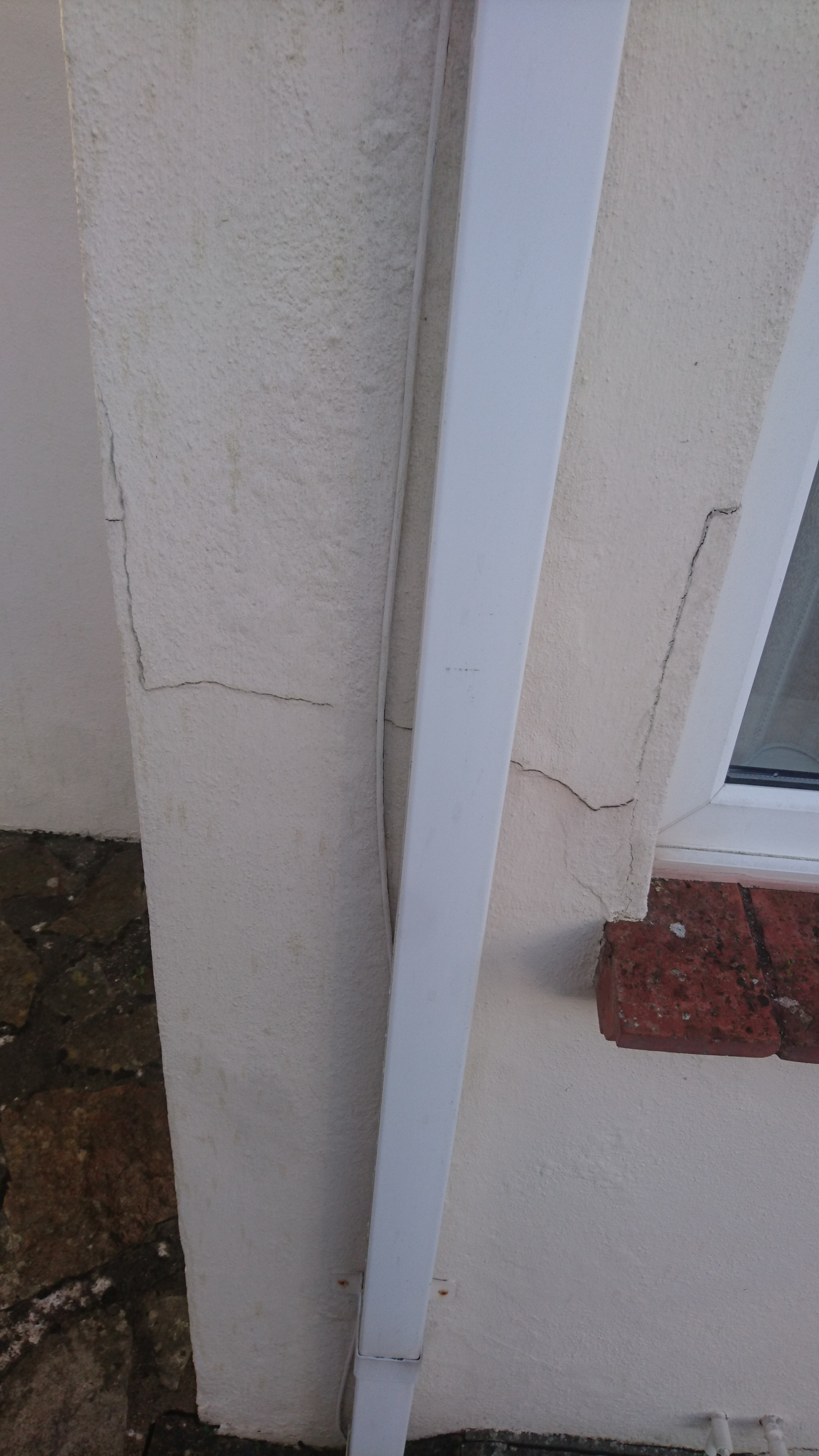
Thank you both for taking the time to respond. We visited the property again other day and noticed quite a major exterior crack in the front of the house. If this crack has appeared since the underpinning I think this is a no go.... If however the crack is from the original subsidence and just wasn't repaired (perhaps it's only aesthetic?), then there is a lot less to be concerned about.
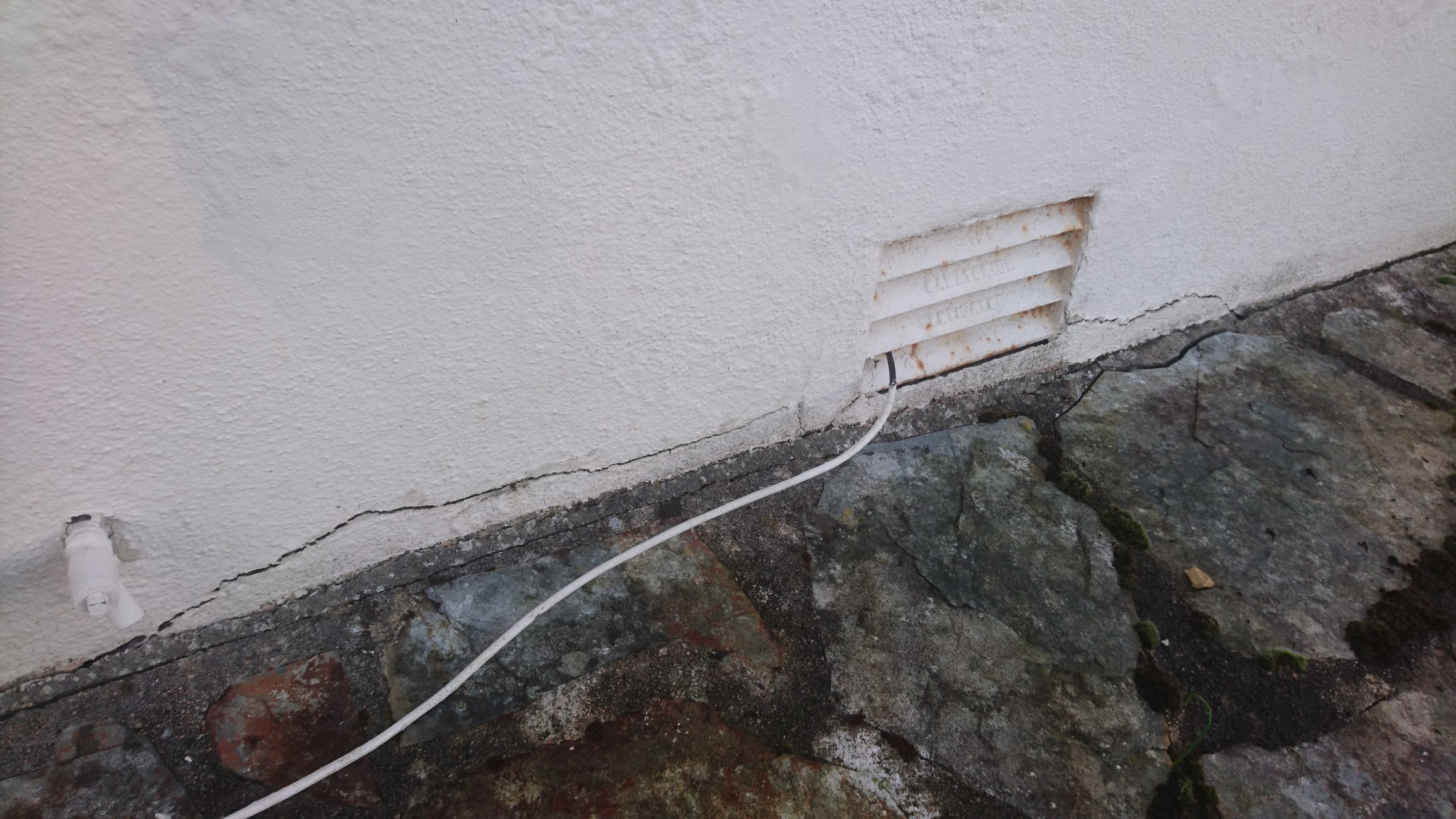
I've attached a few pictures.... Does it seem unlikely that they would have left these cracks on the outside after underpinning the property? Could it be just the rendering that has cracked and the structure beneath is sound?
There are also a few hairline cracks on the inside of the front room. Moreso than anywhere else in the house.Feels vital to find out when these cracks appeared but as yet unable to obtain this info.... 
Any advice greatly appreciated.
Thanks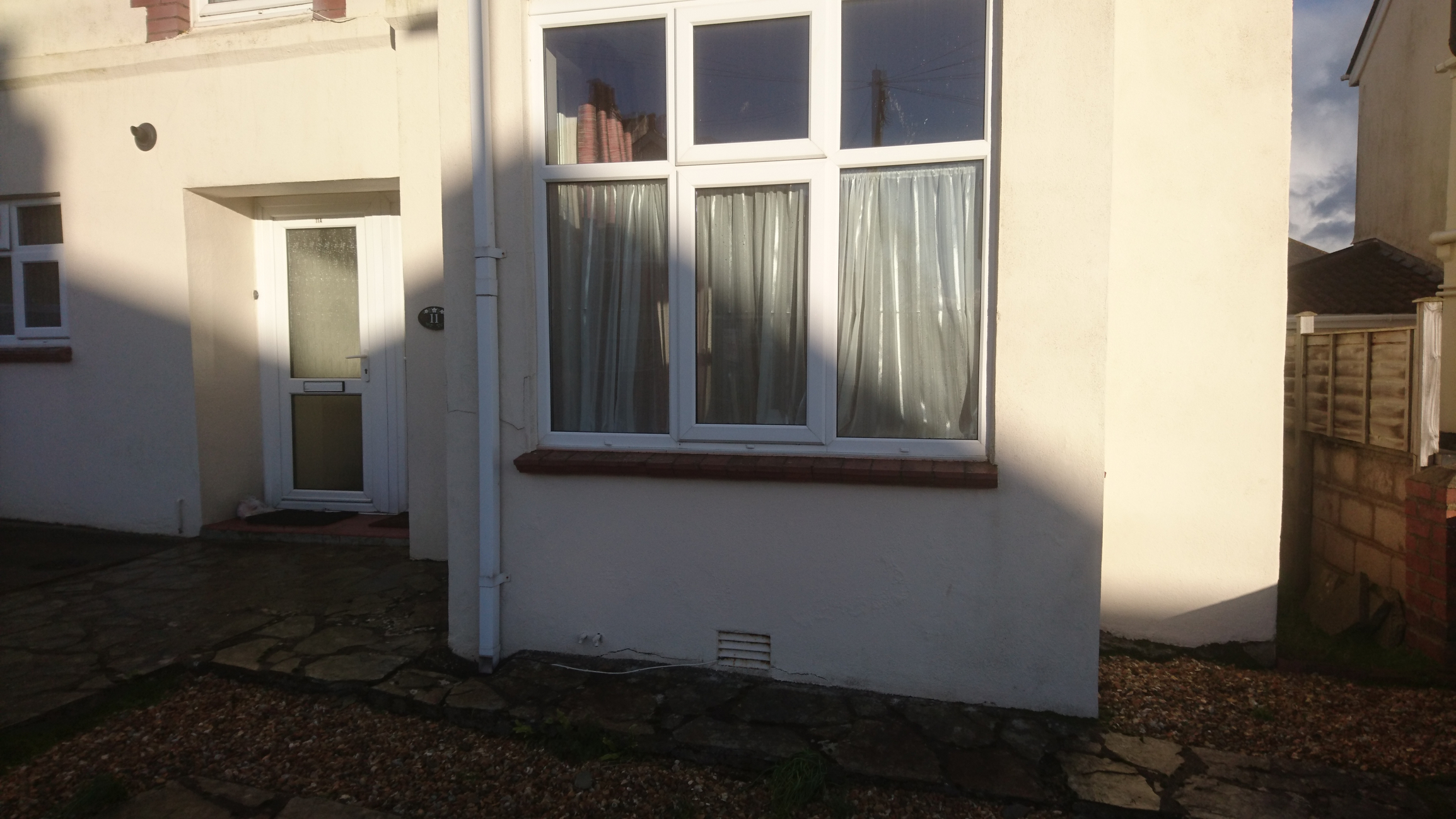
 0
0 -
We were underpinned about 25 years ago, the front flank of our house. It was due to dry clay soil and tree roots. Everything was dealt with at the time of the underpinning, no further problems apart from a few hairline cracks in plaster, nothing to do with movement.
I would be wary of the cracks in the picture, these would have been fixed at the time of the original underpinning, they would not have been left. A full survey should give you answers.
Insurance is not a problem when a house has had subsidence claims/ underpinned. It is far more common than it used to be and apart from the excess of £1000 ours is around the £300 Mark for a fairly large 4 bedroom detached house sitting on a quarter of an acre plot.1 -
Thank you. I do wonder if/hope that the cracks on the outside may have been part of the "remedial works that were not completed" as mentioned in my original post. Seems feasible that if the owner at the time could not fund all of the work recommended, that they would have left the more aesthetic issues.... Or that's a new crack and the house is screwed.amanda_p said:We were underpinned about 25 years ago, the front flank of our house. It was due to dry clay soil and tree roots. Everything was dealt with at the time of the underpinning, no further problems apart from a few hairline cracks in plaster, nothing to do with movement.
I would be wary of the cracks in the picture, these would have been fixed at the time of the original underpinning, they would not have been left. A full survey should give you answers.
Insurance is not a problem when a house has had subsidence claims/ underpinned. It is far more common than it used to be and apart from the excess of £1000 ours is around the £300 Mark for a fairly large 4 bedroom detached house sitting on a quarter of an acre plot.0 -
Does anybody else have any thoughts on the images? Are these cracks possibly just aesthetic, maybe rendering only, or are they quite likely a result of some significant structural movement?
Even if it's just the rendering, is that much of a problem?
Thank you0 -
Cracking in render could be caused by a whole host of different things, as we have recently discovered ourselves. Weathering, drainage issues, settlement, renovation works, subsidence, heave or incorrect mortaring, some being structural, some not. A building survey may not be enough, in our case it noted cracks but said to get them checked by a structural engineer to confirm the cause.
1 -
Those cracks do look aesthetic to me, but given the history of the property its crazy that the seller didn't attempt to repair them.
In the last picture, there's a crack right at the base of the building. That's where water has been seeping in for god knows how long. And people wonder why they get subsidence issues.
An underpinned house that has has a good repair, meticulously maintained and at a reduced price is worth considering. This property hasn't been well maintained. I'd avoid.
0 -
Thanks for your response. What makes you say that they look aesthetic? How might a more structural crack look different?Phil4432 said:Those cracks do look aesthetic to me, but given the history of the property its crazy that the seller didn't attempt to repair them.
In the last picture, there's a crack right at the base of the building. That's where water has been seeping in for god knows how long. And people wonder why they get subsidence issues.
An underpinned house that has has a good repair, meticulously maintained and at a reduced price is worth considering. This property hasn't been well maintained. I'd avoid.
With the crack at the bottom.... Of course there are many brick houses that haven't been rendered and are in perfectly good condition. Is the issue here that water gets trapped between the render and the brick?0 -
Why take the risk? Find somewhere without external cracksGather ye rosebuds while ye may0








Confirm your email address to Create Threads and Reply

Categories
- All Categories
- 354.6K Banking & Borrowing
- 254.4K Reduce Debt & Boost Income
- 455.5K Spending & Discounts
- 247.5K Work, Benefits & Business
- 604.3K Mortgages, Homes & Bills
- 178.5K Life & Family
- 261.8K Travel & Transport
- 1.5M Hobbies & Leisure
- 16.1K Discuss & Feedback
- 37.7K Read-Only Boards