We’d like to remind Forumites to please avoid political debate on the Forum.
This is to keep it a safe and useful space for MoneySaving discussions. Threads that are – or become – political in nature may be removed in line with the Forum’s rules. Thank you for your understanding.
📨 Have you signed up to the Forum's new Email Digest yet? Get a selection of trending threads sent straight to your inbox daily, weekly or monthly!
The Forum now has a brand new text editor, adding a bunch of handy features to use when creating posts. Read more in our how-to guide
Plaster come away over conduit

UncleZen
Posts: 885 Forumite




In an upstairs bedroom, about 15cm of plaster has come away over some conduit from an electrical socket in the room below. I can see the plastic conduit. The depth of the plaster that was there is 2-3mm approx, certainly no thicker. How do I prep and fill this ready for repainting? My main concern is getting the filling medium to stick to the plastic.
Thanks
Thanks
0
Comments
-
Most Spreads would PVA over the plastic and once it's tacky plaster it.0
-
2-3mm or 2-3cm. Clear away any flaking plaster, pva it then if only 2-3mm the use an appropriate filler, I like to use Gyproc Easi-Fill. Leave it slightly proud then sand back to smooth finish.0
-
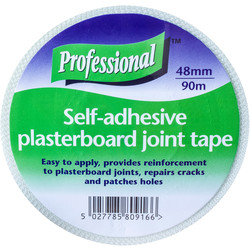
Plastic conduit? Is it not supposed to be steel?I'd remove some plaster around and use some mesh jointing tape.
0 -
Huh?grumbler said:Plastic conduit? Is it not supposed to be steel?I'd remove some plaster around and use some mesh jointing tape.
Why?
Plastic is acceptable
As above gyroc easi fill is best for this , had it been a smaller area a one strike filler would of done the trick0 -
Gyproc also have a ready mixed range called Easifiller that's supposed to be quite good but I've not tried it myself. You'd still want to use the green product for this sort of application. Not the cheapest but certainly one of the best products out there.0
-
Homer_home said:Why?
Plastic is acceptableI am no expert, but my understanding is that the conduit/sheath is supposed to protect the cable running close to the surface from accidental damage by a nail or a drill bit. In this respect plastic is as good as a chocolate fire-guard."All electrical cables should be set into the walls at a minimum depth of 50mm if they are not mechanically protected. If it isn't possible to chase the walls to that depth then the cables should be set deep enough so that metal capping can cover them and allow for plaster to cover that. Such cables must also be protected by a 30mA RCD.
This is a requirement of BS7671:2008 and can be found on page 74 of the On Site Guide."This information is just from some forum (Answered 14th May 2014), so I am not saying that it's correct.
0 -
Well done for finding that , however how long has that plastic conduit been there for?grumbler said:Homer_home said:Why?
Plastic is acceptableI am no expert, but my understanding is that the conduit/sheath is supposed to protect the cable running close to the surface from accidental damage by a nail or a drill bit. In this respect plastic is as good as a chocolate fire-guard."All electrical cables should be set into the walls at a minimum depth of 50mm if they are not mechanically protected. If it isn't possible to chase the walls to that depth then the cables should be set deep enough so that metal capping can cover them and allow for plaster to cover that. Such cables must also be protected by a 30mA RCD.
This is a requirement of BS7671:2008 and can be found on page 74 of the On Site Guide."This information is just from some forum (Answered 14th May 2014), so I am not saying that it's correct.
Electric regs change all the time
Just for your info , even metal conduit won't stop a drill bit , or a screw or even a nail0 -
Homer_home said:Well done for finding that , however how long has that plastic conduit been there for?We don't know. It's a possibility that it's some dodgy work done pretty recently. And I've seen metal conduits in very old houses that builders stopped using long time ago and started using steel capping instead.Just for your info , even metal conduit won't stop a drill bit , or a screw or even a nailWho said "stop"? With a masonry drill bit you'll really struggle to drill through steel. And even with a very sharp HSS or carbon steel bits you'll feel the steel and stop drilling unless you are a complete idiot. Especially if it's just few millimetres below the surface.
0 -
getting off topic this, but the reason for metal/plastic capping is to prevent the cables being damaged by the plastering trowel.
capping does not do anything to protect it from nails or screws.
0 -
Any reliable confirmation of this?fenwick458 said:the reason for metal/plastic capping is to prevent the cables being damaged by the plastering trowel.
capping does not do anything to protect it from nails or screws.
50mm (!) minimum to protect from the trowel?0




Confirm your email address to Create Threads and Reply

Categories
- All Categories
- 354.4K Banking & Borrowing
- 254.4K Reduce Debt & Boost Income
- 455.4K Spending & Discounts
- 247.3K Work, Benefits & Business
- 604K Mortgages, Homes & Bills
- 178.4K Life & Family
- 261.5K Travel & Transport
- 1.5M Hobbies & Leisure
- 16K Discuss & Feedback
- 37.7K Read-Only Boards