We’d like to remind Forumites to please avoid political debate on the Forum.
This is to keep it a safe and useful space for MoneySaving discussions. Threads that are – or become – political in nature may be removed in line with the Forum’s rules. Thank you for your understanding.
PLEASE READ BEFORE POSTING: Hello Forumites! In order to help keep the Forum a useful, safe and friendly place for our users, discussions around non-MoneySaving matters are not permitted per the Forum rules. While we understand that mentioning house prices may sometimes be relevant to a user's specific MoneySaving situation, we ask that you please avoid veering into broad, general debates about the market, the economy and politics, as these can unfortunately lead to abusive or hateful behaviour. Threads that are found to have derailed into wider discussions may be removed. Users who repeatedly disregard this may have their Forum account banned. Please also avoid posting personally identifiable information, including links to your own online property listing which may reveal your address. Thank you for your understanding.
📨 Have you signed up to the Forum's new Email Digest yet? Get a selection of trending threads sent straight to your inbox daily, weekly or monthly!
The Forum now has a brand new text editor, adding a bunch of handy features to use when creating posts. Read more in our how-to guide
It feels pointless to pay more than I need to on mortgage
Comments
-
leftism said:I'm buying a house now and I've got 25k aside for home improvements.
Out of interest, I put it in the calculator to see how much it would knock off my mortgage payments if I just added the 25k to my deposit instead. That seemed like a more sensible option maybe.
But I couldn't believe how little difference it makes to my monthly payments (about 150 quid p/m cheaper). Why would anyone ever do it? Am I missing something?
Surely it makes more sense to stretch it out. After all, ten years from now, assuming inflation continues, money will be worth less, so the mortgage payments will effectively be a smaller proportion.
Or have I got that wrong?
Let's have a play with the MSE mortgage calc...leftism said:Wow, these are all very helpful answers. Thanks guys!
But is my second point valid?
Say, for instance, my mortgage is 1k a month for 20 years, in ten years time, 1k will be worth less, so so much easier to pay. (and home improvements will also cost a lot more)
But I suppose interest rates could go up and I'd be paying more wouldn't I? I don;t really know what I'm talking about! haha.
https://www.moneysavingexpert.com/mortgages/mortgage-rate-calculator/
So let's say you've got a 2% 25yr mortgage, and you're paying £1k/mo. That means you've borrowed around £236k. Over the term of the mortgage, you'll repay just over £300k - the other £65k is, of course, interest.
Let's add £25k to that. Your monthly payments are only £106 more. Bargainacious. Free money.
But at the end of the term, the total repaid is now just under £332k. That £25k has cost you £32k, £7k in interest.
Yes, you've had the benefit of the money up-front. Mortgages are cheap borrowing - the interest rate is not too different to inflation... currently. Because we're in a period of the lowest interest rates EVER.
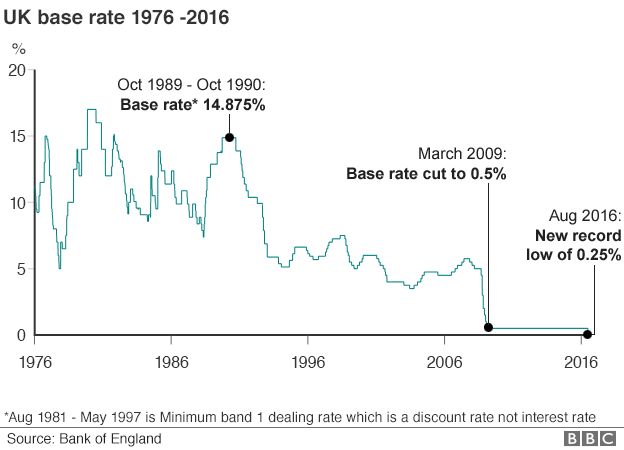
How long are those low rates going to last? Your guess is as good as mine. But they're going to HURT when they do return to more long-term normal figures.1 -
I don't see them hurting to the extent you say IF (rather than when ! ) they rise substantially because inflation will accompany higher rates so that extra money will be worth less in real terms.
Plus the OP will have plenty of warning, people who write scare stories about 5% or higher rates act as if you wake up one morning and that's happened. In reality rates will creep up and there's plenty of time to adjust. Plus, high rates will be accompanied by higher inflation. and by the time we get to even say 3% Or 4% rates the OPs mortgage will have been reduced in size anyway as a number, and they'll be paying with devalued money,I was paying a mortgage when rates were 10%+, but inflation was even higher so every year my real mortgage was getting smaller.2 -
When I had a mortgage, I always over paid as much as I could afford.For me the driving factor was job security. 4 years in, what I thought was a secure job for life ended and I had to find employment in the private sector and found jobs were not easy to find and not particularly secure. So my motivation was simply pay the mortgage off as quick as a possibly could and hope I could achieve that before I stopped being able to find employment.2
-
If you do a mix of pension and ISA you have a relatively liquid pot in the ISA that you can cash in if rates go out of control against inflation and investment returns.
Mortgage free is just part of retirement planning.
The point at which your net assets are sufficient to see you through without earned income.0 -
A small step from that thought leads to Interest Only and Extra Holidays Every year! The interest only time-bomb is still ticking.......AnotherJoe said:
OP you are absolutely correct and you do know what you are talking aboutleftism said:Wow, these are all very helpful answers. Thanks guys!
But is my second point valid?
Say, for instance, my mortgage is 1k a month for 20 years, in ten years time, 1k will be worth less, so so much easier to pay. (and home improvements will also cost a lot more)
But I suppose interest rates could go up and I'd be paying more wouldn't I? I don;t really know what I'm talking about! haha.
The pound you pay off in 25 years time will probably be worth 50p or less in today's money. However I wouldn't just drag out paying it off , that £150 a month in you pension becomes closer to £200 in a pension and then grows at maybe 3-4% long term after inflation, Or for a high rate taxpayer, more than £200. (Or in an ISA for flexibilty at £150, still grows at that sort of rate) . The mortgage free wannabes in that forum are collectively burning millions of pounds in lost opportunity cost and lost tax relief.As for "interest rates might rise" well yeh they might in which case at that time you can adjust and pay more and almost certainly you'll still be better off. It's not as if they will suddenly jump from 1.5% to 5% overnight and you'll be caught unawares.
The only upside is the psychological and perhaps practical benefit of owning your own house a few years earlier but at that time unless you went "all in" on an IO mortgage the amount still owing will be smaller both in numeric amount and also inflation adjusted. Eg maybe you still owe £20k while they paid the last installment but by then £20k is actually worth, in today's terms,Say £10k. And the person who paid it off earlier will have a smaller pension or savings.
This is something I didn't realise myself until much closer to paying off my mortgage, probably lost several 10's of thousands overall in a smaller pension. As you say, Why pay off a Pound on your mortgage now with one pound rather than 30p In 25 years time ?0 -
Not in your case as you didn't even have the sense to get any sort of mortgage but rented through multiple house price booms until owning anything was fully out of your grasp.And if you read my post you'd see I recommended pension or ISA not "extra holidays"
Another fail from Mr Consistently Wrong.1 -
So you think people on IO are pretty smart?AnotherJoe said:Not in your case as you didn't even have the sense to get any sort of mortgage but rented through multiple house price booms until owning anything was fully out of your grasp.And if you read my post you'd see I recommended pension or ISA not "extra holidays"
Another fail from Mr Consistently Wrong.0 -
A lot of cases they are.Crashy_Time said:
So you think people on IO are pretty smart?AnotherJoe said:Not in your case as you didn't even have the sense to get any sort of mortgage but rented through multiple house price booms until owning anything was fully out of your grasp.And if you read my post you'd see I recommended pension or ISA not "extra holidays"
Another fail from Mr Consistently Wrong.
Renting the money has been considerably cheaper than renting a property as you don't have to pay the landlords tax overheads.
1 -
Rents are set by wages/benefit levels and demand, not tax overheads. Do you think some of the smarter IO IO brigade are investing elsewhere for when they have to pay back the big wedge they borrowed from the bank for a shoe-box?getmore4less said:
A lot of cases they are.Crashy_Time said:
So you think people on IO are pretty smart?AnotherJoe said:Not in your case as you didn't even have the sense to get any sort of mortgage but rented through multiple house price booms until owning anything was fully out of your grasp.And if you read my post you'd see I recommended pension or ISA not "extra holidays"
Another fail from Mr Consistently Wrong.
Renting the money has been considerably cheaper than renting a property as you don't have to pay the landlords tax overheads.0 -
Paying interest to the lender, and saving elsewhere to repay the capital...Crashy_Time said:
Do you think some of the smarter IO IO brigade are investing elsewhere for when they have to pay back the big wedge they borrowed from the bank for a shoe-box?
Didn't that used to be fairly popular? Wasn't it called something like "an endowment"...?
I wonder why that fell out of favour...0









Confirm your email address to Create Threads and Reply

Categories
- All Categories
- 354.6K Banking & Borrowing
- 254.5K Reduce Debt & Boost Income
- 455.5K Spending & Discounts
- 247.5K Work, Benefits & Business
- 604.3K Mortgages, Homes & Bills
- 178.6K Life & Family
- 261.9K Travel & Transport
- 1.5M Hobbies & Leisure
- 16.1K Discuss & Feedback
- 37.7K Read-Only Boards