We’d like to remind Forumites to please avoid political debate on the Forum.
This is to keep it a safe and useful space for MoneySaving discussions. Threads that are – or become – political in nature may be removed in line with the Forum’s rules. Thank you for your understanding.
📨 Have you signed up to the Forum's new Email Digest yet? Get a selection of trending threads sent straight to your inbox daily, weekly or monthly!
The Forum now has a brand new text editor, adding a bunch of handy features to use when creating posts. Read more in our how-to guide
Radiator inhibitor query

gilesm89
Posts: 36 Forumite


We moved into a flat a year ago and then about 2 months ago we had to get someone in to pr-pressurise the expansion vessel in the boiler.
We were finding that the pressure would increase too much and the PRV would activate. So we topped it up a few times before getting the engineer in. The engineer had to drain the expansion vessel to then re-pressurise.
Everything is working as it should but the following occurred to me: what if this topping up from the mains has diluted the inhibitor too much. That's on the assumption that inhibitor was ever put in but you would hope it was.
Looking at the boiler manual they recommend a few common inhibitors. What would be my best cause of action?:
- Drain the entire system and add new inhibitor to ensure that 2 products are not getting mixed. On the subject of draining the system, how would you do this completely? Surely you can only drain the radiators and not the pipes under the floors, as they are lower then the drain points.
OR
- Buy one of the recommended inhibitors and add a dose in, as is.
Thanks
We were finding that the pressure would increase too much and the PRV would activate. So we topped it up a few times before getting the engineer in. The engineer had to drain the expansion vessel to then re-pressurise.
Everything is working as it should but the following occurred to me: what if this topping up from the mains has diluted the inhibitor too much. That's on the assumption that inhibitor was ever put in but you would hope it was.
Looking at the boiler manual they recommend a few common inhibitors. What would be my best cause of action?:
- Drain the entire system and add new inhibitor to ensure that 2 products are not getting mixed. On the subject of draining the system, how would you do this completely? Surely you can only drain the radiators and not the pipes under the floors, as they are lower then the drain points.
OR
- Buy one of the recommended inhibitors and add a dose in, as is.
Thanks
0
Comments
-
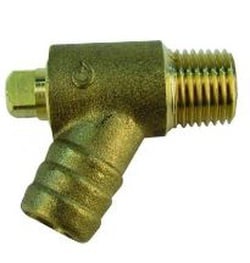
Your system should have a drain valve at its lowest point. It will look similar to this and, if you attach a hose pipe to it and clamp it down using a jubilee clip, you can then open the valve to let out the water in your system. Many different types of drain valve might be in your system. Once some water has been drained out (or all of it if you want/need to) you can introduce inhibitor into a towel rail (if you have one) by removing one of the top plugs or removing the bleed screw bung out of any radiator. Don't forget to close the drain valve first! Then simply re pressurise your system in the normal way and then bleed your radiators.
1 -
Thank you. We have one of those drain valves on one of the radiators (but surely this wouldn't be the lowest point in the system as this would be under the floors, no?Le_Kirk said:Your system should have a drain valve at its lowest point. It will look similar to this and, if you attach a hose pipe to it and clamp it down using a jubilee clip, you can then open the valve to let out the water in your system.
Do you think there is a risk in adding a suitable inhibitor for my boiler, if I am not sure what has been added previously?
thanks
0 -
Also, I have a Magnaclean filter that I am going to clean out. Would this be the easiest place to add inhibitor?0
-
It doesn't need to be the lowest point of the system just lower than any rad you may remove. You will only be accessing an upstairs rad so not all needs draining.
Cleaning the filter means all water below that point needs draining0 -
If you drain it all, once the hose is attached and the valve open, open up the bleed valves upstairs.
I can't see why mixing inhibitors would be an issue but I am sure someone will help with that.0 -
I wouldn't say it's the "usual" place but it can be done:grumbler said:
Yes, this is the usuall place for this.gilesm89 said:Also, I have a Magnaclean filter that I am going to clean out. Would this be the easiest place to add inhibitor?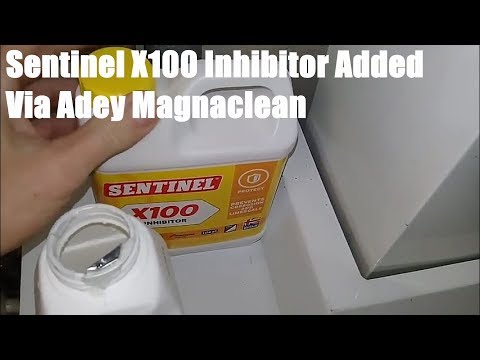 https://youtu.be/Z9d7mU98_j8
Another good place to add inhibitor would be via an upstairs towel rad, Just isolate the rad, drain it, add the inhibitor, refill and away you go.0 -
I use a funnel to top up my inhibitor. Just google Eezyfill.0
-
Another handy tool for the job is one of these - https://www.amazon.co.uk/Eezyfill-Central-Heating-Dosing-Tool/dp/B0082AKWDA/ref=sr_1_20








This discussion has been closed.
Confirm your email address to Create Threads and Reply

Categories
- All Categories
- 354.4K Banking & Borrowing
- 254.4K Reduce Debt & Boost Income
- 455.4K Spending & Discounts
- 247.3K Work, Benefits & Business
- 604K Mortgages, Homes & Bills
- 178.4K Life & Family
- 261.5K Travel & Transport
- 1.5M Hobbies & Leisure
- 16K Discuss & Feedback
- 37.7K Read-Only Boards