We’d like to remind Forumites to please avoid political debate on the Forum.
This is to keep it a safe and useful space for MoneySaving discussions. Threads that are – or become – political in nature may be removed in line with the Forum’s rules. Thank you for your understanding.
📨 Have you signed up to the Forum's new Email Digest yet? Get a selection of trending threads sent straight to your inbox daily, weekly or monthly!
E7 Immersion - Time Switch??

wintergirl
Posts: 55 Forumite
in Energy
Hi all,
We are all electric, (apart from our wonderful wood burner in the lounge!) So electric night storage heaters and immersion heater for the water. Its one of those huge ones with 2 elements. The bottom one is on the E7 circuite, and heats the whole tank during the night, top one to boost it during the day. We very rarely need to use the boost, as its pretty well insulated, and often don't draw all the water from it during the day.
The E7 kicks in for 7 hours, and so the immersion is 'on' for all that time. (Once it is up to temperature, I can sometimes hear it clicking on and off every 20 mins or so during the night, as its situated next to our bedroom.)
Anyway, my question is this :
Does it really need to be on for the 7 hours? - I know its not on solidly during the 7 hours, but it must be on like a 'tick over' once its gets up to temperature. Can you get a time switch to connect between the E7 switch on the wall and the heater, to allow it to just come up to heat for an hour or two at the end of the E7 period?
It seems to me that we are wasting a certain amount of night time electricity, as it must reach operating temperature within a couple of hours, and then the clicking in and out I hear is the temp dropping slightly, and the thermostat switching it back on in short bursts. Does that make sense?
With electricity prices going up all the time, any savings must be of benefit!
Many thanks for any advice given.
We are all electric, (apart from our wonderful wood burner in the lounge!) So electric night storage heaters and immersion heater for the water. Its one of those huge ones with 2 elements. The bottom one is on the E7 circuite, and heats the whole tank during the night, top one to boost it during the day. We very rarely need to use the boost, as its pretty well insulated, and often don't draw all the water from it during the day.
The E7 kicks in for 7 hours, and so the immersion is 'on' for all that time. (Once it is up to temperature, I can sometimes hear it clicking on and off every 20 mins or so during the night, as its situated next to our bedroom.)
Anyway, my question is this :
Does it really need to be on for the 7 hours? - I know its not on solidly during the 7 hours, but it must be on like a 'tick over' once its gets up to temperature. Can you get a time switch to connect between the E7 switch on the wall and the heater, to allow it to just come up to heat for an hour or two at the end of the E7 period?
It seems to me that we are wasting a certain amount of night time electricity, as it must reach operating temperature within a couple of hours, and then the clicking in and out I hear is the temp dropping slightly, and the thermostat switching it back on in short bursts. Does that make sense?
With electricity prices going up all the time, any savings must be of benefit!
Many thanks for any advice given.
0
Comments
-
If the tank is losing that much heat that the immersion keeps clicking on and off throughout the 7 hour period I'd suggest your money would be better spent on more insulation for the tank. My tank heats up, couple of on/off cycles just as the theromostat settles down to the right temperature then it won't come on again for hours unless so hot water is drawn off somewhere.0
-
wintergirl wrote: »Hi all,
We are all electric, (apart from our wonderful wood burner in the lounge!) So electric night storage heaters and immersion heater for the water. Its one of those huge ones with 2 elements. The bottom one is on the E7 circuite, and heats the whole tank during the night, top one to boost it during the day. We very rarely need to use the boost, as its pretty well insulated, and often don't draw all the water from it during the day.
The E7 kicks in for 7 hours, and so the immersion is 'on' for all that time. (Once it is up to temperature, I can sometimes hear it clicking on and off every 20 mins or so during the night, as its situated next to our bedroom.)
Anyway, my question is this :
Does it really need to be on for the 7 hours? - I know its not on solidly during the 7 hours, but it must be on like a 'tick over' once its gets up to temperature. Can you get a time switch to connect between the E7 switch on the wall and the heater, to allow it to just come up to heat for an hour or two at the end of the E7 period?
It seems to me that we are wasting a certain amount of night time electricity, as it must reach operating temperature within a couple of hours, and then the clicking in and out I hear is the temp dropping slightly, and the thermostat switching it back on in short bursts. Does that make sense?
With electricity prices going up all the time, any savings must be of benefit!
Many thanks for any advice given.
It probably doesn't need to be on all 7 hours, but as you say it cuts out once the water requires the required temperature.
It shouldn't be cutting in and out every 20 minutes, especially if the tank is as well insulated as you suggest. If it is cutting in and out that often, it suggests the thermostat is set too high.
This is quite common with lower side entry immersions fitted to large tanks. People often set the thermostat at say 65 or 70 degrees. As the thermostat is housed within the heater assembly, I've even known such immersions staying on for the full 7 hours. I could hear the water boiling away at the top of the tank, yet it never managed to reach 70 degrees at the bottom where the immersion/thermostat was.
The problem fitting a timer, is that the timer also requires electricity to run; only a tiny bit, but without it most will stop. And that circuit only supplies electricity for 7 hours per day.
So if you do decide to go ahead and fit one, make sure it is one with a rechargeable battery backup.0 -
PartL compliant cylinder
- the bottom 3kW element [off-peak] is able to heat at least 85% of the cylinder contents
- the top 3kW element [on-peak-60min boost] is able to heat a minimum of 60 litres of water
- a PartL insulated cylinder 24-hour max heat loss should be no more than [kWh]
- - 1.84 for a 120Litre tank
- - 2.05 for a 144Litre tank, and;
- - 2.56 for a big 210Litre tank
- the top element should be 60ºC, the lower whole cylinder element should be set at 65ºC
The "cutting in and out every 20 minutes" constant boil mentioned by both Wywth & Andy_WSM is often caused by non PartL cylinders wrongly used as part of a PartL system, or often times by scale build up. In hard water areas of the country calcium carbonate [scale] is layered, layer on layer as the water is heated. This actually protects from corrosion, it also unfortunately leads to exceeding the stat and element settings leading eventually to prem failure, but in the years proceeding failure you get this tendency to over heat the water. Titanium sheaths with low surface adhesive properties are a help, as indeed they are in all soft water areas with free oxygen and carbon dioxide, both of which are aggressive [acidic] to common metals.Disclaimer : Everything I write on this forum is my opinion. I try to be an even-handed poster and accept that you at times may not agree with these opinions or how I choose to express them, this is not my problem. The Disabled : If years cannot be added to their lives, at least life can be added to their years - Alf Morris - ℜ0 -
Richie, what do you have to say about the new Dimplex Quantum cylinder?
The graphs and what-not will mean more to you than me.
Any good, or just sales speech?0 -
I'm out for a couple of hours, I'll get back to you:
- this 250 calc
- led to this analysis
- which Dimplex used for the Quantum product build needs
If ever the smart meter / smart E24 delivery system get 'on legs' this system is quite capable of (1) coming very very close to matching natural gas running costs, (2) beating into the dust gas central heating maintenance costs, (3) carbon [lifetime] costs and with absolutely no (4) degradation in heating performance and or (5) servicing costs. The SS can used on the water has a 25 year life guarantee, but many bog standard ParL cans installed 35 - 55 or more years ago still functional now, so expect the cylinder to considerably exceed its 25 years and ditto elements except where there are the usual issues with calcium.
It was always the case that any electric energy system capable of two way communicating its needs with a grid supplied by high cost wind turbines and wave power in the particular was an attractive proposition as every kW generated after 11pm is effectively wasted, as it can not be stored. In my view windmills are an extremely expensive political expedient not a source of renewable energy, more so when they are literally dumping it in the earth for half of their expensive low demand cost ineffective short lifetime. This energy could be stored at least for the winter months in the homes of millions of people on these Islands.
The general claims on how long the heaters can store energy for I'm inclined to think are pretty honest, the general claims on how long the water system can store energy for, ditto, the claims on what % of heat is lost [insulation] to thermal conductivity leakage from both heater and water system dovetails with the storage figures. The electronics of their earlier sister company release, the Creda were carp as were their two earlier versions of stat / hub / 'communication'. My one worry is the sadly short warranty on the overall product, most volume sales up to now are to social housing providers in their scheduled refurb programmes. At around £600 per unit for the small one, rising to £1000 for the biggie [Q70-10.9-630/Q100-15.4-880/Q125-19.3-1130/Q150-23.1-1300] storage heaters that's a very high investment for storage heating with only a 24 month warranty.
post01
post02
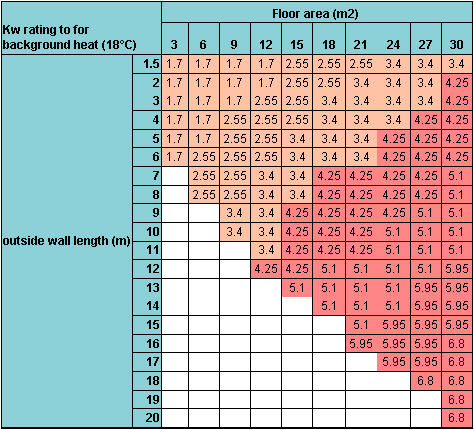
background heat 18oC
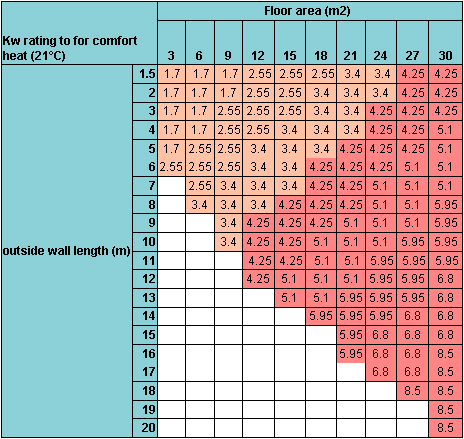
comfort heat 21oC
- point to the specific graphs you speak of and I'll have a look my friend
NOTE01 : The biggest Quantum the Q150 stores 23.1kWh of heat which is directly comparable with the existing old 3.4 which can hold a maximum charge of 23.8 kw over a 7 hour charge period, the Q150 has an additional 1300W rated 'boost' element.
NOTE02 : Add installation, and the costs of the Quantum Cylinder & hub and the system is expensive, but nice, with a worryingly low warranty on the space heating side in particular and the electronics of both.Disclaimer : Everything I write on this forum is my opinion. I try to be an even-handed poster and accept that you at times may not agree with these opinions or how I choose to express them, this is not my problem. The Disabled : If years cannot be added to their lives, at least life can be added to their years - Alf Morris - ℜ0 -
Ha! i was about to start a thread on exactly the same thing. I purchased a flat and I have an electricity only flat, I also have 2 big metal things (I assume boiler and immersion). I was thinking of getting a timer installed so I could have the hot water come on and the heating come on for set times. Can you get a timer installed to do this?06/06/2023 mortgage mort dateJUST BRING IT0
-
Thanks for that Richie, very helpful.Richie-from-the-Boro wrote: »I'm out for a couple of hours, I'll get back to you:
- this 250 calc
- led to this analysis
- which Dimplex used for the Quantum product build needs
If ever the smart meter / smart E24 delivery system get 'on legs' this system is quite capable of (1) coming very very close to matching natural gas running costs, (2) beating into the dust gas central heating maintenance costs, (3) carbon [lifetime] costs and with absolutely no (4) degradation in heating performance and or (5) servicing costs. The SS can used on the water has a 25 year life guarantee, but many bog standard ParL cans installed 35 - 55 or more years ago still functional now, so expect the cylinder to considerably exceed its 25 years and ditto elements except where there are the usual issues with calcium.
It was always the case that any electric energy system capable of two way communicating its needs with a grid supplied by high cost wind turbines and wave power in the particular was an attractive proposition as every kW generated after 11pm is effectively wasted, as it can not be stored. In my view windmills are an extremely expensive political expedient not a source of renewable energy, more so when they are literally dumping it in the earth for half of their expensive low demand cost ineffective short lifetime. This energy could be stored at least for the winter months in the homes of millions of people on these Islands.
The general claims on how long the heaters can store energy for I'm inclined to think are pretty honest, the general claims on how long the water system can store energy for, ditto, the claims on what % of heat is lost [insulation] to thermal conductivity leakage from both heater and water system dovetails with the storage figures. The electronics of their earlier sister company release, the Creda were carp as were their two earlier versions of stat / hub / 'communication'. My one worry is the sadly short warranty on the overall product, most volume sales up to now are to social housing providers in their scheduled refurb programmes. At around £600 per unit for the small one, rising to £1000 for the biggie [Q70-10.9-630/Q100-15.4-880/Q125-19.3-1130/Q150-23.1-1300] storage heaters that's a very high investment for storage heating with only a 24 month warranty.
post01
post02
background heat 18oC
comfort heat 21oC
- point to the specific graphs you speak of and I'll have a look my friend
NOTE01 : The biggest Quantum the Q150 stores 23.1kWh of heat which is directly comparable with the existing old 3.4 which can hold a maximum charge of 23.8 kw over a 7 hour charge period, the Q150 has an additional 1300W rated 'boost' element.
NOTE02 : Add installation, and the costs of the Quantum Cylinder & hub and the system is expensive, but nice, with a worryingly low warranty on the space heating side in particular and the electronics of both.0








This discussion has been closed.
Confirm your email address to Create Threads and Reply

Categories
- All Categories
- 355.8K Banking & Borrowing
- 254.9K Reduce Debt & Boost Income
- 456.2K Spending & Discounts
- 248.3K Work, Benefits & Business
- 605.9K Mortgages, Homes & Bills
- 179K Life & Family
- 263.8K Travel & Transport
- 1.5M Hobbies & Leisure
- 16.2K Discuss & Feedback
- 37.7K Read-Only Boards