We’d like to remind Forumites to please avoid political debate on the Forum.
This is to keep it a safe and useful space for MoneySaving discussions. Threads that are – or become – political in nature may be removed in line with the Forum’s rules. Thank you for your understanding.
📨 Have you signed up to the Forum's new Email Digest yet? Get a selection of trending threads sent straight to your inbox daily, weekly or monthly!
Best way to insulate 70+mm of hollow cavity wall?




Greetings,
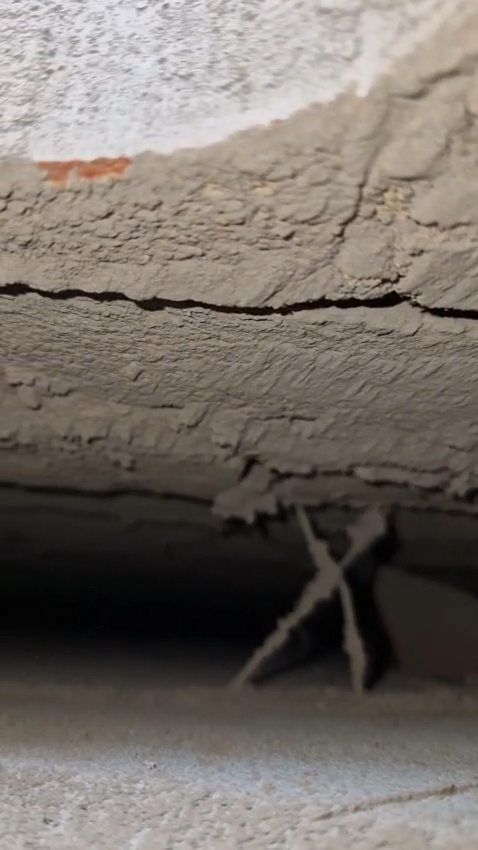
The properties on our estate were built in the early 90's and so we (incorrectly) presumed that we have some sort of insulation within our 70+mm wall cavity. As the image below highlights, this is not the case. Our NE facing wall is, by far, the coldest - we can feel a draft coming through parts of the wall on the 1st floor, making one of the bathrooms a no go zone.
I've watched several videos detailing horror stories with injection foam insulation causing damp and wondered if there was a well respected alternative that we could adopt instead?Once that's been decided, I suppose the next step would be to identify the best way to get this installed.
As always, thanks for the input!
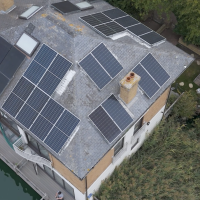
- Triple aspect: ENE (2.7 kWp), WSW (3.3 kWp), SSE (2.4 kWp)
- Viessmann 200-W on Advanced Weather Comp. (The most efficient gas boiler sold)
Comments
-
Several properties near me had cavity wall insulation installed a couple of years ago (quite possibly by the local housing association). I'm pretty sure it was polystyrene beads, blown into the cavity on a stream of air.
N. Hampshire, he/him. Octopus Intelligent Go elec / Fuse gas / Vodafone BB / iD mobile. Kirk Hill Co-op member.Economy 7 cap explainer. Gas vs E7 vs peak elec heating costs, Ecoflow Stream, Best kettle :-)
2.72kWp PV facing SSW installed Jan 2012. 11 x 247w panels, 3.6kw inverter. 37 MWh generated, long-term average 2.6 Os.1 -
I luckily didn't have to make a decision on cavity wall injection on my house, which was built on the cusp of the building regs change in the 1980s when cavity insulation became mandatory, because when the surveyor put a boroscope throgh the wall he found 20mm of foil backed foam.
Had there been no insulation I'd have opted for polystyrene balls, as any penetrating moisture will fall down the cavity and drain out of the weeps, more easily than tracking horizontally. The main downside to beads is that they leak out into meter boxes and through any other opening that isn't tightly sealed.
1 -
LOL. My father had poly beads done about the same time as us (early 2000's). His gas meter cupboard is actually built into the inner wall. So come meter reading time, he opened the door, to find a perfect white moulded 'wall' matching the T&G cupboard door.
He thought it was funny, showed me, before starting to break it up and scoop it out.
No damp issues at either house after poly install. But we do seem to require less heating than neighbours.
Mart. Cardiff. 8.72 kWp PV systems (2.12 SSW 4.6 ESE & 2.0 WNW). 28kWh battery storage. Two A2A units for cleaner heating. Two BEV's for cleaner driving.
For general PV advice please see the PV FAQ thread on the Green & Ethical Board.4 -
I was an early adopter through my workplace discount - Southern Electric in the mid 80s. The material was blown rockwool, which doesn't have the disadvantage of foam, and possibly not as fugitive as poly beads, although random building work has shown a bit of settling.
0 -
I'd be wary of blown fibre in a high exposure area, like where I am in Wales. Driving rain could soak the fibre and get to the inner leaf. Poly beads are water resistant in themselves and the shape would make it very difficult for water to track across. Gravity would win and it will run down the outer leaf and out through the weep holes at the bottom of the cavity.
1 -
Our estate also has empty narrow cavities, apparently the builders got building regs consent by using internal insulating plasterboard.
I looked into cavity wall insulation a few years ago soon after moving in, but found there were very few suppliers. As others have said, the only safe solution seemed to be the polystyrene balls. I got one quote which I was seriously considering, but it wasn't cheap enough to make it a no brainer and I was concerned about the lack of competition and that I couldn't find a single house on the estate that had done it before, so I didn't fancy being the pioneer as the downside risks of a bad install are significant.
I was also concerned about having balls coming out of holes, and I read that people had had balls spilling out when doing future works, eg changing windows or installing A2A units. As I was planning some more improvements to the house I decided to defer it until I had done those. Years later I've not ruled it out but I'm still not confident enough. I think there is a system with the balls with weak bonding/glue, which if it had the right quality control, guarantees and competition in the market and the right price I'd consider it in future.
0 -
I think there is a system with the balls with weak bonding/glue,
Yep, that's how ours (and my dad as mentioned) was done around 20+yrs ago. May be wrong, but I think it's just something simple like PVA. You can easily dig it out with fingers (like a polystyrene sheet/board), but otherwise stays in place.
Can't remember our cavity size, but definitely small (1930's semi-detached), probably ~50mm.
Edit - Just checked, as the wall in our loft has a 'step' in it where it passes the base of the purlins. I assume at that point the gable end wall goes from cavity to solid brick. The 'step' is 50mm. Or to be more precise and in respect to the seven names written in a small spread of mortar on said wall in 1934, two inches.
Mart. Cardiff. 8.72 kWp PV systems (2.12 SSW 4.6 ESE & 2.0 WNW). 28kWh battery storage. Two A2A units for cleaner heating. Two BEV's for cleaner driving.
For general PV advice please see the PV FAQ thread on the Green & Ethical Board.0 -
Round here the council have been removing the injected foam and replacing with beads - was in a relative's house whilst it was being done and getting the foam out certainly finds any air gaps round windows etc ! I had beads put in back in the 1980s and remember finding them in the attic and when I removed the boxing round the soil stack in the bathroom found loads in there, I think back then the beads were just loose and not bonded.
Never associate with idiots on their own level, because, being an intelligent man, you'll try to deal with them on their level - and on their level they'll beat you every time.
Being hated by idiots is the price you pay for not being one of them.
Jean Cocteau 1889-1963
0 -
I thought that the point of loose beads was that you could suck them out of the cavity again should something go wrong.
Reed0 -
I have booked a survey in with a company called Viridian. They have very strong reviews and have stated that they do not use bead based insulation but use "white wool" instead.
A quick search highlighted that this is the exact product they use - I am familiar with the brand and the loft rolls (Knauf 40) are highly regarded for their insulation properties. Comes with a 25 year guarantee.
- 10 x 400w LG Bifacial + 6 x 550W SHARP BiFacial + 2 x 570W SHARP Bifacial + 5kW SolarEdge Inverter + SolarEdge Optimizers. SE London.
- Triple aspect: ENE (2.7 kWp), WSW (3.3 kWp), SSE (2.4 kWp)
- Viessmann 200-W on Advanced Weather Comp. (The most efficient gas boiler sold)Feel free to DM me for help with any form of energy saving! Happy to help!1









Confirm your email address to Create Threads and Reply

Categories
- All Categories
- 355.8K Banking & Borrowing
- 254.9K Reduce Debt & Boost Income
- 456.2K Spending & Discounts
- 248.3K Work, Benefits & Business
- 606K Mortgages, Homes & Bills
- 179K Life & Family
- 263.8K Travel & Transport
- 1.5M Hobbies & Leisure
- 16.2K Discuss & Feedback
- 37.7K Read-Only Boards