We’d like to remind Forumites to please avoid political debate on the Forum.
This is to keep it a safe and useful space for MoneySaving discussions. Threads that are – or become – political in nature may be removed in line with the Forum’s rules. Thank you for your understanding.
New Solar & Battery Install
Comments
-
Thanks again your replies, still scratching my head ! A bit more history / info.
Our place was originally a bungalow with a detached garage - electric to this garage from the main consumer unit. Ten years later we aquired more garden. We wanted to build a new garage. Planners said no but agreed it we converted the original garage to a living room and joined to the bungalow that would be okay. We did this. New consumer unit installed in the new room (old garage), which then supplied the new garage with electric to its consumer unit. So we have 3 consumer units in a line….
So, first off, if you have two separate arrays connected to two separate inverters, they will still need to run their AC side cables back to the consumer unit (a single point).
Yep - get that…
So I'm not clear how that differs to running the cables from the PV, to a single point, such as one inverter with an attached battery, or a Tesla PW3 (battery and inverter in one)?
Yep - also get that, it will require lift slabs, digging the garden and breaking a path. Not impossible
Whatever the route the AC cabling will take, can't the DC cables from the PV take the same route? I suspect there's a good reason(?), just one that you know that needs a bit more explaining.
The initial drawings showed all panels on the new garage roof, with inverter and batteries in the new garage. However the site survey has established the roofs area is less than estimated. This means a mix of 3 landscape and 6 portrait panels rather 12 portrait panels.
However, DC cabling from panels is actually very small cabling, and can be easily housed in 'discreet' plastic tubing. I have a small ground array, and the cables travel ~12m from panels to inverter across/around the garden. So it might be possible for you to pick the preferred location for the inverter/battery, favouring one of the arrays, and then bring the DC cables from the other, to that location. [I'm guessing that you are concerned that one of the arrays would have to travel all the way (not half the way to a mid point) back to the 'better' location (the garage)?]
Definately would prefer everything in the new garage. Thinking answer two above would solve this and run a cable in ducting from the panels on the old garage roof back to the new garage.
Don't worry, we aren't arguing with you for fun, or trying to be critical, just thinking through the options, in order to find the best solution for you. One inverter makes life easier, cheaper, and probably more efficient. Also, may complicate approval from the DNO (district network operator), as they will want to add the two inverter sizes together, whereas a shared single inverter, especially one like the PW3 that can be limited in export terms, may be lower, and easier to get approval. But if it's not possible, that's fine. Just don't worry too much, yet! 😉
Not worried yet ! Grateful for all your knowledge/experience. I see the advantages above. Its the ball ache of the groundworks (thought my days of hard graft were long gone !) vs cost of additional inverter vs the advantage of having panels on the south facing old garage roof.
1 -
My understandng is if we had two inverters then each would be connected into the house electric supply through the consumer units in the old and new garage (see history in the reply above) which then leads back to the main consumer unit in the bungalow and to the meter point.
If installing a battery in the garage there will need to be some form of signal cable back to the incoming supply so the battery or its controller can sense import/export. Again that's what we have.
We have been advised this can be done wirelessly
0 -
Wirelessly is certainly a possibility.
You should perhaps get details to give you confidence it will work seamlessly from the property main feed at the meter, through how many walls/metalwork, and the distance. This needs to be 100% of the time and not suffer from any interference.
The higher the frequency the more walls and distance becomes a problem. Anything in the 2.5GHz band might be ok over about 10m range depending upon other transmissions in the same band. That band is shared with WiFi, in home displays and more. Lower frequency such as 450MHz bands fair much better.
External antennas help in that aspect.
If possible Current Transformers can easily be extended by cable.
A bit off topic but...
If it was me and we were digging a trench etc. I would install extra comms cables and maybe fibre optic (even if unused at present ) considering potential future use for all sorts of things or a current broadband extension. A small extra cost.
1 -
My advice (aimed solely at avoiding further confusion) would be to contract an installer who will offer a survey as part of their quotation process. The surveyor should easily be able to determine the best course of action after consulting with the homeowner ( this process can be iterative in nature).
- 10 x 400w LG Bifacial + 6 x 550W SHARP BiFacial + 2 x 570W SHARP Bifacial + 5kW SolarEdge Inverter + SolarEdge Optimizers. SE London.
- Triple aspect: ENE (2.7 kWp), WSW (3.3 kWp), SSE (2.4 kWp)
- Viessmann 200-W on Advanced Weather Comp. (The most efficient gas boiler sold)Feel free to DM me for help with any form of energy saving! Happy to help!1 -
Not an answer to your solar question but something to think about with the heat pump.
When a gas boiler dies you can usually get a replacement fitted within a few days. Heat pumps take a lot longer to sort, months in some cases, so it's better to get the process started well before the old boiler breaks. You don't want to wake up one morning next January wondering why it's feeling a bit chilly and end up with a new gas boiler because you need heat fast.
Barnsley, South Yorkshire
Solar PV 5.25kWp SW facing (14 x 375) installed Mar 22
Lux 3.6kw hybrid inverter and 9.6kw Pylontech batteries
Daikin 8kW ASHP installed Jan 25
Octopus Cosy/Fixed Outgoing2 -
For everyone's viewing pleasure!
 - 10 x 400w LG Bifacial + 6 x 550W SHARP BiFacial + 2 x 570W SHARP Bifacial + 5kW SolarEdge Inverter + SolarEdge Optimizers. SE London.
- Triple aspect: ENE (2.7 kWp), WSW (3.3 kWp), SSE (2.4 kWp)
- Viessmann 200-W on Advanced Weather Comp. (The most efficient gas boiler sold)Feel free to DM me for help with any form of energy saving! Happy to help!3 -
Agree 100%. This happened to us during the chip shortage (we had to miss out on the previous generation Valiant Arotherm Heat pump but were fortunate to discover the Viessmann 200-W gas boiler).
I would recommend you reach out to the Heat Geeks for a quote (with a 400% efficiency guarantee). If they won’t offer a heat pump, Octopus may be a suitable fallback option.- 10 x 400w LG Bifacial + 6 x 550W SHARP BiFacial + 2 x 570W SHARP Bifacial + 5kW SolarEdge Inverter + SolarEdge Optimizers. SE London.
- Triple aspect: ENE (2.7 kWp), WSW (3.3 kWp), SSE (2.4 kWp)
- Viessmann 200-W on Advanced Weather Comp. (The most efficient gas boiler sold)Feel free to DM me for help with any form of energy saving! Happy to help!0 -
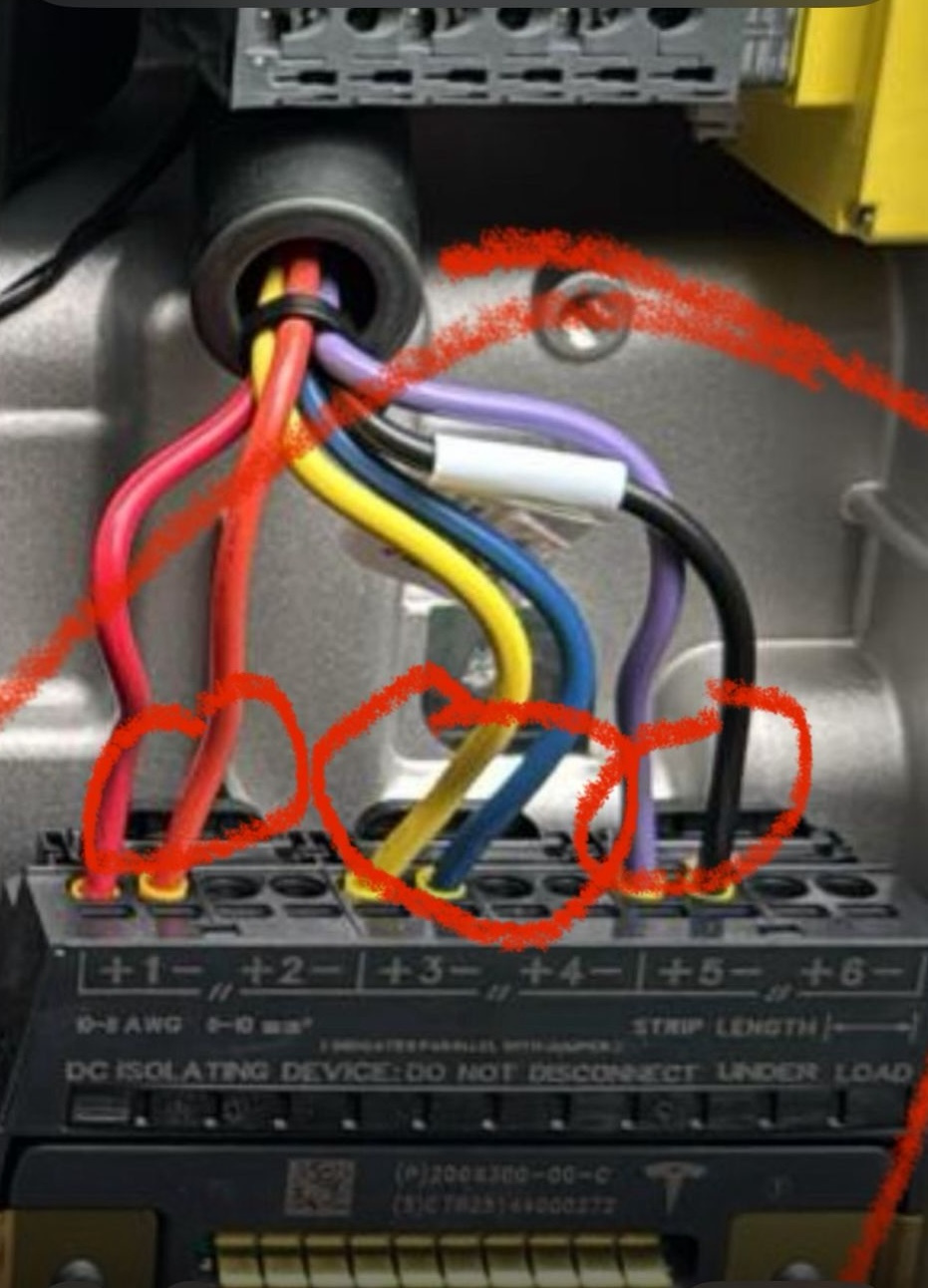
Thanks, nice image showing the 6 MPPT's, and that on the UK model MPPT's 1&2, 3&4, and 5&6 are paired together giving 3 higher current (26A) MPPT's on the UK model.
I am a Forum Ambassador and I support the Forum Team on the Benefits & tax credits, Heat pumps and Green & Ethical MoneySaving forums. If you need any help on those boards, do let me know. Please note that Ambassadors are not moderators. Any post you spot in breach of the Forum Rules should be reported via the report button, or by emailing forumteam@moneysavingexpert.com. All views are my own & not the official line of Money Saving Expert.1 -
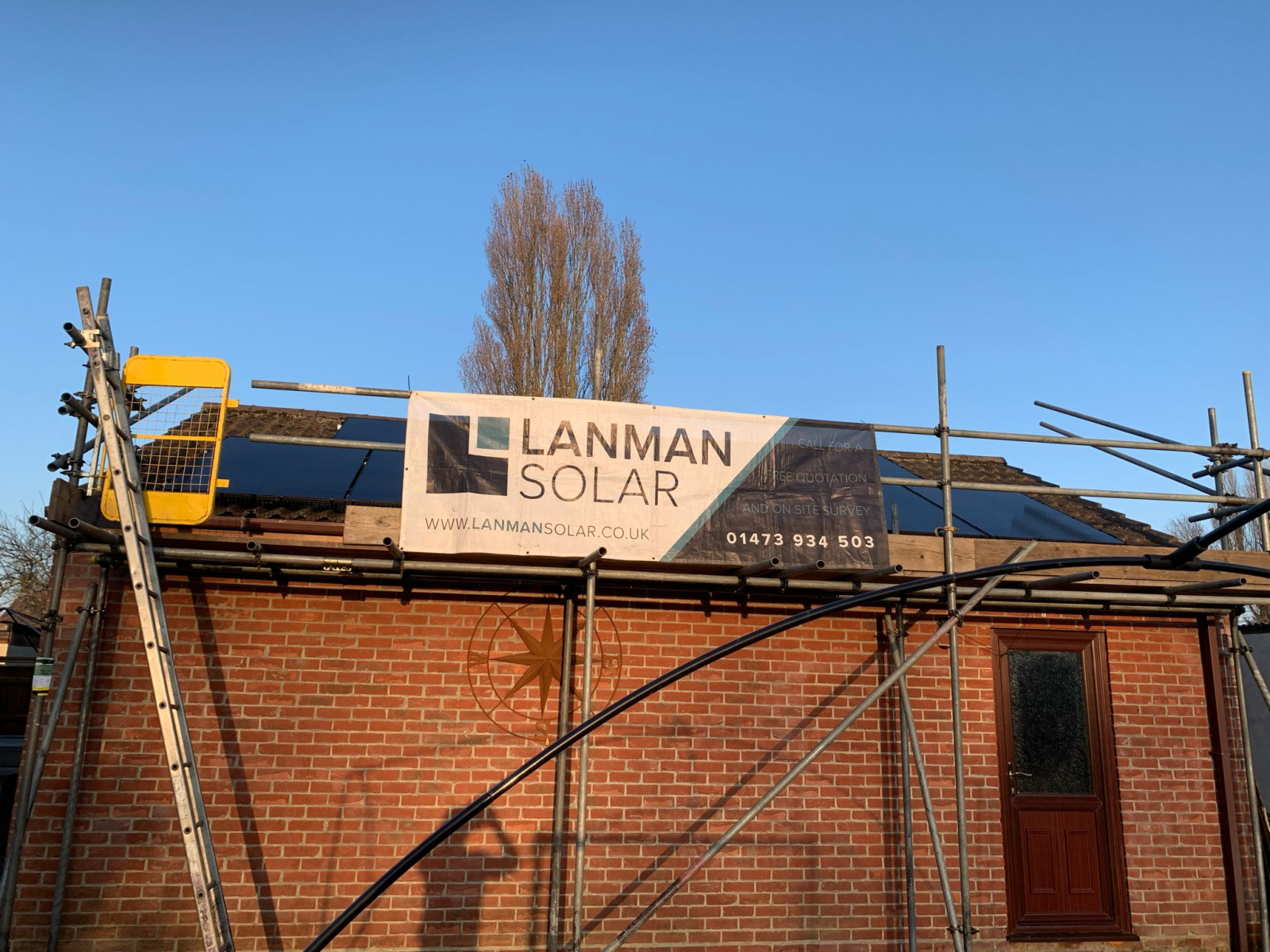
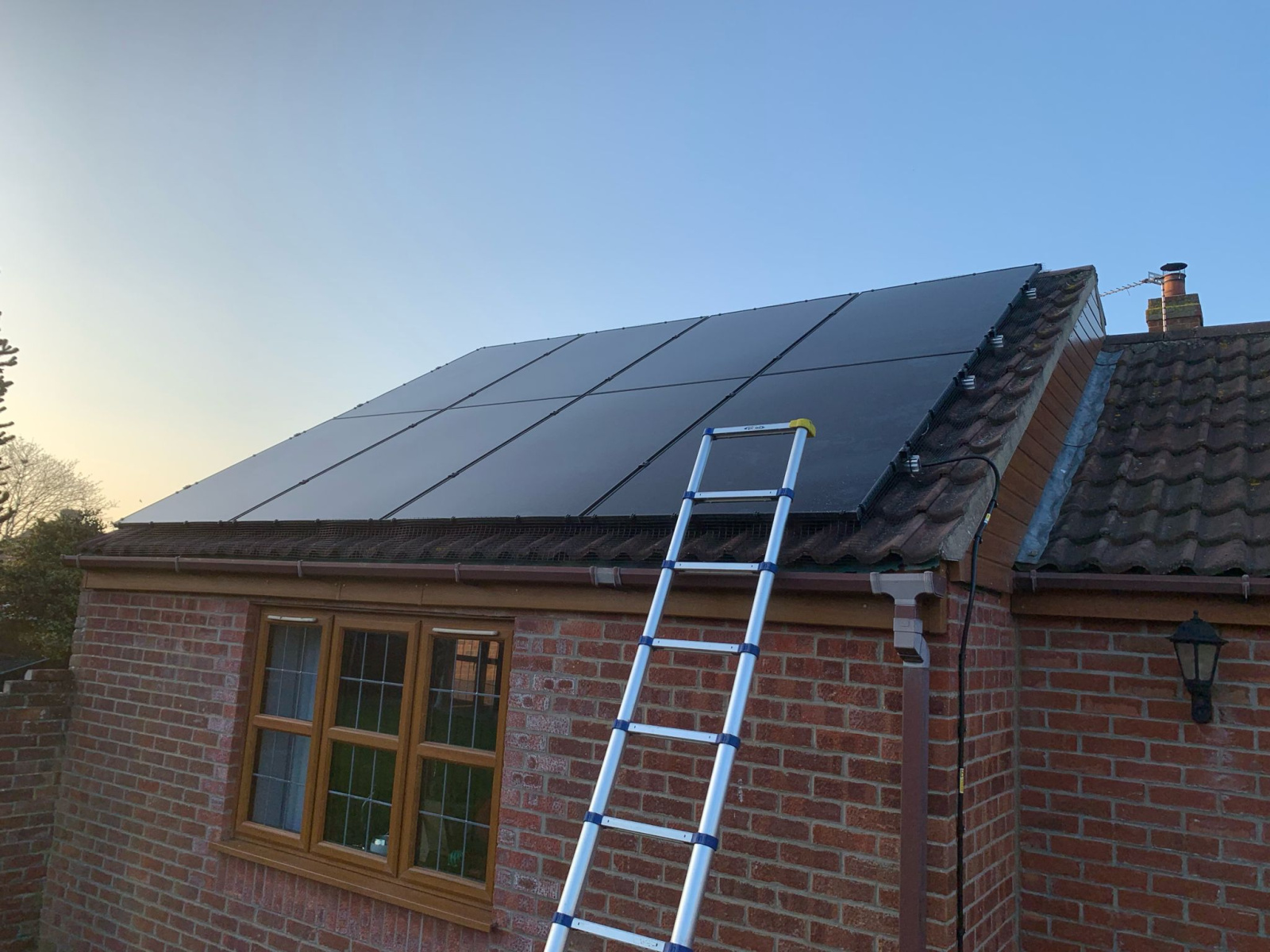
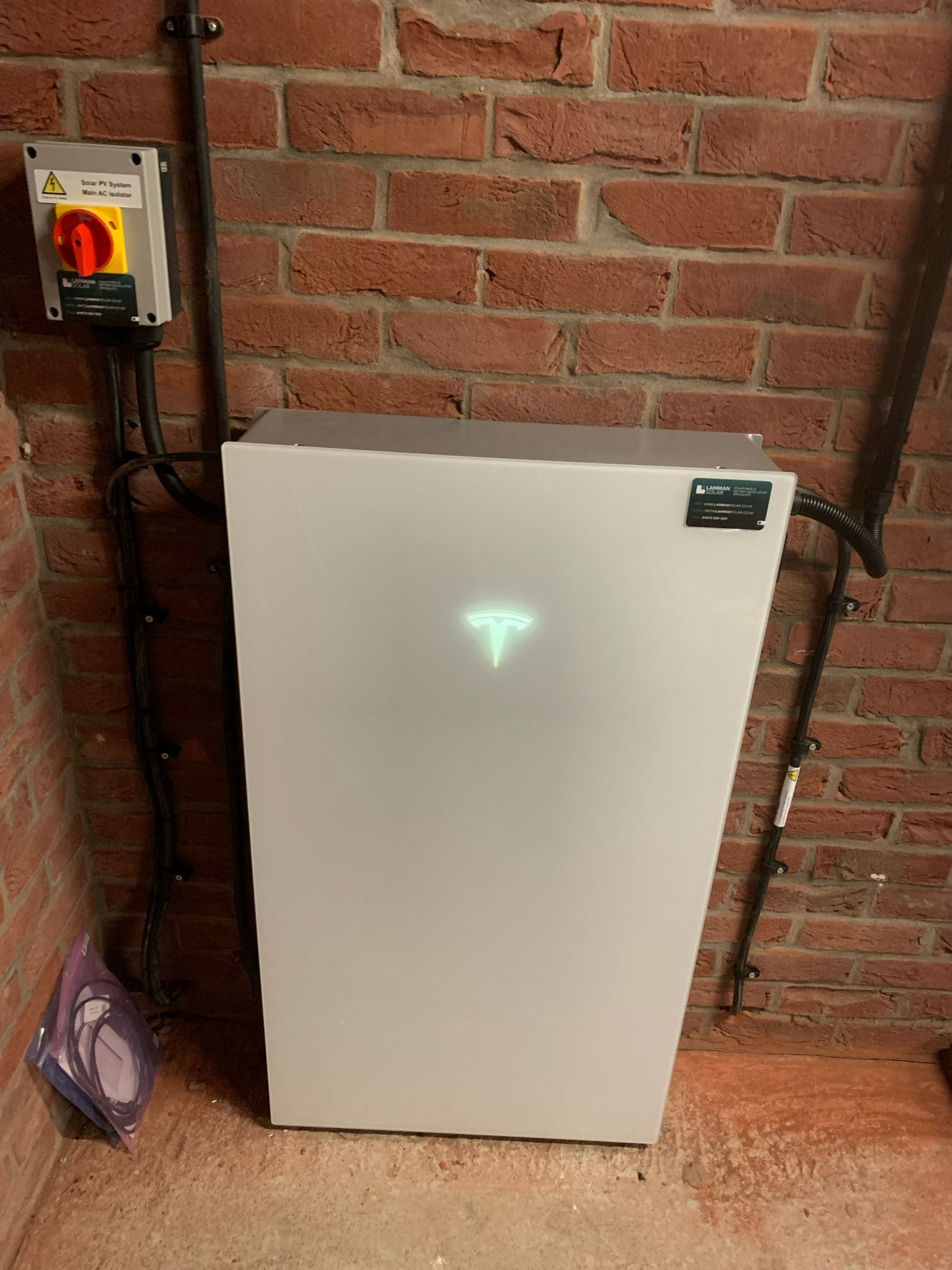
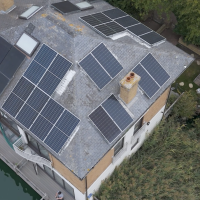
Update: Job completed in a day, two weeks ago, and we could not be happier. Decided to stick with our local installer, although @Screwdriva recommendation was cheaper - thanks for your PM's mate..
I have 17 x 480w AIKO panels, 9 on a west facing roof and 8 on an a south facing roof together with a Tesla PW3. I was not convinced, possibly wrongly, bifacial panels on the two roofs would be significantly more efficient. Groundworks were easy, 13 slabs needed lifting for burying cables and relaying, and a mate cut a channel in our concreted rear access.
Apart from a misty/foggy first weekend we have not used any grid electricity for the past 9 days. On two recent days we have generated 35kWh, of which around 60% was exported.
I am currently on an OVO fixed rate tariff until the end of August. After initially being told they didn't have regulator permission to set up new export accounts, we got a call yesterday imforming us the account should be set up in the coming weeks. The export rate will be £0.12. Exporting has been approved / capped at 11kWh.
Thanks all for your help and direction - I have attached a few photos.
![IMG_4470[2].JPG](https://us-noi.v-cdn.net/6031891/uploads/BYGB93XV0W9U/img-4470-5b2-5d-jpg.jpg)
![IMG_4471[1].JPG](https://us-noi.v-cdn.net/6031891/uploads/EDFJC4XBIG6Q/img-4471-5b1-5d-jpg.jpg) 6
6 -
Very nice. Glad it all worked out well.
Mart. Cardiff. 8.72 kWp PV systems (2.12 SSW 4.6 ESE & 2.0 WNW). 28kWh battery storage. Two A2A units for cleaner heating. Two BEV's for cleaner driving.
For general PV advice please see the PV FAQ thread on the Green & Ethical Board.1









Confirm your email address to Create Threads and Reply

Categories
- All Categories
- 355.7K Banking & Borrowing
- 254.9K Reduce Debt & Boost Income
- 456.1K Spending & Discounts
- 248.3K Work, Benefits & Business
- 605.8K Mortgages, Homes & Bills
- 179K Life & Family
- 263.6K Travel & Transport
- 1.5M Hobbies & Leisure
- 16.1K Discuss & Feedback
- 37.7K Read-Only Boards